









ORLEN and 13 partners launch Baltic Energy Initiative, from offshore wind to SMRs
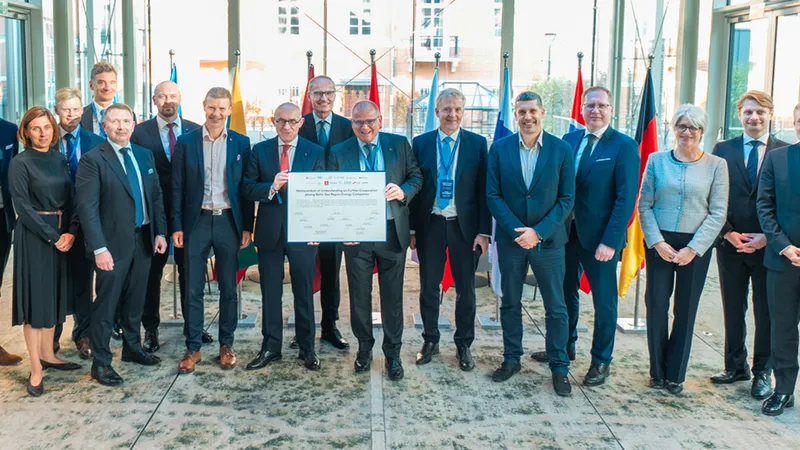
Poland's ORLEN and thirteen energy companies and organisations from Northern and Central Europe have signed a cooperation agreement establishing the Baltic Energy Initiative. The aim is to jointly prepare projects that strengthen the energy security and competitiveness of the Baltic Sea region: from offshore wind, LNG and BioLNG, through hydrogen and carbon capture and storage, to nuclear power and small modular reactors. Protecting energy infrastructure is to be one of the alliance's key tasks.
In brief
Baltic Energy Initiative brings together fourteen signatories from nine countries, including ORLEN, Fortum, Siemens Energy, Ørsted, Latvenergo and Gasgrid Finland. The initiative's priorities are offshore wind energy, the LNG and BioLNG market, a regional hydrogen market, CO2 transport and storage, small modular reactors and protection of energy infrastructure. ORLEN CEO Ireneusz Fąfara says the alliance combines the companies' competences, infrastructure and investment potential to strengthen the security and competitiveness of the Baltic Sea region. The signatories also want to jointly approach European institutions on regulations and support mechanisms.
Fourteen signatories from nine countries
The agreement brings together fourteen signatories from Poland, Finland, Sweden, Denmark, Germany, Lithuania, Latvia, Estonia and Norway. Alongside ORLEN, the initiative has been joined by Eesti Energia, Enefit, Fortum, KN Energies, DNV Energy Systems, Topsoe, Siemens Energy, Adven, Steady Energy, P2X Solutions, Latvenergo, Gasgrid Finland and Ørsted. The group includes energy utilities and infrastructure operators as well as technology suppliers and certification companies, which is meant to allow competences to be combined along the entire value chain.
– The scale of the challenges facing the energy sector today requires cooperation that goes beyond the borders of individual states and companies. The Baltic Energy Initiative gives us the opportunity not only to take part in key projects of the energy transition, but also to co-shape their direction. We are combining the competences, infrastructure and investment potential of European companies in order to jointly strengthen security, make more effective use of available financing and build the competitive advantage of the Baltic Sea region – says Ireneusz Fąfara, chief executive of ORLEN.
From offshore wind to SMRs
The agreement is meant to create a space for combining corporate competences, exchanging experience and preparing projects of international significance. The priorities include the development of offshore wind, the integration of the LNG and BioLNG market, the creation of a regional hydrogen market, the transport and storage of CO2, and the development of small modular reactors. Cooperation in securing financing from European Union programmes and other international sources is also to be an important element.
For ORLEN this means the possibility of building partnerships around projects important for the group's transformation and of helping to shape solutions for the whole market, including cross-border projects, the exchange of know-how and recommendations on regulation and support mechanisms. These are the areas in which the group is developing its own competences and assets: offshore wind, LNG, hydrogen, CCS and nuclear power. In the Baltic, ORLEN is building Baltic Power, Poland's first offshore wind farm, which is already delivering its first electricity to the grid, and is developing the Baltic East and Baltic West projects through its subsidiary ORLEN Neptun.
Infrastructure protection and a joint voice in Brussels
One of the initiative's key tasks will be the protection of energy infrastructure. The participants are to exchange experience on securing critical infrastructure, cybersecurity, crisis preparedness and responding to physical and hybrid threats, and to jointly analyse projects that increase the resilience of infrastructure and the possibilities of financing them. In a region that has seen a series of incidents around subsea cables and pipelines in recent years, this dimension of cooperation carries particular weight.
The Baltic Energy Initiative is also intended to strengthen the position of the region's energy sector in dialogue with European institutions. Joint positions and recommendations are to cover regulation, investment and support mechanisms for strategic projects, which, according to the signatories, will make it possible to present common needs more effectively and to make fuller use of the energy potential of the Baltic Sea area.
Source: Gazeta Morska · Compiled by: Kamil Kusier
Related articles
 Energy and offshore Equinor takes over Bałtyk 2 and 3 O&M base in Łeba. Port to serve 1.44 GW of offshore wind for 30 years
 Navy and defence Port Gdański Eksploatacja secures NATO NCAGE code. Gdańsk port company lines up for defence tenders
 Shipbuilding industry Ex-Enterprise towed to Mobile under $418.5m contract. Test case for Nimitz-class disposal begins
 Energy and offshore Energa renames Gdańsk gas plant company as foundations for 6,000-tonne turbine and boiler are laid
 Equipment and technology WB Group takes Polish drones from Tokyo to SOFEX in Jordan in a single week
 Ports and logistics PGE books Gdańsk’s T5 terminal for the long haul: Baltica 2 first, then more offshore wind farms
Comments (0)
The discussion is moderated by the editors: a comment appears after review. Your e-mail address is not published.
Nobody has commented on this article yet.