New LNG carriers join ORLEN's fleet
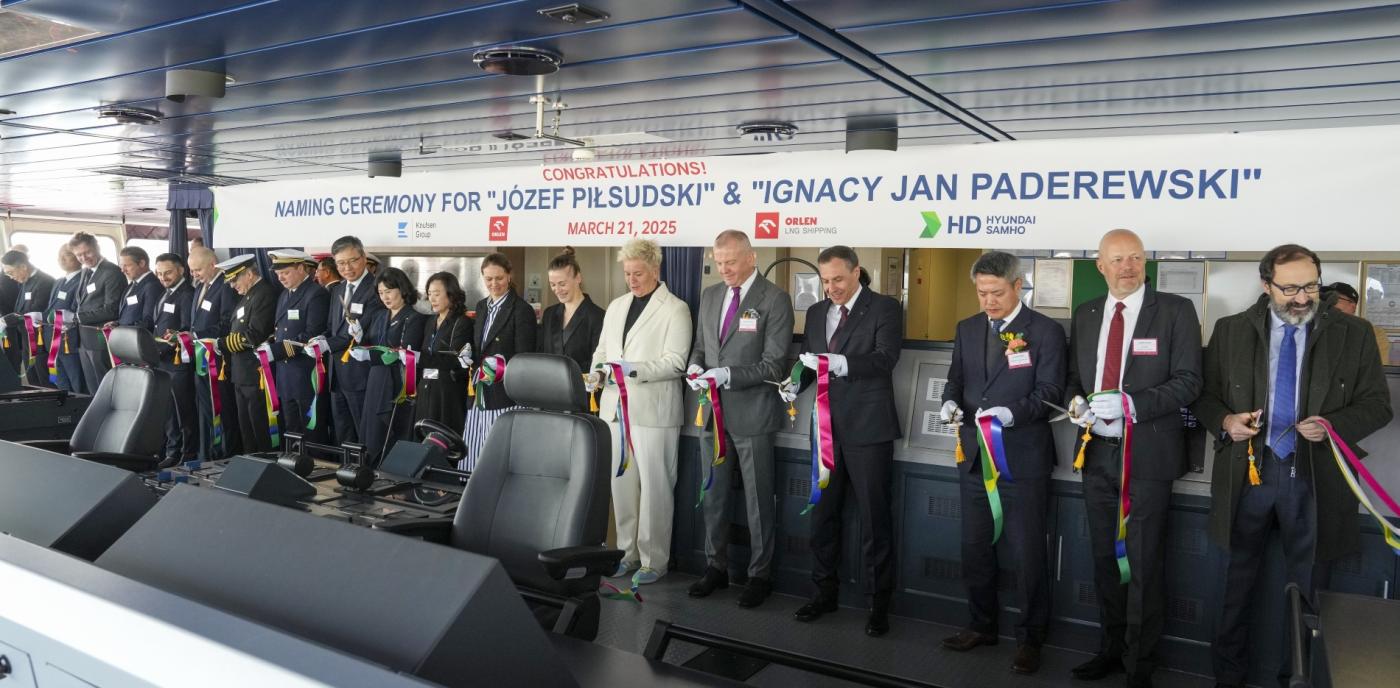
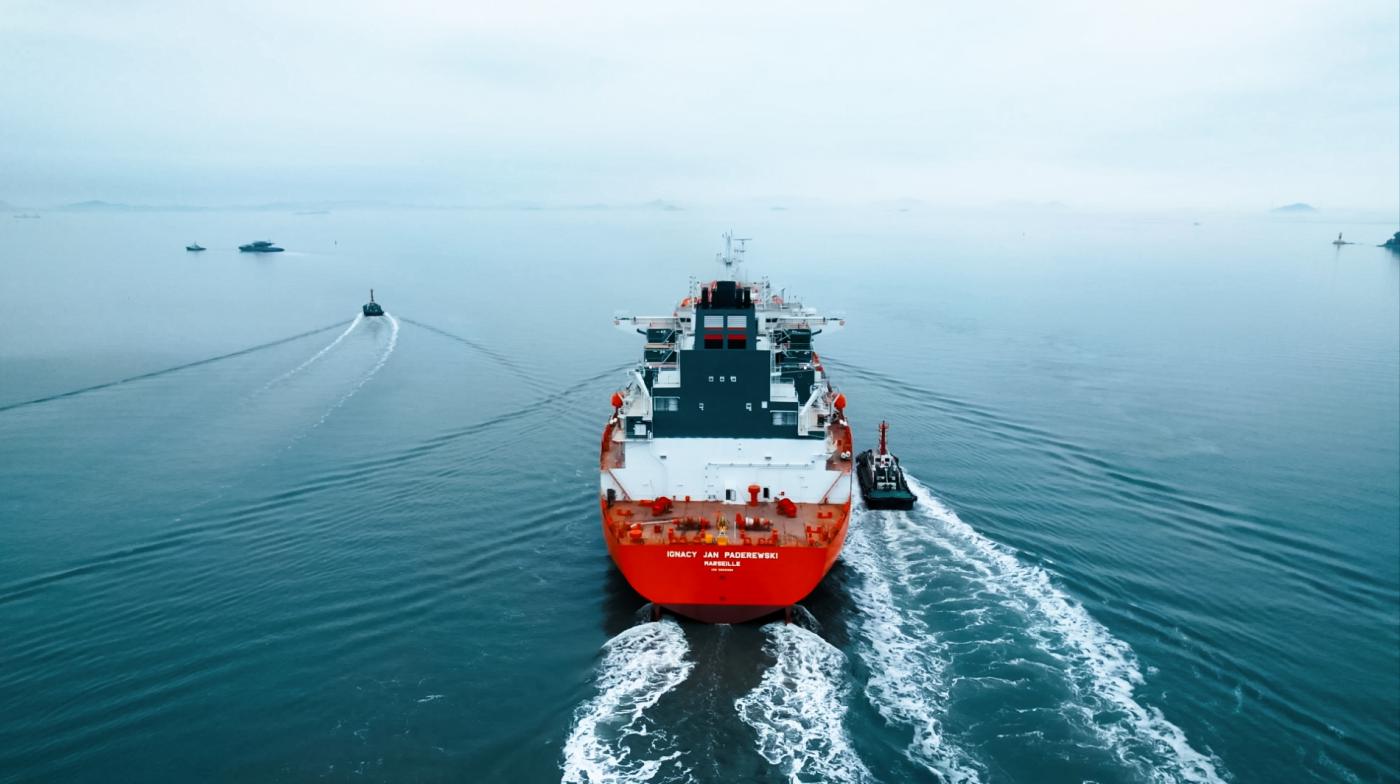
Each of ORLEN's newly commissioned LNG tankers can deliver enough gas to power up to two million Polish households. A naming ceremony for the two new liquefied natural gas (LNG) carriers, purpose-built for the ORLEN Group, was held at the Hyundai Samho Heavy Industries shipyard in Mokpo, South Korea. The vessels were christened Józef Piłsudski and Ignacy Jan Paderewski by their godmothers, Anita Włodarczyk and Natalia Partyka.
business power engineering maritime economy ports news21 march 2025 | 16:23 | Source: Orlen / Gazeta Morska | Prepared by: Kamil Kusier | Print
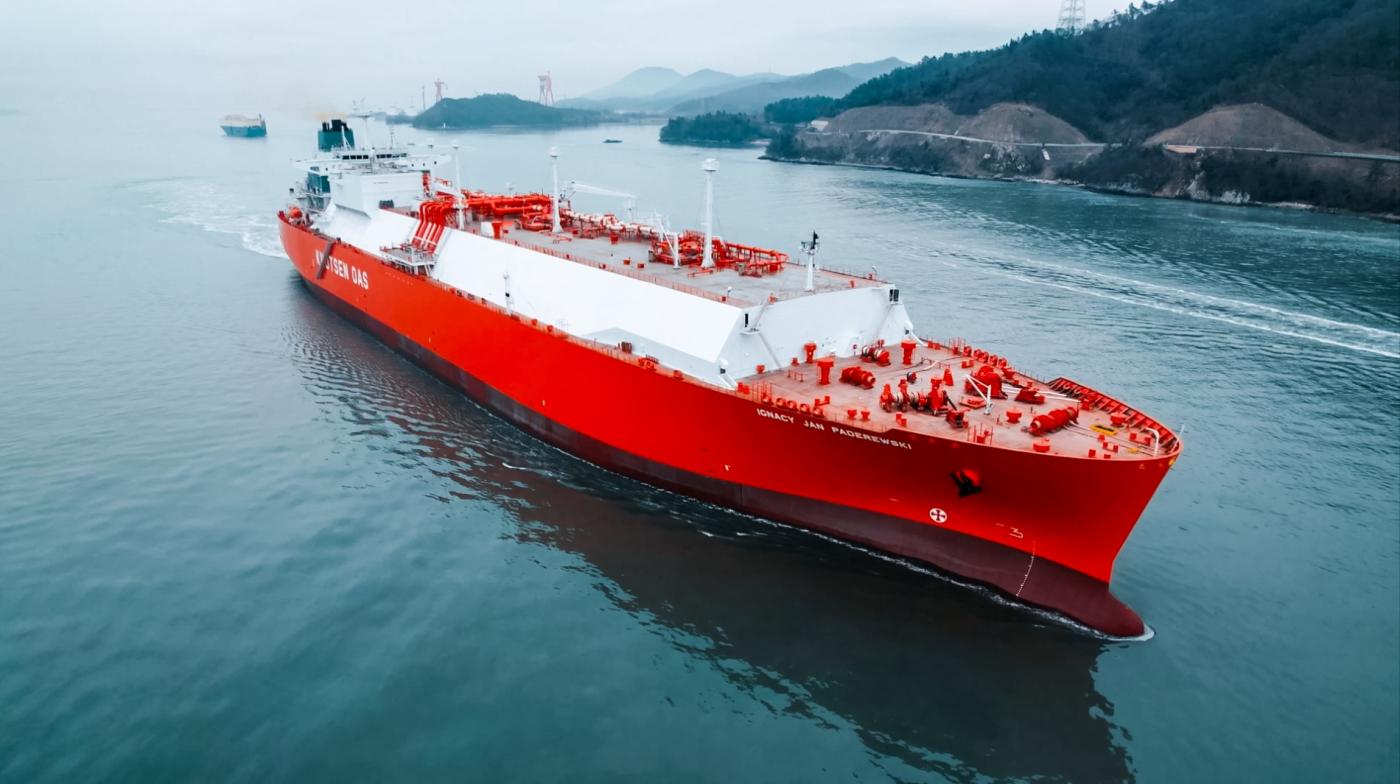
fot. Orlen
- We are building Poland's energy security and independence. We have adopted and are implementing a supply diversification strategy that leverages our own LNG fleet. By next year, it will grow to as many as eight vessels. Meanwhile, our expanding portfolio of long-term contracts with U.S. suppliers strengthens our market position and guarantees the stability of deliveries. As a result, we can provide Polish customers with reliable sources of gas while also supplying neighbouring markets, including Ukraine, thereby reinforcing energy security across the region, said Ireneusz Fąfara, President of the Management Board of ORLEN.
The share of seaborne liquefied natural gas in Poland's total gas imports has been steadily increasing. In 2024, LNG accounted for nearly half of all gas brought into the country, with the full volume of 70.22 TWh imported by the ORLEN Group. The new LNG carriers will provide the Company with greater flexibility in securing deliveries in the coming years.
The vessels are named after two key figures in Poland's fight for independence: Józef Piłsudski and Ignacy Jan Paderewski. Their godmothers are decorated Polish athletes: Anita Włodarczyk, Olympic champion in athletics, and Natalia Partyka, Paralympic champion in table tennis. Both ships represent the most advanced LNG carriers of their kind globally. They were constructed by Hyundai Heavy Industries, one of the leading companies in the global shipbuilding industry.
The vessels are chartered for a period of 10 years, with an option to extend. Each can carry approximately 70,000 tonnes of LNG – equivalent to around 100 mcm of natural gas in its gaseous state, or roughly the weekly consumption of all Polish households. Their size and specification ensure maximum versatility, allowing for loading and unloading at nearly all LNG terminals worldwide.
The construction of the vessels incorporated the most advanced technical solutions aimed at maximising operational efficiency. These include integrated power management systems and onboard reliquefaction technology, which allows for the recovery of boil-off gas that naturally evaporates during transport. Additionally, the vessels' dual-fuel engines can operate on both marine diesel and natural gas, ensuring compliance with current and future environmental standards for maritime transport.
In line with ORLEN's 2035 strategy, natural gas will continue to serve as a key transitional fuel in Poland's and the region's energy transition. Consumption is expected to increase steadily, reaching 27 bcm within the next decade. To address this growing demand, the Group is executing an ambitious investment programme, one of whose core components is the secure supply of LNG.
Most LNG cargoes are received at the Świnoujście terminal. To date, 347 deliveries have been completed, totalling 27 million tonnes of LNG. The largest number of shipments originated from Qatar (154) and the United States (167). Other sources included Norway (16), Nigeria (3), Trinidad and Tobago (4), Egypt (2), and Equatorial Guinea (1). In the first quarter of this year, the Company plans to receive 20 deliveries at the terminal – 9 more than during the same period last year.
ORLEN also utilises capacity reserved at the FSRU terminal in Klaipėda, Lithuania, where it has so far received 11 cargoes totalling nearly 740,000 tonnes of LNG. After regasification, the gas is transported to Poland via the Poland–Lithuania interconnector. A portion of the fuel is also supplied to Baltic markets.
The Group is further expanding its domestic LNG import capabilities. ORLEN has reserved the full regasification capacity – 6.1 bcm – of the floating LNG terminal currently under construction in the Bay of Gdańsk. This infrastructure expansion will enable the Group to increase the number of LNG cargoes received annually by as many as 58 shipments.
see also
Buy us a coffee, and we’ll invest in great maritime journalism! Support Gazeta Morska and help us sail forward – click here!
Kamil Kusier
redaktor naczelny
gallery

comments
Add the first comment
see also
Navantia and Fincantieri deepen cooperation on the european patrol corvette programme
Galeon Yachts and Meyer Shank Racing: merging luxury yachts with motorsport expertise
Unmanned systems and naval firepower modules. WB Group showcases integrated capabilities at Enforce Tac 2026
Swedish ports record lowest ship calls in 18 years. Implications for the maritime sector
February in Szczecin’s shiprepair sector. Ice, overhauls and North Sea expansion
Advanced ROV trials conducted at CTO to validate subsea technologies for offshore applications
University of Gdańsk and PGZ Naval Shipyard join forces for innovation and security
Stadt Naval to deliver electric propulsion system for Polish rescue vessel Ratownik
Gdańsk port’s Basen Górniczy to gain modern port infrastructure
First month of Jantar Unity operations. Polsca ferry paves the way for Batory program units
ADVERTISEMENT
ADVERTISEMENT