A new era of underwater warfare. Saab’s Autonomous Ocean drone
The future of naval defence is moving beneath the surface — and Saab is positioning itself at the forefront of this transformation. The Swedish defence company has unveiled its latest innovation, the Autonomous Ocean Drone, a large uncrewed underwater vehicle (LUUV) designed to redefine intelligence, surveillance, and seabed warfare. Backed by a newly awarded contract worth SEK 60 million (approx. USD 5–6 million) from Sweden’s Defence Materiel Administration (FMV), Saab is accelerating the development of this next-generation platform.
business maritime economy navy worldwide defense industry equipment and technology news05 september 2025 | 13:45 | Source: Gazeta Morska | Prepared by: Kamil Kusier | Print
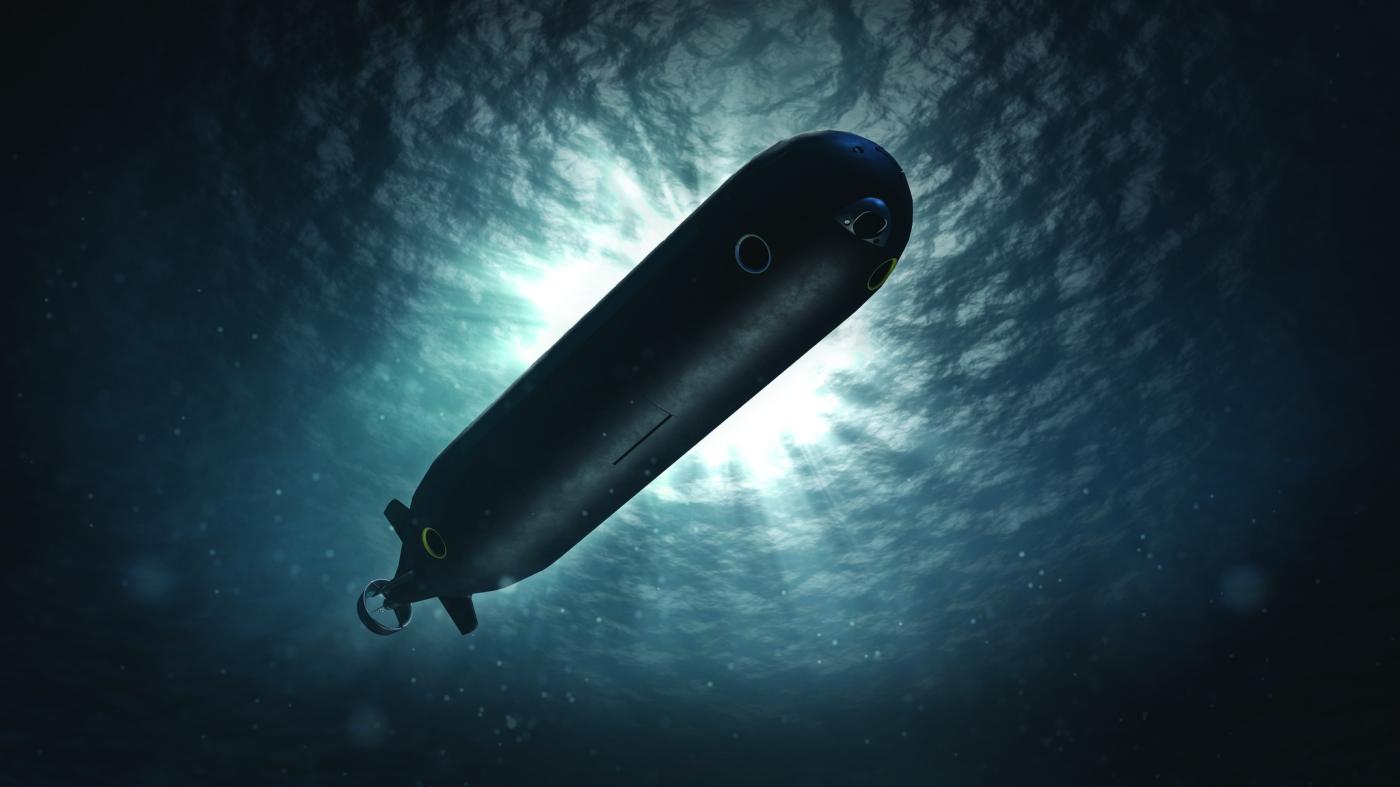
fot. Saab
From submarines to drones: a century of experience
Saab is not a newcomer to underwater technologies. With more than a hundred years of submarine-building tradition, the company has consistently pushed the limits of what can be achieved in challenging maritime environments. Submarines built for the Baltic Sea have demonstrated long-range endurance without logistical support, modular mid-life upgrades, and resilience in one of the world’s most complex naval theatres.
The Autonomous Ocean Drone inherits this evolutionary design philosophy. Modularity and adaptability lie at its core, enabling rapid integration of new systems and technologies to meet both today’s and tomorrow’s mission profiles.
Versatility in deployment
Unlike traditional underwater platforms, Saab’s LUUV offers flexible deployment methods. The drone can be launched directly pier-side or deployed covertly from compatible submarines, such as the Blekinge-class (A26) equipped with a multi-mission portal. This dual capability provides strategic choice: discreet operations when launched from submarines, or independent missions initiated from ports or surface ships.
ISR and seabed operations
At its current stage of development, the Autonomous Ocean Drone is optimised for intelligence, surveillance, and reconnaissance (ISR) tasks. Equipped with a suite of advanced sensor systems, it can conduct stealth monitoring, deliver objects to the seabed, or install seabed ISR infrastructure such as cables or power sources. The system can also support special forces operations by transporting equipment to hard-to-reach underwater locations.
Saab stresses that this is only the beginning. The platform is designed for scalability, with future capabilities such as torpedo launches already being evaluated as potential mission extensions.
Autonomous Ocean Core – the brain of the system
Central to the concept is Autonomous Ocean Core, Saab’s AI-driven system-of-systems architecture. It provides navigation, electronic warfare support, advanced sensor fusion, and the ability to synchronise with crewed and uncrewed assets. Built for long-term scalability, the core allows integration not only of Saab’s proprietary technologies but also third-party solutions — ensuring sustained relevance as the underwater threat landscape evolves.
Strategic implications
The unveiling of the Autonomous Ocean Drone comes at a time when seabed warfare and the protection of Exclusive Economic Zones (EEZs) and critical national infrastructure (CNI) are rising in importance. The Baltic Sea, with its dense infrastructure and geopolitical sensitivities, underscores the need for stealthy, long-endurance underwater assets.
By blending autonomy, modularity, and proven submarine heritage, Saab’s LUUV positions itself as a future cornerstone of underwater operations. Whether operating as a “water wingman” alongside submarines or conducting independent ISR missions, the platform represents a decisive step in extending the operational reach of modern navies.
Buy us a coffee, and we’ll invest in great maritime journalism! Support Gazeta Morska and help us sail forward – click here!
Kamil Kusier
redaktor naczelny
comments
Add the first comment
see also
StartupHack 3.0 at GPNT: Space and maritime technologies at the core of innovation
Polish technology powers zero-emission public transport. AREX secures largest municipal contract
Defence.Hub strengthens capabilities in technologies supporting maritime infrastructure security
Hanseatic Global Terminals takes full ownership of Florida International Terminal
Aleksandra Kosiorek: The sea has always been a space of openness for us, and that will not change
Gdańsk to launch Baltic Sea monitoring center
Türkiye advances indigenous GNSS ambitions: what FGN-100-D3 means for the maritime sector
Lithium at the core. TKMS and E3 Lithium align on Canada’s submarine ambitions
Błażej Konkol appointed vice president for infrastructure at the Port of Gdańsk Authority
WB Group expands into Romania, strengthening presence in the Black Sea region
ADVERTISEMENT
ADVERTISEMENT