









No strong Europe without a strong maritime economy. Informal meeting of EU maritime ministers concludes
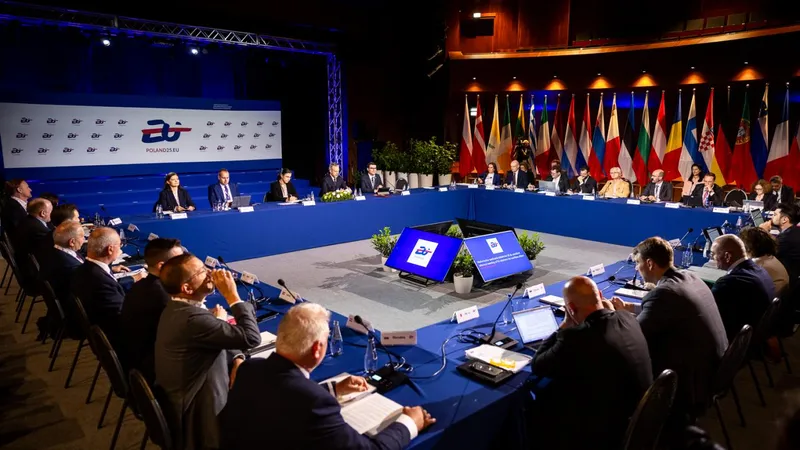
The maritime economy, seaports, the Szczecin container terminal, the EU maritime strategy, and Poland’s presidency of the Council of the EU were among the key topics discussed during the 11th edition of the International Maritime Congress held in Szczecin. Organized as part of Poland’s EU Council Presidency, the event attracted representatives from governments, the European Commission, the maritime industry, and international organizations.
In brief
Prime Minister Donald Tusk opened the 11th edition of the International Maritime Congress in Szczecin, announcing the repolonisation of the maritime sector and tenders to be won by Polish suppliers. Infrastructure Minister Dariusz Klimczak pointed to the construction of a deepwater container terminal in the Szczecin and Świnoujście port complex, capable of simultaneously receiving two container ships up to 400 m long and one 200 m long. The congress concluded with the handover to the European Commission of a joint declaration by European Union member states on the competitiveness of shipping and the maritime industry.
Following Łódź and Wrocław, Szczecin has joined the ranks of Europe’s transport capitals. The Congress was officially opened by Prime Minister Donald Tusk, who emphasized the strategic importance of the Baltic Sea and the need to “repolonize” the maritime sector.
– We are thinking about how to better, more wisely, and more intensively develop this magnificent coastal belt – Poland’s pride stretching from my Gdańsk to your Szczecin. The idea is for our Pomerania, this great Pomerania, to truly become one of the most precious jewels in Poland’s crown – said the Prime Minister.
Donald Tusk stressed that investments in Polish ports are crucial not only for Poland but for the entire European continent.
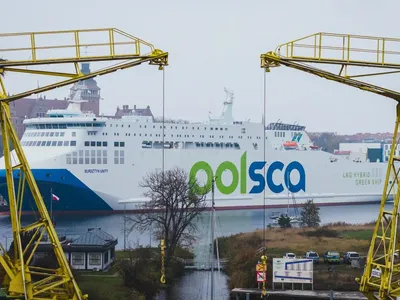
– We know well what pressure from non-EU countries looks like – price pressure, competitive pressure – and this is not fair competition. The Polonization of the Baltic, turning the Baltic into a “Polish Sea,” also means Polonizing orders wherever possible. Even if it is very difficult, tenders will be won by Polish suppliers, Polish manufacturers. This also applies to building our ships – as was the case with the ferries – announced Prime Minister Donald Tusk.
A new training vessel, announced during the congress, will be a strategic investment in Polish maritime education and the preparation of future workforce for the sector.
The event was hosted by Infrastructure Minister Dariusz Klimczak and Deputy Minister Arkadiusz Marchewka, who underlined Szczecin’s significance as a gateway to the world due to its location within the TEN-T — the Trans-European Transport Network.
– We meet today in a special place. Szczecin is not only an industrial hub and a port city with a rich history but also, because of its geographic location, a gateway to the world. It is part of the core Trans-European TEN-T network, the main transport connections of the European Union. Here, one of the most important maritime investments in Poland is taking place – the construction of a deepwater container terminal that will be able to receive the world’s largest container ships capable of entering the Baltic Sea – said Infrastructure Minister Dariusz Klimczak.
The new container terminal at the Szczecin–Świnoujście Port Complex will be capable of simultaneously accommodating two container ships up to 400 meters long and one up to 200 meters long. Moreover, the terminal can also serve a role within the country’s defense system.
– Security, Europe! – is the guiding slogan of the presidency, and we treat it as a commitment – emphasized Minister Dariusz Klimczak.
– The sea and maritime transport are a common topic for all Europeans. There is no strong Europe without a strong maritime economy, which guarantees economic, food, military, and energy security. The ambitious goals set before us globally, both in defense and economic terms, we will consistently pursue in the coming years – he added.
The debate titled – New EU Industrial Policy in the Maritime Economy Sector – included representatives of the European Commission and industry organizations. They discussed the current challenges facing European maritime enterprises and identified key components to be included in the new EU maritime strategy: enhancing competitiveness, technological autonomy, securing critical industrial capabilities, and attracting qualified personnel.
During the government session, political directions for the new EU Maritime Industrial Strategy and ways to strengthen European cooperation in the maritime economy were discussed.
The congress concluded with the submission of a joint declaration by EU member states to the European Commission. The document focuses on increasing the competitiveness and resilience of Europe’s shipping and maritime industrial sectors. Developed in dialogue with the Directorate-General for Mobility and Transport, it will contribute to shaping the forthcoming European Maritime Industry Strategy.
The International Maritime Congress in Szczecin is a well-established event among the most important maritime conferences in Europe. This year’s edition included not only EU representatives but also partners from the EFTA countries – Norway and Iceland. The event once again confirmed that the maritime economy is a key pillar of Europe’s future.
Source: Gazeta Morska · Compiled by: Kamil Kusier
Related articles
 Shipbuilding industry Poland christens ro-pax ferry Bursztyn Unity in Szczecin on Independence Day. Ystad service starts 18 November
 Energy and offshore Orlen Neptun deploys V-LiDAR buoys at Baltic West ahead of Poland's 2027 offshore wind auction
 Energy and offshore Equinor takes over Bałtyk 2 and 3 O&M base in Łeba. Port to serve 1.44 GW of offshore wind for 30 years
 Navy and defence Port Gdański Eksploatacja secures NATO NCAGE code. Gdańsk port company lines up for defence tenders
 Shipbuilding industry Ex-Enterprise towed to Mobile under $418.5m contract. Test case for Nimitz-class disposal begins
 Energy and offshore Energa renames Gdańsk gas plant company as foundations for 6,000-tonne turbine and boiler are laid
Comments (0)
The discussion is moderated by the editors: a comment appears after review. Your e-mail address is not published.
Nobody has commented on this article yet.