Naval exercise Fearless Shark-25. Safeguarding Baltic Sea shipping routes and critical infrastructure
On 12 September, the Polish Navy launched its major exercise Fearless Shark-25 in the Baltic Sea. The drills, running until 26 September, aim to test the Navy’s ability to conduct defensive operations in the maritime domain. The exercise forms part of the wider training federation Iron Defender-25 – one of the largest planned military undertakings of the Polish Armed Forces in 2025.
security navy nato news22 september 2025 | 14:06 | Source: Gazeta Morska | Prepared by: Kamil Kusier | Print
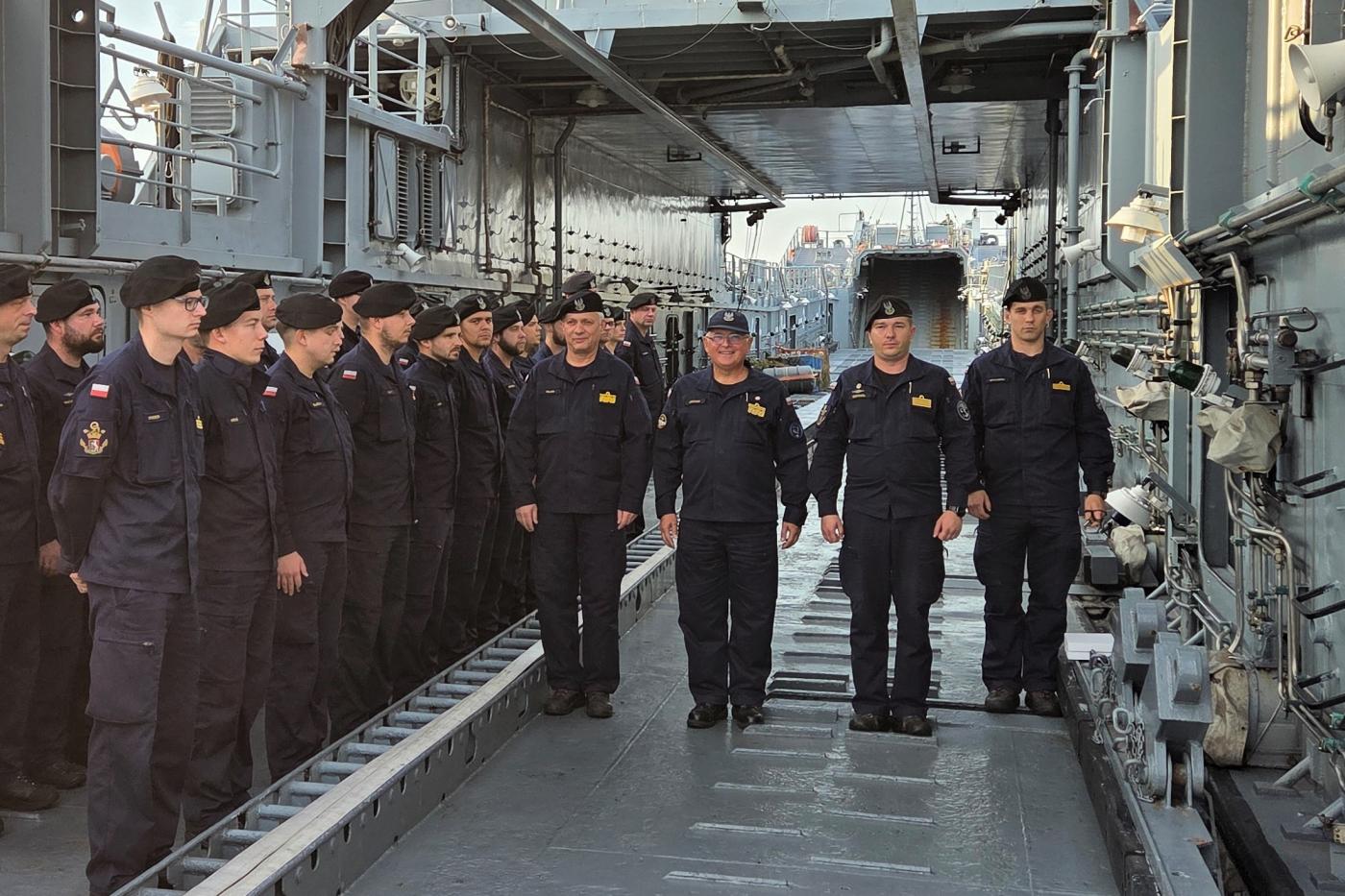
fot. Centrum Operacji Morskich ? Dowództwo Komponentu Morskiego
Comprehensive maritime defense
The exercise brings together units from the 3rd Ship Flotilla, 8th Coastal Defense Flotilla, and the Naval Aviation Brigade, under the command of the Maritime Operations Centre – Maritime Component Command in Gdynia.
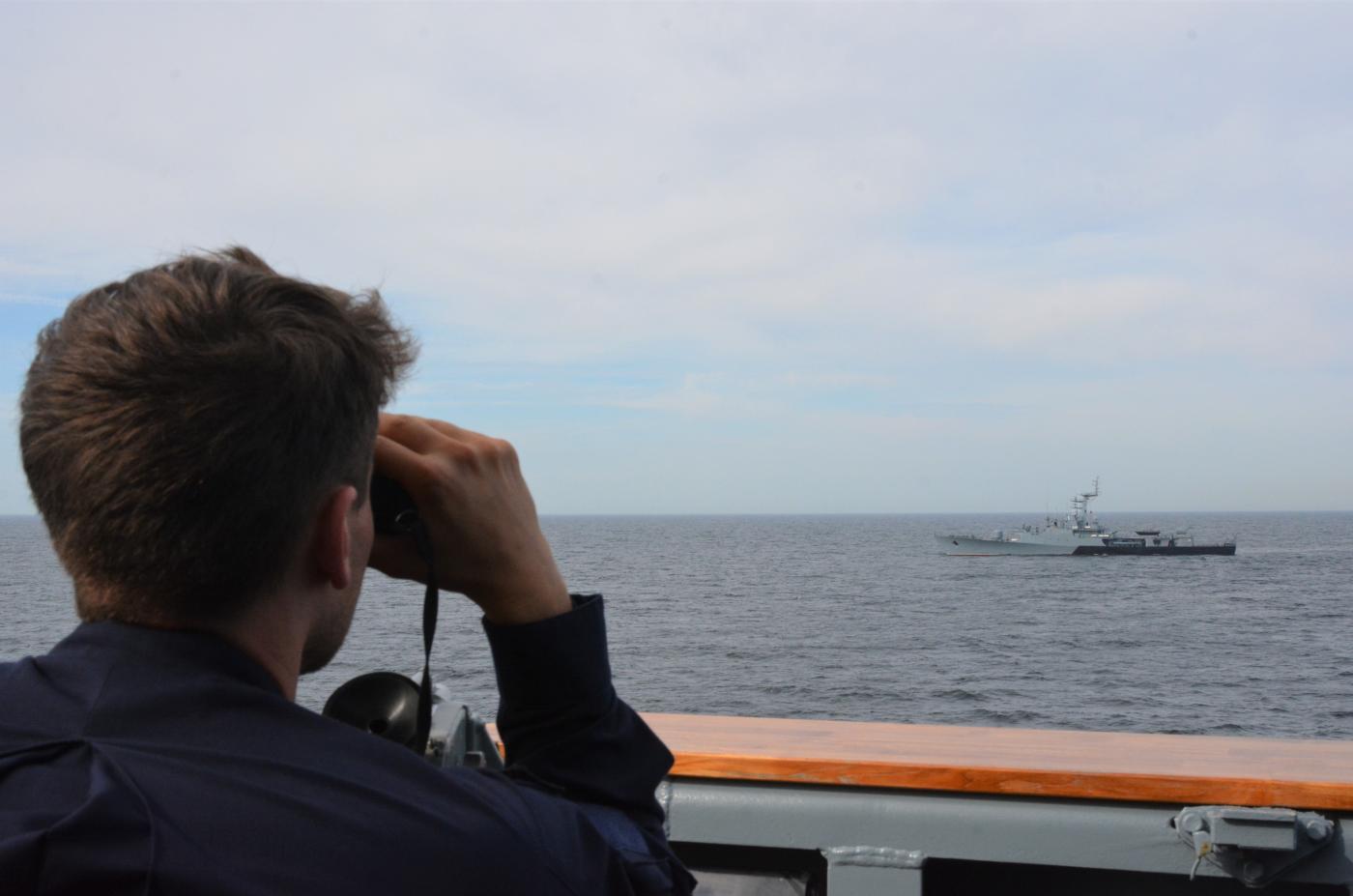
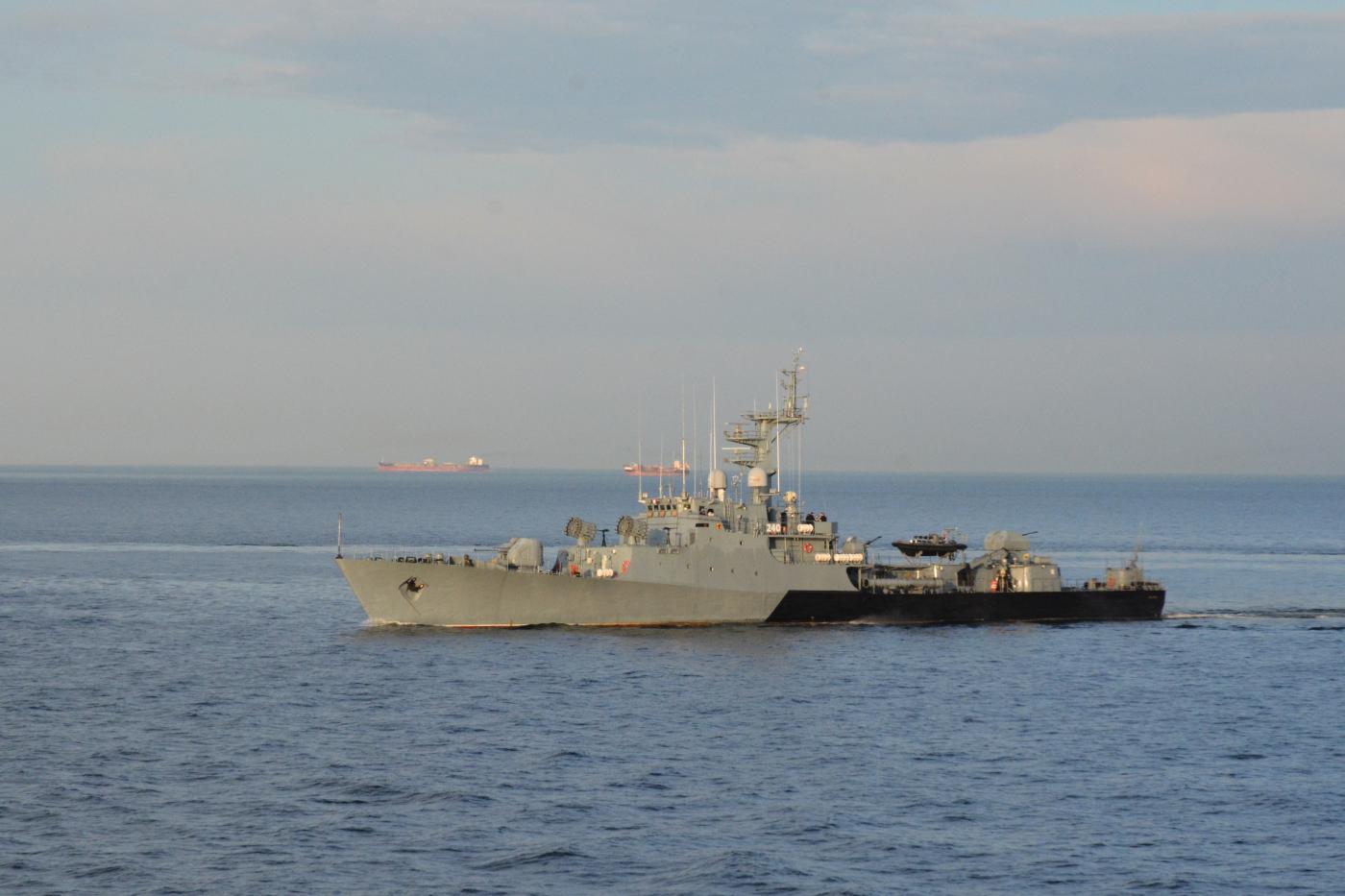
Scenarios include a broad spectrum of modern maritime threats, with naval assets ranging from a guided-missile frigate, an anti-submarine warfare corvette, landing ships and minehunters, to auxiliary and rescue vessels, supported by coastal missile batteries, patrol aircraft Bryza and AW101 and W-3WARM helicopters.
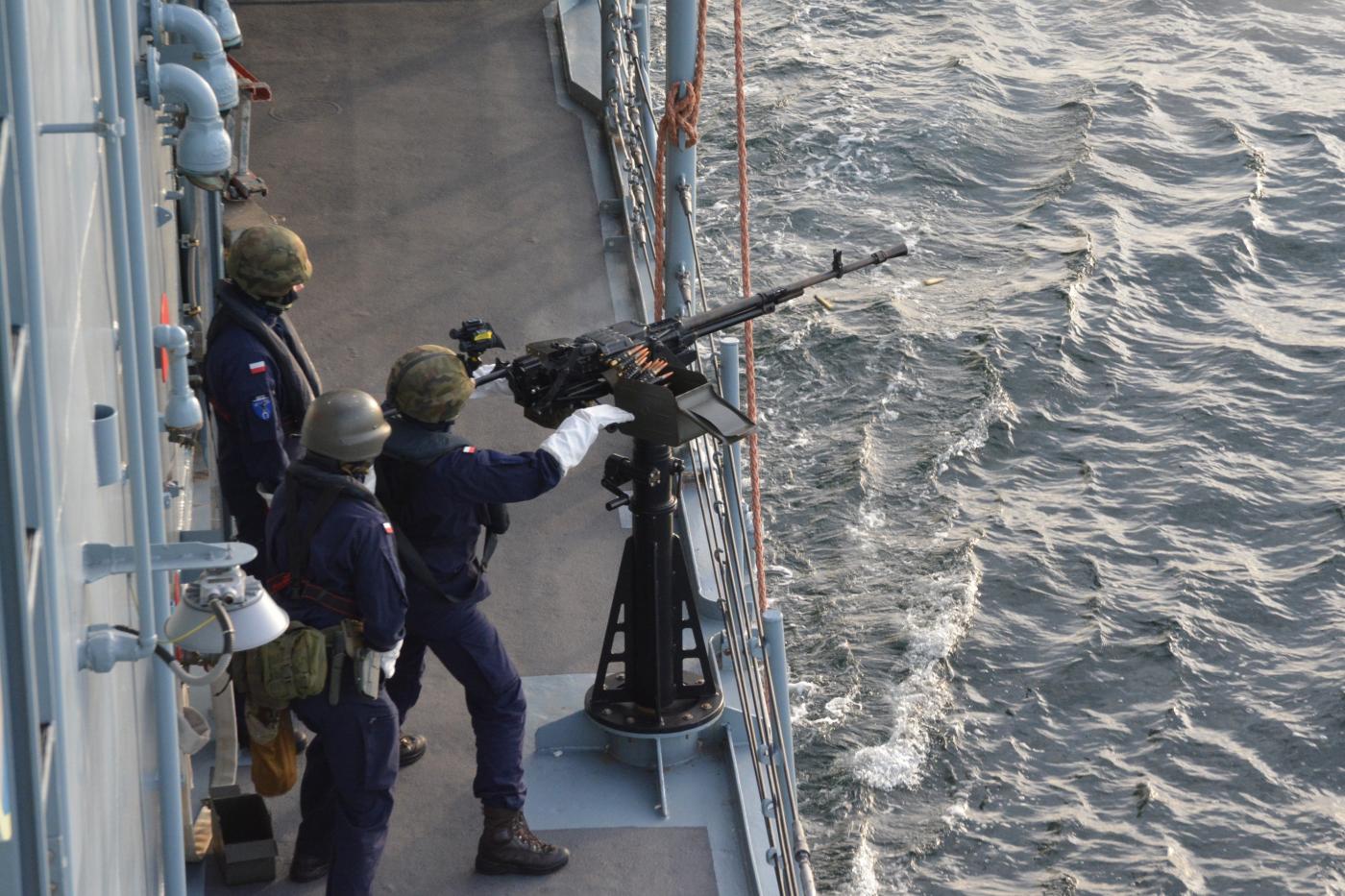
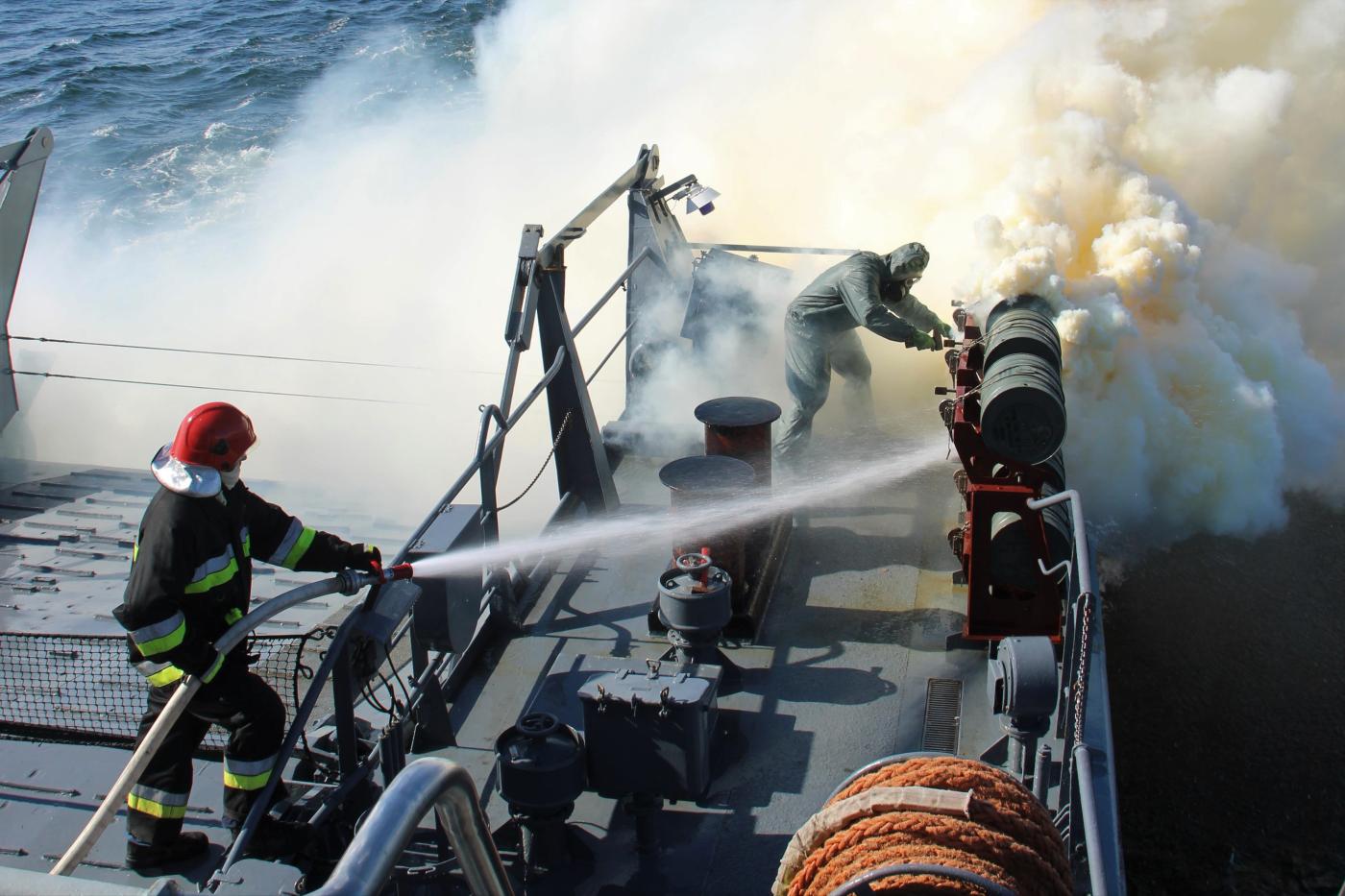
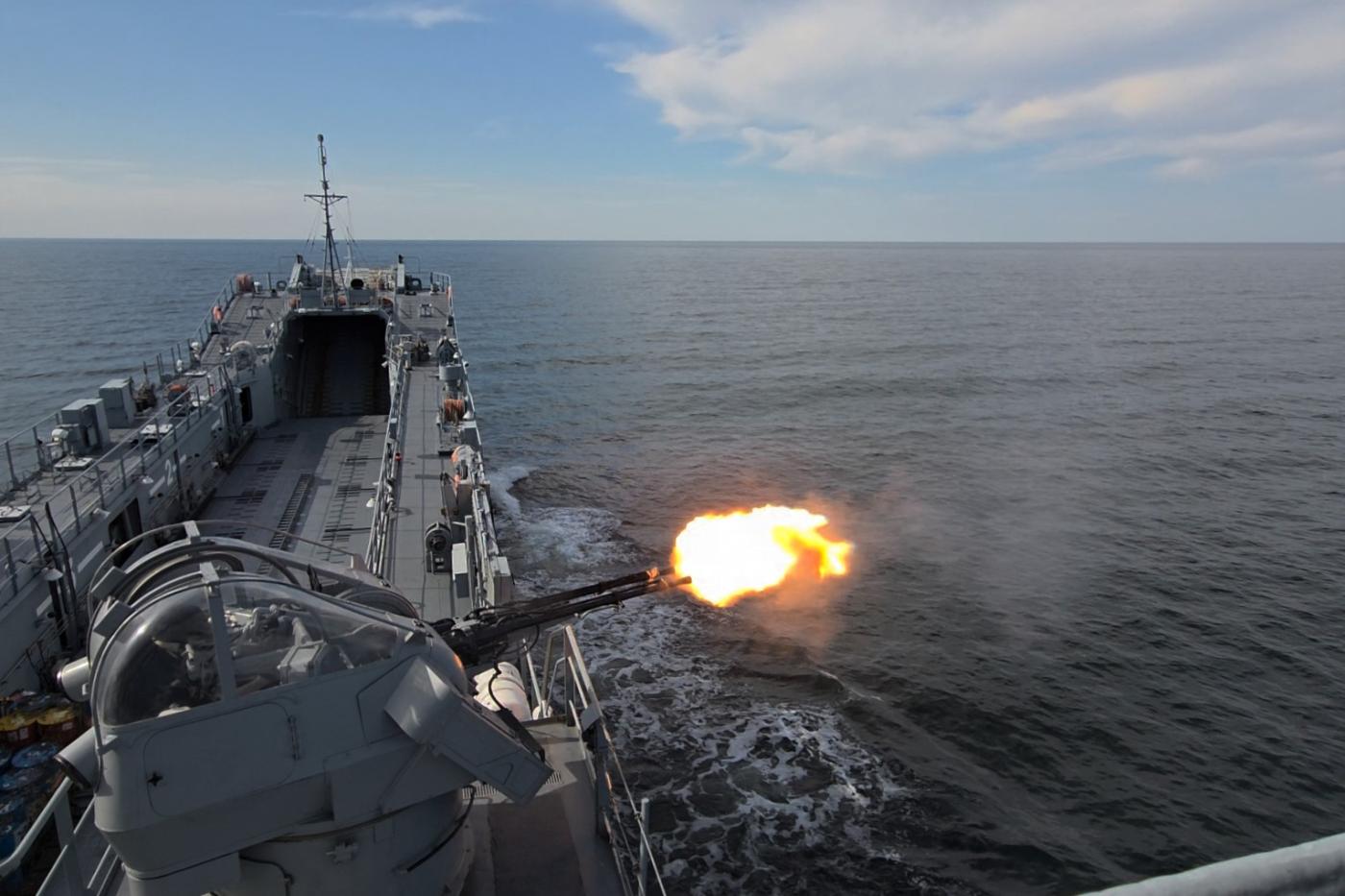
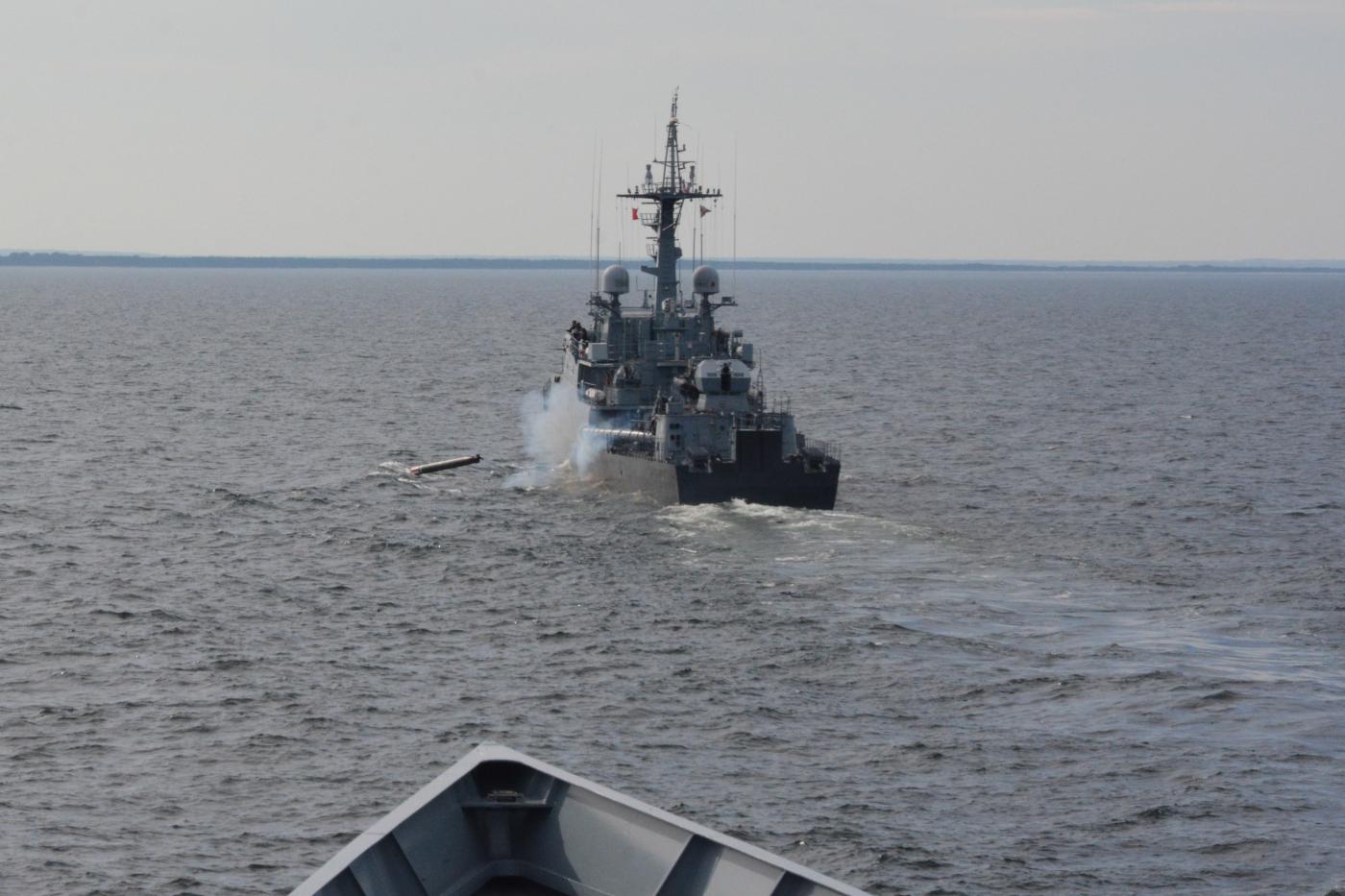
Naval crews are conducting live torpedo and artillery firings, air defense drills, strategic sealift protection, mine countermeasure operations, and search and rescue actions, as well as responses to asymmetric threats and chemical incidents.
Protecting sea lines of communication
A key focus of Fearless Shark-25 is the protection of sea lines of communication (SLOCs) and the prevention of maritime blockades. Disruptions in seaborne trade – whether energy, industrial inputs, or consumer goods – directly impact national economies.
The Baltic Sea hosts around 3,000 vessels daily. Polish ports handle nearly 140 million tons of cargo annually, including crude oil and LNG. Customs duties, excise, and tax revenues from port operations account for up to 10% of the national budget.
With LNG terminals, oil terminals, pipelines, subsea power and telecom cables, and future offshore wind farms, the Baltic has become a linchpin for Poland’s and the region’s energy and economic security. Safeguarding this infrastructure against potential sabotage is increasingly integrated into NATO and Polish naval training.
Part of Iron Defender-25
Fearless Shark-25 represents the maritime component of Iron Defender-25, involving around 30,000 troops from the Polish Armed Forces and NATO allies, supported by about 600 military assets.
The federation’s overarching goal is to test interoperability in a multi-domain environment and demonstrate credible deterrence. At sea, this translates into maintaining maritime dominance, protecting critical infrastructure, and ensuring uninterrupted trade and energy supply routes.
Buy us a coffee, and we’ll invest in great maritime journalism! Support Gazeta Morska and help us sail forward – click here!
Kamil Kusier
redaktor naczelny
gallery

comments
Add the first comment
see also
Strait of Hormuz at a strategic crossroads: sinking of IRIS Dena and implications for maritime transport
The submarine contract of the decade? Canada weighs South Korea against Germany
When two powers clash, Poland must be ready to act. Military security must be the priority
Commodore Przemysław Karaś appointed deputy commander of the Maritime Operations Centre - Naval Component Command
Radmor hosts delegation from the Republic of Turkey. Advancing maritime security cooperation
French Navy expands global operations from the Pacific to the Red Sea
"Let everyone know we will prevail". Poland’s armed forces set strategic course for 2026-2039
“Army 500” and strategic transformation: Poland sets the course for long-term deterrence and allied readiness
Medical evacuation from offshore vessel in the Baltic. Rescue 511 helicopter and m/s Huragan deployed
Karol Nawrocki: “The strength of the republic lies in its armed forces”. Security requires national unity
ADVERTISEMENT
ADVERTISEMENT