NATO navies conduct training in anti-submarine warfare in the Baltic Sea
Allied forces from across NATO participated in the anti-submarine warfare exercises called Merlin 2024, which took place in the Baltic Sea in November.
security aviation navy worldwide nato defense industry equipment and technology news19 november 2024 | 18:00 | Source: NATO / Gazeta Morska | Prepared by: Bartosz Piątek | Print
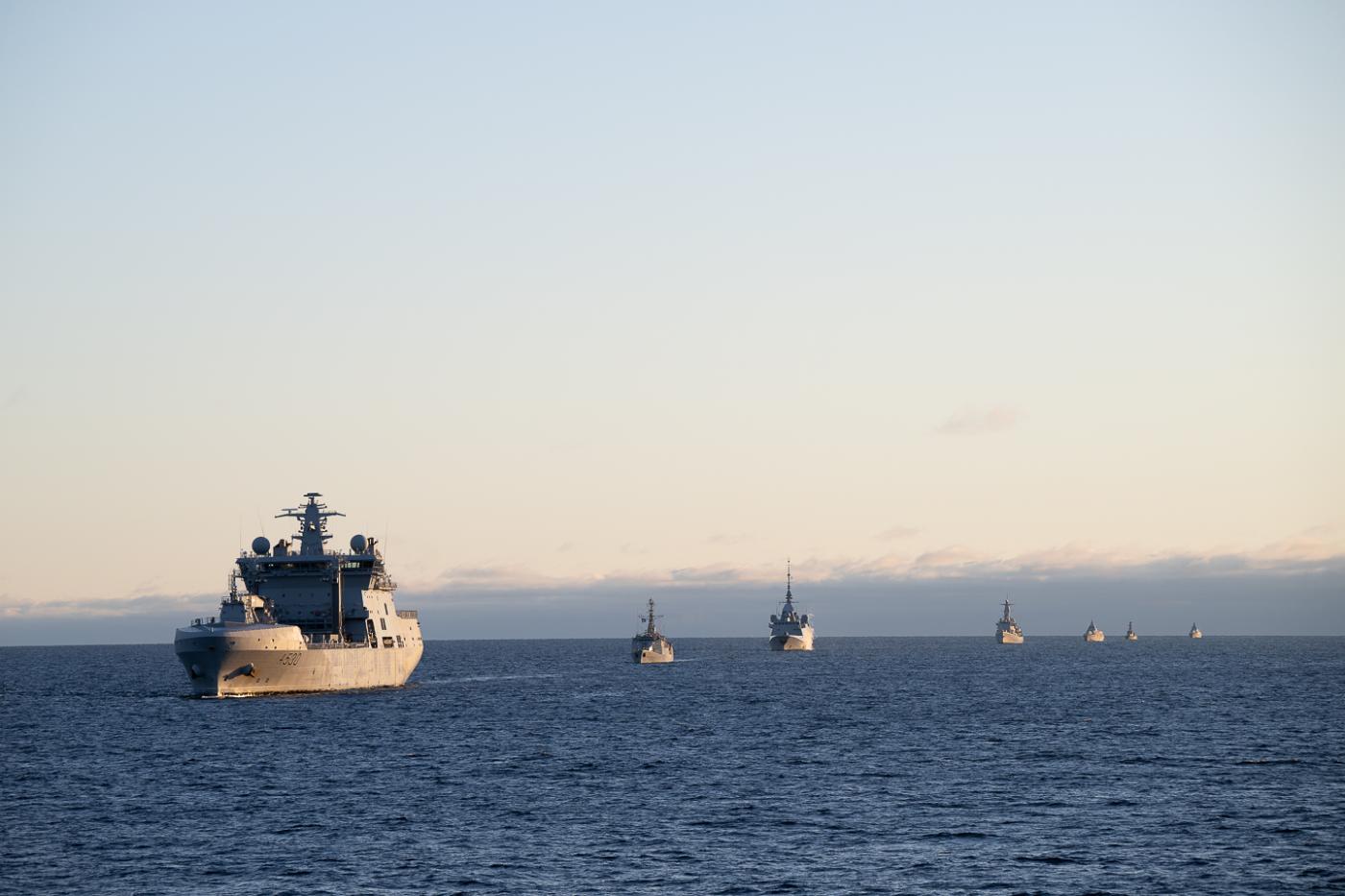
fot. NATO Maritime Command
NATO exercise Merlin 2024 in the Baltic Sea
The NATO-led training exercise involved naval and air units from Belgium, Denmark, France, Germany, the Netherlands, Portugal, Norway, Sweden, the United Kingdom, and the United States.
Merlin 2024 encompassed the full spectrum of maritime assets, including surface ships, submarines, and maritime patrol aircraft. The exercise allowed NATO navies to enhance key skills in anti-submarine warfare, surface operations, and aerial maneuvers related to maritime patrols. The objective was to increase situational awareness in the maritime domain and track enemy submarines.
- Thanks to the involvement of multiple platforms across all three domains, participating units confirmed their operational skills at the highest level - said the commander of SNMG1, Commodore Thomas Stig Rasmussen of the Danish Navy. - Anti-submarine warfare is a challenging field, but through regular exercises like Merlin 2024, NATO forces maintain capabilities at the highest level throughout the year. These exercises also highlight the Alliance's ability and readiness to act together, responding to threats from all directions - he added.
The benefits of Merlin 2024 stem from high-level training and the interoperability of NATO navies. Training with real submarines, combined with regular maritime exercises, strengthens cooperation among allied navies. Maintaining a wide range of NATO's interoperable military capabilities at a high level of readiness is a key element in the Alliance's defense.
- The Baltic Sea is a demanding operational environment. The local knowledge of our regional allies contributes to success, and practicing command and control ensures the effective use of resources - said Commodore Rasmussen. - Joint training in Swedish waters gives allies an important opportunity to increase interoperability, which is key to success in real-world operations. Our new allies, Sweden and Finland, have changed the way NATO approaches maritime security in the region - he emphasized.
The exercise was led by NATO's Maritime Command (MARCOM) and marked the first maritime training under the tactical command of the Baltic Task Force (CTF Baltic). The new multinational headquarters of CTF Baltic is a German national center with the capacity to carry out NATO tasks.
- During Merlin 2024, our entirely new personnel worked directly for the commander of NATO's Maritime Command (MARCOM) for the first time - said Rear Admiral Stephan Haisch, commander of the Baltic Task Force. - This is another milestone for us. The goal of Merlin is to train allied command and control structures in the Baltic Sea region. We are pleased to contribute with our capabilities and experience - he emphasized.
NATO's Maritime Command (MARCOM) is the central command entity for all NATO maritime forces, and the MARCOM commander serves as the Alliance's principal naval advisor.
Bartosz Piątek
redaktor
comments
Add the first comment
see also
Strait of Hormuz at a strategic crossroads: sinking of IRIS Dena and implications for maritime transport
The submarine contract of the decade? Canada weighs South Korea against Germany
When two powers clash, Poland must be ready to act. Military security must be the priority
Commodore Przemysław Karaś appointed deputy commander of the Maritime Operations Centre - Naval Component Command
Radmor hosts delegation from the Republic of Turkey. Advancing maritime security cooperation
French Navy expands global operations from the Pacific to the Red Sea
"Let everyone know we will prevail". Poland’s armed forces set strategic course for 2026-2039
“Army 500” and strategic transformation: Poland sets the course for long-term deterrence and allied readiness
Medical evacuation from offshore vessel in the Baltic. Rescue 511 helicopter and m/s Huragan deployed
Karol Nawrocki: “The strength of the republic lies in its armed forces”. Security requires national unity
ADVERTISEMENT
ADVERTISEMENT