









Naftoport expansion in Gdańsk enters execution phase. Strategic boost to Poland’s energy security
Poland’s accelerated investment cycle in the energy sector is entering a decisive phase as construction begins on the expansion of Naftoport in Gdańsk - one of the most critical elements of the country’s energy infrastructure and a key asset in the Baltic region. The project centers on the development of a new unloading berth, designated "W", which will significantly enhance the terminal’s operational capacity and reinforce the security of crude oil and fuel supplies.
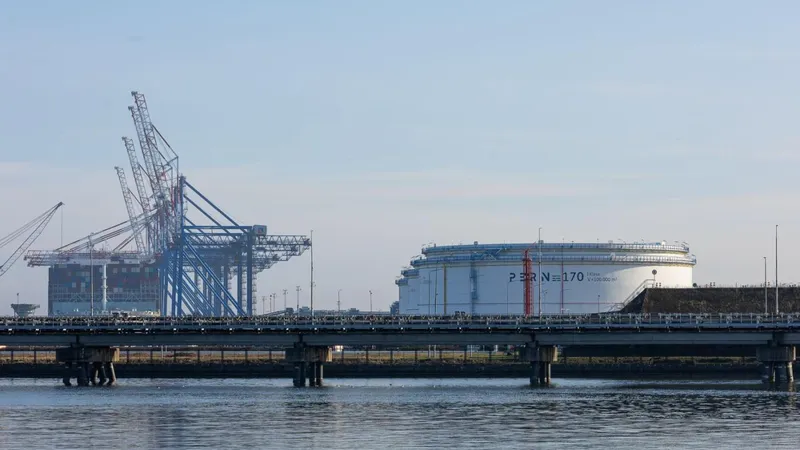
In brief
The expansion of Naftoport in Gdańsk has begun with the construction of handling berth W, worth around PLN 500 million and carried out with the Port of Gdańsk Authority. The new berth will provide around 9 million tonnes of handling per year, raise the terminal's throughput to 49 million tonnes per year and enable the handling of VLCC tankers over 300 metres long. In 2025, Naftoport received 37.4 million tonnes of crude oil, with 38 million tonnes handled in total and 463 vessels served. The building permit was obtained in May 2025, and completion is scheduled for the second half of 2028.
The investment is being implemented in cooperation with the Port of Gdańsk Authority and reflects both increasing market demand and the need to strengthen resilience against disruptions in global supply chains.
Pomerania emerging as a regional energy hub
The Naftoport expansion forms part of a broader transformation of Poland’s Pomeranian region into a major energy investment hub in Central and Eastern Europe. Parallel projects include the development of a nuclear power plant, offshore wind farms, and large-scale energy storage systems.
- Pomerania is becoming one of the key centers for energy investments. A nuclear power plant is under development, offshore wind farms are expanding, and large-scale energy storage is being deployed. At the same time, we are expanding Naftoport, strengthening fuel supply security and the resilience of the distribution system. This strategic decision will increase the terminal’s capacity by nearly 20%. In the face of the most severe oil crisis in over 50 years, such investments significantly improve the preparedness and resilience of Poland’s energy sector, said Minister of Energy Miłosz Motyka.
Naftoport: a pillar of supply security
Naftoport, part of the PERN Group, serves as Poland’s primary maritime gateway for crude oil and petroleum product imports. The terminal supplies refineries in Gdańsk and Płock while also supporting deliveries to Central European markets.
In 2025, Naftoport achieved record operational performance:
- 37.4 million tonnes of crude oil received
- 38 million tonnes of total throughput
- 463 vessels handled
These figures underline the terminal’s growing role as a cornerstone of stable energy supply for both Poland and the wider region.
- Naftoport is a key gateway for crude and fuel imports, enabling the Polish economy to function securely—even under highly challenging conditions. This infrastructure already serves the country effectively, and its further expansion is an investment in security, jobs, and regional development. It confirms that energy security remains our top priority, emphasized Wojciech Wrochna, Government Plenipotentiary for Strategic Energy Infrastructure.
Berth “W”: capacity, flexibility, and future readiness
The new “W” berth is the central component of the project, with an estimated value of approximately PLN 500 million. Once completed, it will significantly enhance terminal capabilities:
- handling capacity of approx. 9 million tonnes per year
- increase in total terminal throughput to 49 million tonnes annually
- simultaneous handling of up to four large tankers
- capability to accommodate VLCC-class vessels (over 300 meters in length)
The development will also increase flexibility in handling various crude grades and prepare the terminal for future fuels such as ammonia and methanol.
An important operational advantage will be the ability to carry out modernization works on existing infrastructure without interrupting terminal operations—enhancing overall system reliability.
Strengthening energy system resilience
The project directly contributes to Poland’s energy sovereignty by:
- ensuring full independence in seaborne crude oil imports
- increasing resilience to geopolitical disruptions
- enabling further diversification of supply sources
- supporting NATO and EU objectives related to critical infrastructure and regional energy security
Against the backdrop of ongoing geopolitical instability, the expansion represents a concrete step toward securing long-term supply stability.
Economic impact and regional development
Beyond energy security, the project is expected to deliver tangible economic benefits:
- job creation in construction and marine engineering sectors
- increased tax revenues and port fees
- new contracts for local and international contractors
- enhanced competitiveness of the Port of Gdańsk in the European market
The scope of works includes the construction of a new jetty, cargo handling installations, pipeline racks, and advanced environmental protection systems.
Timeline and strategic outlook
The construction permit was obtained in May 2025, and the EPC contract was signed in November 2025. Project completion is scheduled for the second half of 2028.
The “W” berth development exemplifies a modern infrastructure project that integrates energy security, economic growth, and sectoral transformation. Upon completion, it will further strengthen Gdańsk’s position as a leading energy hub in the Baltic Sea region and reinforce Poland’s role as a reliable and resilient partner in the European energy market.
Source: Gazeta Morska · Compiled by: Kamil Kusier
Related articles
 Energy and offshore Equinor takes over Bałtyk 2 and 3 O&M base in Łeba. Port to serve 1.44 GW of offshore wind for 30 years
 Navy and defence Port Gdański Eksploatacja secures NATO NCAGE code. Gdańsk port company lines up for defence tenders
 Shipbuilding industry Ex-Enterprise towed to Mobile under $418.5m contract. Test case for Nimitz-class disposal begins
 Energy and offshore Energa renames Gdańsk gas plant company as foundations for 6,000-tonne turbine and boiler are laid
 Equipment and technology WB Group takes Polish drones from Tokyo to SOFEX in Jordan in a single week
 Ports and logistics PGE books Gdańsk’s T5 terminal for the long haul: Baltica 2 first, then more offshore wind farms
Comments (0)
The discussion is moderated by the editors: a comment appears after review. Your e-mail address is not published.
Nobody has commented on this article yet.