









Modernisation vs Modification - Marcin Ryngwelski on Polish Navy Upgrades
In the world of naval shipbuilding, not all upgrades are created equal. While the terms modernisation and modification may sound interchangeable, in practice they involve different objectives, scopes of work, and—critically—different contracting authorities within the Polish Ministry of National Defence (MON).
In brief
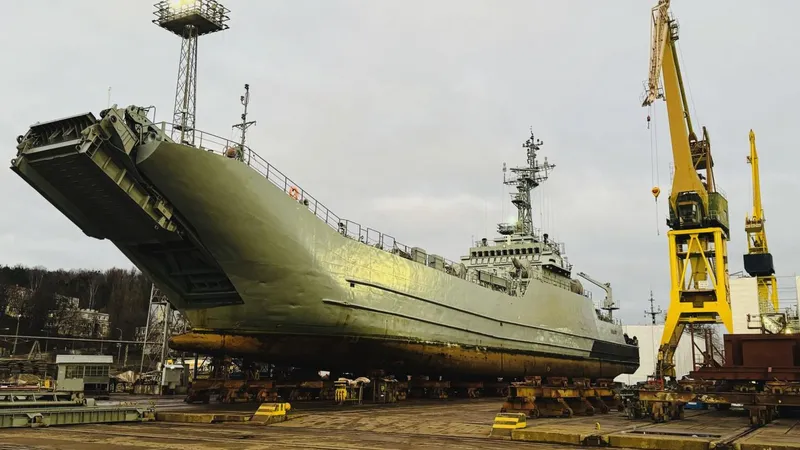
Marcin Ryngwelski, president of PGZ Stocznia Wojenna, explained that ship modernisations are commissioned by the Armament Agency in Warsaw through the Naval Technology Directorate, while modifications are commissioned by the Support Inspectorate in Bydgoszcz. The modification of the ORKAN class vessels, combined with a major and docking repair, covered a change of the propulsion system from three engines to two, replacement of post-Soviet engines and modernisation of electrical installations and IT networks. The planned modernisation of ORP Ślązak, prepared by the Armament Agency, is to include anti-aircraft launchers and an electronic warfare system.
- Modernisation projects are commissioned by the Armament Agency in Warsaw, via the Naval Technology Directorate. Modifications, on the other hand, are handled by the Support Inspectorate in Bydgoszcz, explains Marcin Ryngwelski, President of PGZ Naval Shipyard (PGZ Stocznia Wojenna).
While both types of work may target the same class of naval vessels, the overseeing entities, funding lines, and technical deliverables are distinct.
- For example, modification of the ORKAN-class fast attack craft is under the Support Inspectorate. Potential modernisation of ORP Ślązak falls under the Armament Agency, adds Ryngwelski.
ORKAN vs Ślązak – Two Ships, Two Strategies
A current example of modification is underway on ORKAN-class vessels, where PGZ Naval Shipyard is executing a scope contracted via the Naval Port Command. The effort has been integrated with scheduled dry-dock and major overhauls. Key deliverables include:
- Reconfiguring the propulsion system from three to two engines
- Replacing obsolete Soviet-era diesel engines with new-generation units
- Overhauling electrical infrastructure and IT networks
Interestingly, the ships were originally intended to undergo full-scale modernisation—including a replacement of the integrated combat management system.
- Due to budgetary constraints, the task was reassigned from the former Armament Inspectorate to the Support Inspectorate, Ryngwelski notes. The change in mandate significantly narrowed the scope and funding available for the shipyard.
Meanwhile, ORP Ślązak is expected to undergo a true modernisation—pending final approval and launch by the Armament Agency. Planned upgrades include:
- Acquisition and installation of surface-to-air missile launchers
- Integration of next-generation electronic warfare systems
- Installation of anti-surface and land-attack weapons
Lifecycle Support – An International Standard
- It’s standard practice worldwide that the shipyard responsible for building a naval vessel continues to service, modify, and modernise it throughout its lifecycle—until decommissioning, says Ryngwelski.
This approach ensures technical continuity, reduces integration risks, and leverages the shipbuilder’s familiarity with the platform—especially in complex naval environments where interoperability and system-level reliability are non-negotiable.
Source: Gazeta Morska · Compiled by: Kamil Kusier
Related articles
 Shipbuilding industry Poland christens ro-pax ferry Bursztyn Unity in Szczecin on Independence Day. Ystad service starts 18 November
 Energy and offshore Orlen Neptun deploys V-LiDAR buoys at Baltic West ahead of Poland's 2027 offshore wind auction
 Energy and offshore Equinor takes over Bałtyk 2 and 3 O&M base in Łeba. Port to serve 1.44 GW of offshore wind for 30 years
 Navy and defence Port Gdański Eksploatacja secures NATO NCAGE code. Gdańsk port company lines up for defence tenders
 Shipbuilding industry Ex-Enterprise towed to Mobile under $418.5m contract. Test case for Nimitz-class disposal begins
 Energy and offshore Energa renames Gdańsk gas plant company as foundations for 6,000-tonne turbine and boiler are laid
Comments (0)
The discussion is moderated by the editors: a comment appears after review. Your e-mail address is not published.
Nobody has commented on this article yet.