









Modern arctic units for the Canadian Coast Guard
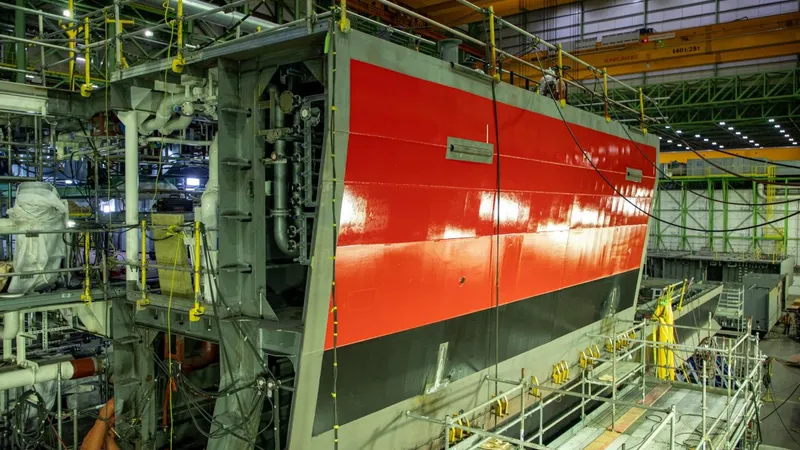
The Canadian coast guard (CCG) is strengthening its fleet with modern arctic and offshore patrol ships (AOPS), currently under construction at Irving Shipbuilding Inc. in Halifax, Nova Scotia. The first vessel, built under the national shipbuilding strategy, is entering a crucial phase of construction, heralding a new era in maritime operations in arctic and coastal waters.
In brief
The Canadian Coast Guard is strengthening its fleet with Arctic and Offshore Patrol Ships (AOPS) built at the Irving Shipbuilding Inc. shipyard in Halifax, Nova Scotia. The vessels are designed for icebreaking, scientific research, humanitarian assistance and servicing navigation systems, with a reinforced hull structure for operations in Arctic conditions. Construction of the AOPS is part of the National Shipbuilding Strategy fleet modernisation programme. The first ship of the class, HMCS Harry DeWolf, has already entered service with the Royal Canadian Navy, while Margaret Brooke, Max Bernays and William Hall are under construction or in planning.
The new vessels are designed with versatility and flexibility in mind, enabling them to perform a wide range of tasks – from icebreaking and scientific research to humanitarian assistance and navigation system maintenance. With state-of-the-art technologies and reinforced hull construction, the ships will be capable of operating in harsh arctic conditions, enhancing the reach and effectiveness of the Canadian coast guard's operations.
The AOPS construction is part of a broader fleet modernization program under the national shipbuilding strategy, aimed at enhancing CCG's operational capabilities and supporting Canada's shipbuilding industry. The first vessel of this class, HMCS Harry DeWolf, has already entered service with the Royal Canadian Navy, while subsequent units – Margaret Brooke, Max Bernays, and William Hall – are in various stages of construction or planning.
The introduction of these new vessels is crucial for maintaining Canada's presence in the far north and protecting the marine environment in the face of ongoing climate change. The new patrol ships will enable CCG to respond more effectively to threats, conduct scientific research, and support communities living in arctic regions.
The modern arctic units represent a significant step in building a future fleet capable of meeting the growing challenges related to maritime security and environmental protection in Canadian waters.
Source: Gazeta Morska · Compiled by: Kamil Kusier
Related articles
 Energy and offshore Equinor takes over Bałtyk 2 and 3 O&M base in Łeba. Port to serve 1.44 GW of offshore wind for 30 years
 Navy and defence Port Gdański Eksploatacja secures NATO NCAGE code. Gdańsk port company lines up for defence tenders
 Shipbuilding industry Ex-Enterprise towed to Mobile under $418.5m contract. Test case for Nimitz-class disposal begins
 Energy and offshore Energa renames Gdańsk gas plant company as foundations for 6,000-tonne turbine and boiler are laid
 Equipment and technology WB Group takes Polish drones from Tokyo to SOFEX in Jordan in a single week
 Ports and logistics PGE books Gdańsk’s T5 terminal for the long haul: Baltica 2 first, then more offshore wind farms
Comments (0)
The discussion is moderated by the editors: a comment appears after review. Your e-mail address is not published.
Nobody has commented on this article yet.