Maersk christens dual-fuel container ship "Adrian Mærsk" in Rotterdam - a step towards sustainable shipping
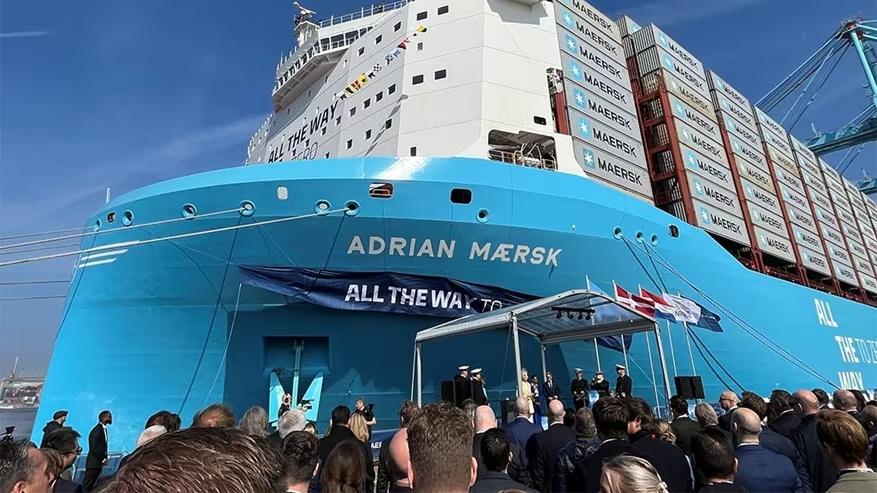
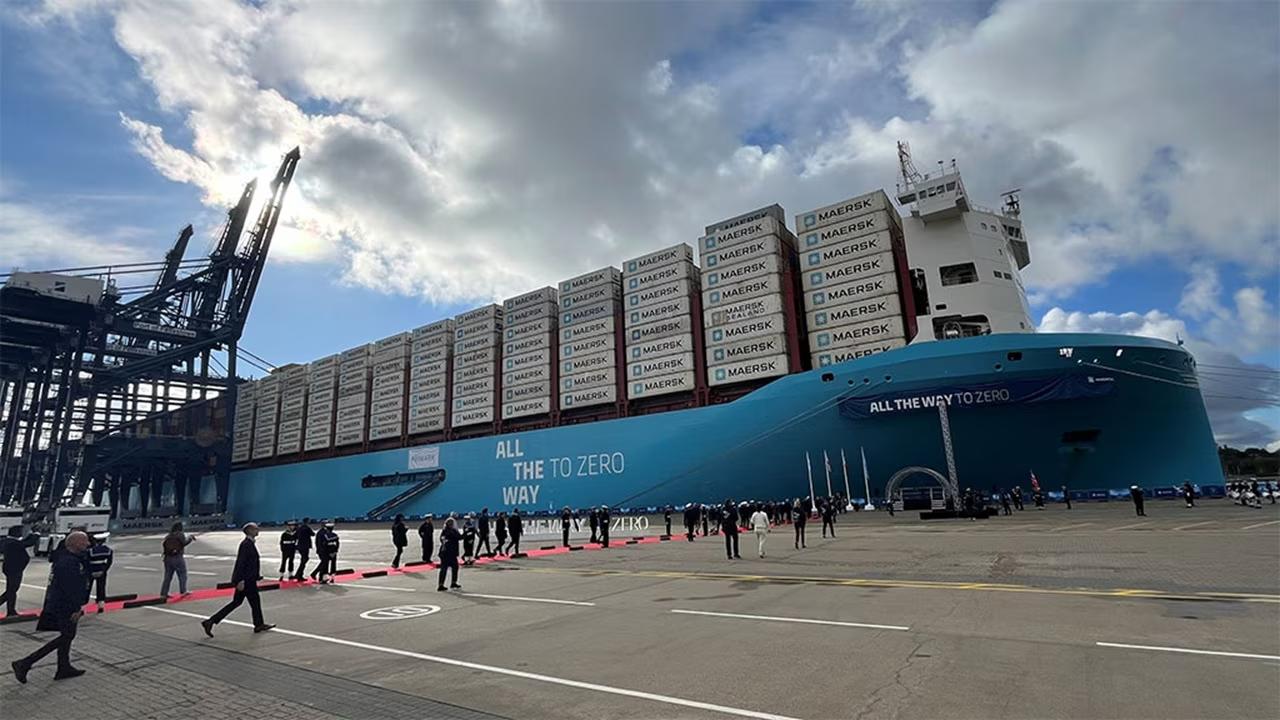
Maersk has officially christened the modern dual-fuel container vessel ‘Adrian Mærsk’ at the APM Terminals Maasvlakte II in Rotterdam. The vessel, with a capacity exceeding 16,000 TEU (twenty-foot equivalent unit), is a crucial part of Maersk’s decarbonization strategy for maritime transport. Stephanie Pullings Hart, executive vice president and chief operations officer (COO) of Nestlé, one of Maersk’s key partners in sustainable shipping, was named the ship’s godmother.
business maritime economy logistics ports shipbuilding industry transport and forwarding news29 march 2025 | 14:58 | Source: Gazeta Morska | Prepared by: Kamil Kusier | Print
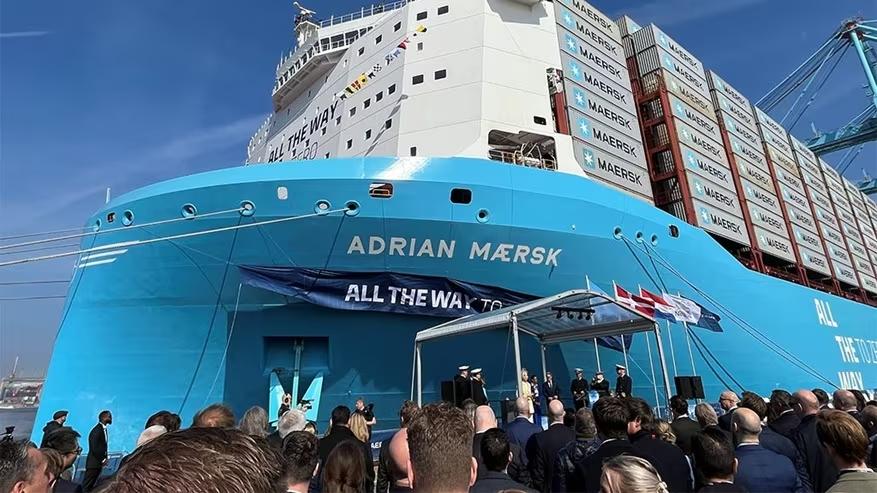
fot. Maersk
Dual-fuel technology and sustainable maritime transport
Nestlé, in line with its carbon reduction goals, ships 100% of its cargo via Maersk under the ECO Delivery Ocean program. This initiative utilizes alternative fuels, reducing greenhouse gas (GHG) emissions by over 80% compared to conventional fossil-based fuels.
- Dual-fuel vessels demonstrate that the technology for the energy transition in shipping is already available. The key now is the decisions to be made by the International Maritime Organization (IMO) in London next month. We urgently need regulations that support the adoption of fuels that significantly cut GHG emissions. At the same time, ambitious customers like Nestlé play a pivotal role in driving the green transformation of the shipping and logistics sectors, said Karsten Kildahl, chief commercial officer (CCO) of Maersk.
Following its maiden voyage from Rotterdam, ‘Adrian Mærsk’ will serve the Asia-Mediterranean trade route. It will be integrated into Maersk’s new east-west network, which aims to achieve schedule reliability above 90%.
Nestlé and Maersk – a partnership for zero-emission logistics
- At Nestlé, we recognize climate change as one of the greatest challenges of our time. As a global leader in the food and beverage industry, we are committed to taking decisive action to combat it. We have already achieved a 20% reduction in greenhouse gas emissions by 2024, ahead of our 2025 target, and our ambition is to reach net zero by 2050. Our green logistics efforts, including our partnership with Maersk, demonstrate our commitment to a sustainable future, emphasized Stephanie Pullings Hart, COO of Nestlé.
Bio- and e-methanol – the future of green shipping
Dual-fuel vessels are a central component of Maersk’s decarbonization roadmap. The use of bio- and e-methanol can reduce greenhouse gas emissions by 65-90%, depending on feedstock and production processes. Additionally, Maersk is set to deploy dual-fuel liquefied methane (LNG) vessels, with the aim of transitioning to bio- or e-methane as soon as feasible.
The future of maritime shipping lies in zero-emission technologies and sustainable fuel alternatives. Maersk, in collaboration with partners like Nestlé, is playing a leading role in this transformation, pushing the industry towards climate neutrality.
Buy us a coffee, and we’ll invest in great maritime journalism! Support Gazeta Morska and help us sail forward – click here!
Kamil Kusier
redaktor naczelny
gallery
comments
Add the first comment
see also
Navantia and Fincantieri deepen cooperation on the european patrol corvette programme
Galeon Yachts and Meyer Shank Racing: merging luxury yachts with motorsport expertise
Unmanned systems and naval firepower modules. WB Group showcases integrated capabilities at Enforce Tac 2026
Swedish ports record lowest ship calls in 18 years. Implications for the maritime sector
February in Szczecin’s shiprepair sector. Ice, overhauls and North Sea expansion
Advanced ROV trials conducted at CTO to validate subsea technologies for offshore applications
University of Gdańsk and PGZ Naval Shipyard join forces for innovation and security
Stadt Naval to deliver electric propulsion system for Polish rescue vessel Ratownik
Gdańsk port’s Basen Górniczy to gain modern port infrastructure
First month of Jantar Unity operations. Polsca ferry paves the way for Batory program units
ADVERTISEMENT
ADVERTISEMENT