Royal Navy fliers train in Norwegian fjords ahead of key Pacific mission
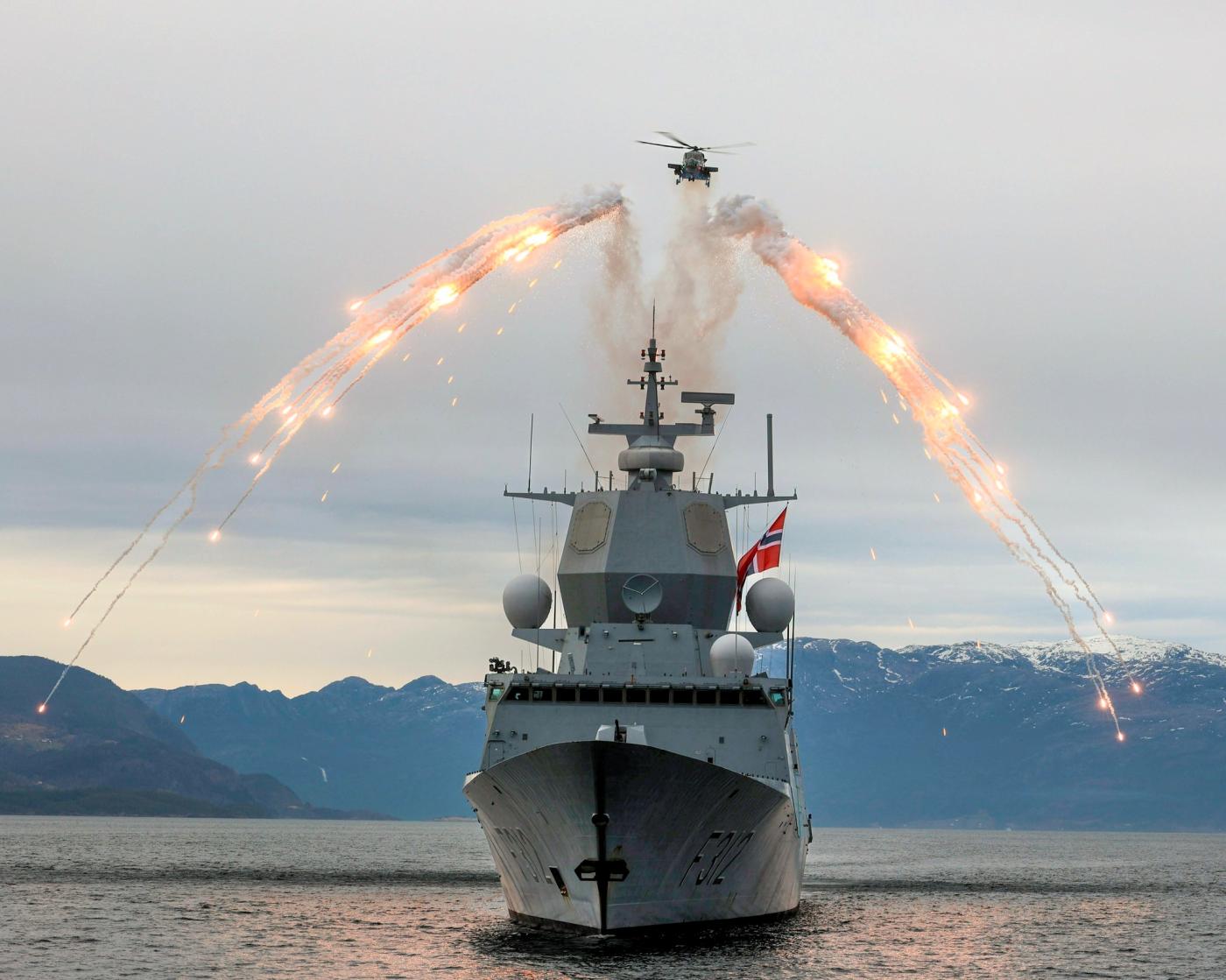
Personnel from 815 naval air squadron (815 NAS) of the Royal Navy are undergoing intensive preparations for the UK's most significant maritime operation of 2025. As part of these preparations, pilots and ground crew are training aboard the Norwegian warship HNoMS Otto Sverdrup before deploying next month on its sister frigate, HNoMS Roald Amundsen. The Norwegian vessel will form part of the international escort supporting the aircraft carrier HMS Prince of Wales during an eight-month mission in the western Pacific, aimed at strengthening defence alliances and ensuring regional security and stability.
aviation navy nato news12 march 2025 | 11:10 | Source: Royal Navy / Gazeta Morska | Prepared by: Kamil Kusier | Print
fot. Royal Navy
Intensive training in demanding conditions
The British Wildcat helicopter crew, consisting of around ten personnel including pilots and engineers, typically operate from Royal Navy frigates and destroyers. To better prepare for service aboard the Norwegian vessel, the squadron members have undergone rigorous training both on land and at sea. They first trained at the Norwegian navy's training centre before participating in large-scale exercises in the waters off Bergen during Tamber Shield 2025.
As part of their training, the British personnel had to master emergency procedures using Norwegian equipment. They honed their disaster response skills, including the rapid and effective extraction of casualties (dummies) from the wreckage of a helicopter—simulated using two destroyed cars. They also conducted a fire suppression exercise, which required them to familiarise themselves with firefighting techniques employed by the Norwegian navy.
Norwegian methods in action
- The Norwegian firefighting equipment proved to be extremely effective, and our fire suppression methods impressed our Norwegian hosts—despite leaving everyone completely drenched in the process, recounted participants in the training.
Two Wildcat flights will rotate in supporting the Amundsen throughout its service with the HMS Prince of Wales carrier strike group. The first team will begin operations in the spring, with a second group replacing them in late summer. All personnel are trained to respond to emergencies such as fires and floods, just as they would aboard a British warship.
Norwegian training facilities, including mobile and partially flooded mock ship compartments, are nearly identical to those found at Royal Navy bases in Portsmouth and Plymouth. Damage control methods, such as driving wooden wedges into leaks and reinforcing them, are also familiar to British sailors.
- Because many aspects of the training—both theoretical and practical—are similar to our own, we quickly adapted to working with our Norwegian colleagues, said aircraft engineer Connor Miller. - My favourite part of the course was getting hands-on with the rescue equipment and using it to cut open the cars. It gave me a real appreciation of how difficult it is to access a vehicle in an emergency, but it was also a highly engaging experience.
Teamwork and Norwegian hospitality
Air engineering technician Matt "Godders" Godfrey was struck by Norwegian hospitality, from the stunning location of their naval training facilities in the fjords to the high standard of daily meals. With conscription an integral part of Norwegian life, even Michelin-starred chefs are called up, resulting in exceptional food quality within military bases.
- The Norwegian approach to training and service makes them a formidable ally, said Matt Godfrey. - Their familiarity with our procedures, built over previous Tamber Shield exercises, allowed for a swift start to operations.
Tamber Shield 2025 involves several hundred British and Norwegian sailors, multiple Royal Navy P2000 fast patrol boats, Norwegian missile boats, the Otto Sverdrup frigate, the supply ship HNoMS Maud, and several Wildcat helicopters. The exercises focus on missile defence drills, countering fast attack craft, torpedo operations, and executing these manoeuvres within the challenging confines of the Norwegian fjords. The tactics developed during these drills will benefit both navies, particularly in ensuring the defence of the HMS Prince of Wales carrier strike group during its Pacific mission.
Buy us a coffee, and we’ll invest in great maritime journalism! Support Gazeta Morska and help us sail forward – click here!
Kamil Kusier
redaktor naczelny
comments
Add the first comment
see also
"Let everyone know we will prevail". Poland’s armed forces set strategic course for 2026-2039
“Army 500” and strategic transformation: Poland sets the course for long-term deterrence and allied readiness
Medical evacuation from Danish-flagged vessel Skoven off Łeba. Joint SAR operation in the Baltic Sea
SAR medevac operation in the Baltic Sea: m/v Lone crew member airlifted to Słupsk hospital
Polish Navy conducts medical evacuation from Aura Seaways ferry in harsh Baltic conditions
Polish naval aviators conduct another medical evacuation operation in the Baltic Sea
NHV launches helicopter base in Gdańsk to support Baltic offshore wind sector
Medical evacuation from offshore installation in the Baltic Sea. First naval SAR mission of 2026
The capture of President Nicolás Maduro: how U.S. maritime operations triggered a geopolitical turning point
Kondor over the sea: Poland’s attempt to close the maritime situational awareness gap
ADVERTISEMENT
ADVERTISEMENT