









Klaipėda Port launches green hydrogen infrastructure. A first for the Baltic region
Klaipėda Port has taken a significant step toward becoming the first port in Lithuania and the Baltic Sea region to produce and supply green hydrogen for maritime, port, and land-based applications. With a construction permit already granted, building works on the facility are set to begin this June.
In brief
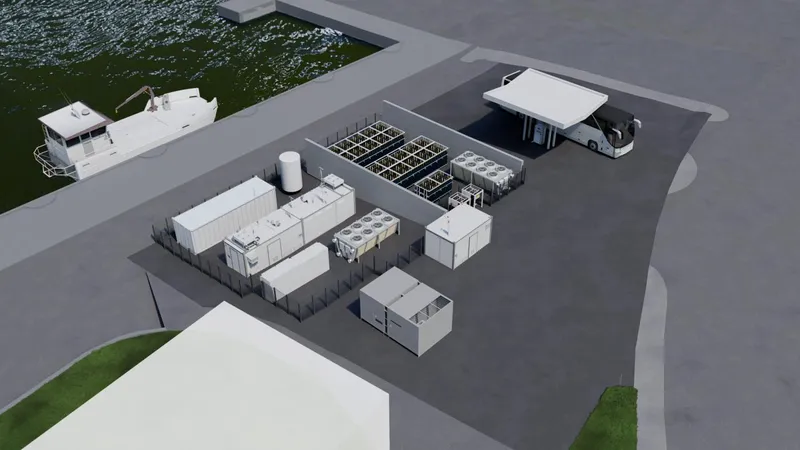
The Port of Klaipėda is building the first green hydrogen production and distribution station in Lithuania and the Baltic Sea region, with a building permit issued and works starting in June. The modular installation will be housed in a 40-foot container, the electrolysers will have a capacity of 2.25 MW, and annual output is to reach 127 tonnes of hydrogen for ships, port equipment and road transport. The investment budget is around 12 million euros, half of which comes from EU funds under 'Next Generation Lithuania'. Port director general Algis Latakas says production will start next year.
- The ambition to lead the region in green hydrogen is bold, but necessary, said Algis Latakas, Director General of the Klaipėda State Seaport Authority. - Klaipėda Port is taking the path of sustainability, and with this project, we are advancing both national and EU decarbonisation goals. We expect hydrogen production to begin next year, and construction of the first hydrogen-powered vessel is already underway.
The port authority is finalizing its construction tender, with site development scheduled to include installation and upgrades of engineering infrastructure—power supply, water and stormwater systems, hydrogen pipelines, and communications networks.
The hydrogen production system will be housed in a standard 40-foot sea container, with an estimated electricity requirement of 2.25 MW. The facility will supply green hydrogen not only to vessels and port machinery, but also to trucks, buses, and private vehicles.
Annual production is expected to reach 127 tonnes of hydrogen. Simultaneously, planning is ongoing for the fuel’s integration across port and transport operations.
In 2024, Klaipėda Port signed a memorandum of understanding with terminal operator Bega to explore hydrogen use in cargo-handling equipment. Another agreement, signed with Lithuania’s national rail group LTG, focuses on potential hydrogen use in rail transport and on building a broader supply chain, leveraging EU project participation and joint technical expertise.
The project is financed through the Lithuanian Recovery and Resilience Plan “Next Generation Lithuania,” part of the EU’s NextGenerationEU framework. Total investment is estimated at €12 million, with €6 million provided through EU funding.
This project positions Klaipėda as a frontrunner in the region’s maritime energy transition—laying the groundwork for a cleaner, hydrogen-based port economy.
Source: Gazeta Morska · Compiled by: Kamil Kusier
Related articles
 Energy and offshore Equinor takes over Bałtyk 2 and 3 O&M base in Łeba. Port to serve 1.44 GW of offshore wind for 30 years
 Navy and defence Port Gdański Eksploatacja secures NATO NCAGE code. Gdańsk port company lines up for defence tenders
 Shipbuilding industry Ex-Enterprise towed to Mobile under $418.5m contract. Test case for Nimitz-class disposal begins
 Energy and offshore Energa renames Gdańsk gas plant company as foundations for 6,000-tonne turbine and boiler are laid
 Equipment and technology WB Group takes Polish drones from Tokyo to SOFEX in Jordan in a single week
 Ports and logistics PGE books Gdańsk’s T5 terminal for the long haul: Baltica 2 first, then more offshore wind farms
Comments (0)
The discussion is moderated by the editors: a comment appears after review. Your e-mail address is not published.
Nobody has commented on this article yet.