









Ivory Coast deploys military to combat cocoa smuggling amid record prices and tight supply
In a bold effort to protect one of its most critical national assets, the government of Ivory Coast has launched a large-scale military operation to halt the illegal smuggling of cocoa—its top export and a vital source of state revenue. The operation, codenamed Operation Sluice 322, has already intercepted 600 tons of cocoa in just six months.
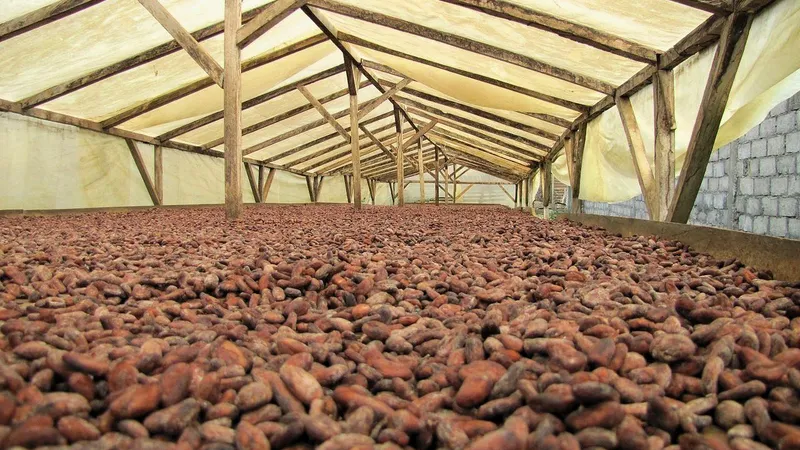
In brief
Côte d'Ivoire has deployed the military to fight cocoa smuggling, and in the ongoing operation "Śluza 322" 600 tonnes of beans were seized within six months. The anti-smuggling brigade, set up three years ago, has its headquarters in Danane, 20 kilometres from the border with Liberia, from where contraband goes to Guinea and then by sea to Europe and the United States. Côte d'Ivoire produces 2 million tonnes of cocoa a year, which provides more than a quarter of budget revenues, and this year's harvest will amount to about 1.85 million tonnes according to the International Cocoa Organization.
Armed checkpoints now dot the two main routes leading toward the borders with Guinea and Liberia. These roads, strategically located in the west of the country, are patrolled by a special brigade established three years ago specifically to combat cocoa smuggling. The troops, identifiable by their red berets, are stationed along roads known to be used by smugglers who exploit remote forest trails under the cover of night.
At the heart of the operation is the brigade’s headquarters in Danané, a town just 20 kilometers from the Liberian border. The A8 highway splits here—north toward Guinea and south along Liberia’s edge—creating a key junction for monitoring contraband routes. From these official roads, smugglers veer off into rugged tracks cut through dense forest, making their way across the porous frontier.
Roughly 50 kilometers east lies Man, the center of cocoa cultivation in Ivory Coast. The town is surrounded by hundreds of cocoa farms that blend almost indistinguishably into the surrounding rainforest. Yet Man is not only an agricultural hub—it’s also a hotspot for the cocoa smuggling trade.
Sergeant Kone, a member of the anti-smuggling unit, explained the scale and sophistication of the operation. He noted that smugglers often travel in convoys of five to ten motorbikes, each towing a trailer packed with sacks of cocoa. Larger shipments are moved by truck, with cargo transferred to smaller vehicles before reaching the border.
According to Kone, this is the peak season for smuggling. The urgency is tied to the impending rainy season, which will soon turn the already treacherous paths into muddy traps. The Cavally River, which traces 500 kilometers along the Liberian border, will swell from a shallow, narrow stream into a formidable natural barrier.
Trucks will struggle on the washed-out roads, Kone said, but lighter vehicles might still pass. As for the river, smugglers rely on local fishermen, who use traditional canoes to ferry the cocoa across. These fishermen can transport over a ton of beans per day and earn between $100 and $200 for their services—compensation not only for the labor but also for their silence.
Ivory Coast is the world’s largest cocoa producer, accounting for nearly half of global output with an annual yield of about 2 million tons. The government sets domestic prices—currently at $2.60 per kilogram—to protect farmers from market volatility. However, with global prices still exceeding $8 per kilogram even after recent drops, the financial incentive to smuggle cocoa abroad is significant.
This year’s harvest is expected to reach around 1.85 million tons, according to the International Cocoa Organization (ICCO), making border control a matter of national priority. Cocoa generates over a quarter of Ivory Coast’s public revenues, reinforcing its status not just as a commodity, but as a strategic asset—and a national treasure.
Source: PAP / Gazeta Morska · Compiled by: Tadeusz Brzozowski
Related articles
 Energy and offshore Equinor takes over Bałtyk 2 and 3 O&M base in Łeba. Port to serve 1.44 GW of offshore wind for 30 years
 Navy and defence Port Gdański Eksploatacja secures NATO NCAGE code. Gdańsk port company lines up for defence tenders
 Shipbuilding industry Ex-Enterprise towed to Mobile under $418.5m contract. Test case for Nimitz-class disposal begins
 Energy and offshore Energa renames Gdańsk gas plant company as foundations for 6,000-tonne turbine and boiler are laid
 Equipment and technology WB Group takes Polish drones from Tokyo to SOFEX in Jordan in a single week
 Ports and logistics PGE books Gdańsk’s T5 terminal for the long haul: Baltica 2 first, then more offshore wind farms
Comments (0)
The discussion is moderated by the editors: a comment appears after review. Your e-mail address is not published.
Nobody has commented on this article yet.