Hanwha Ocean launches first KSS-III Batch-II submarine. A new era for South Korea’s underwater fleet
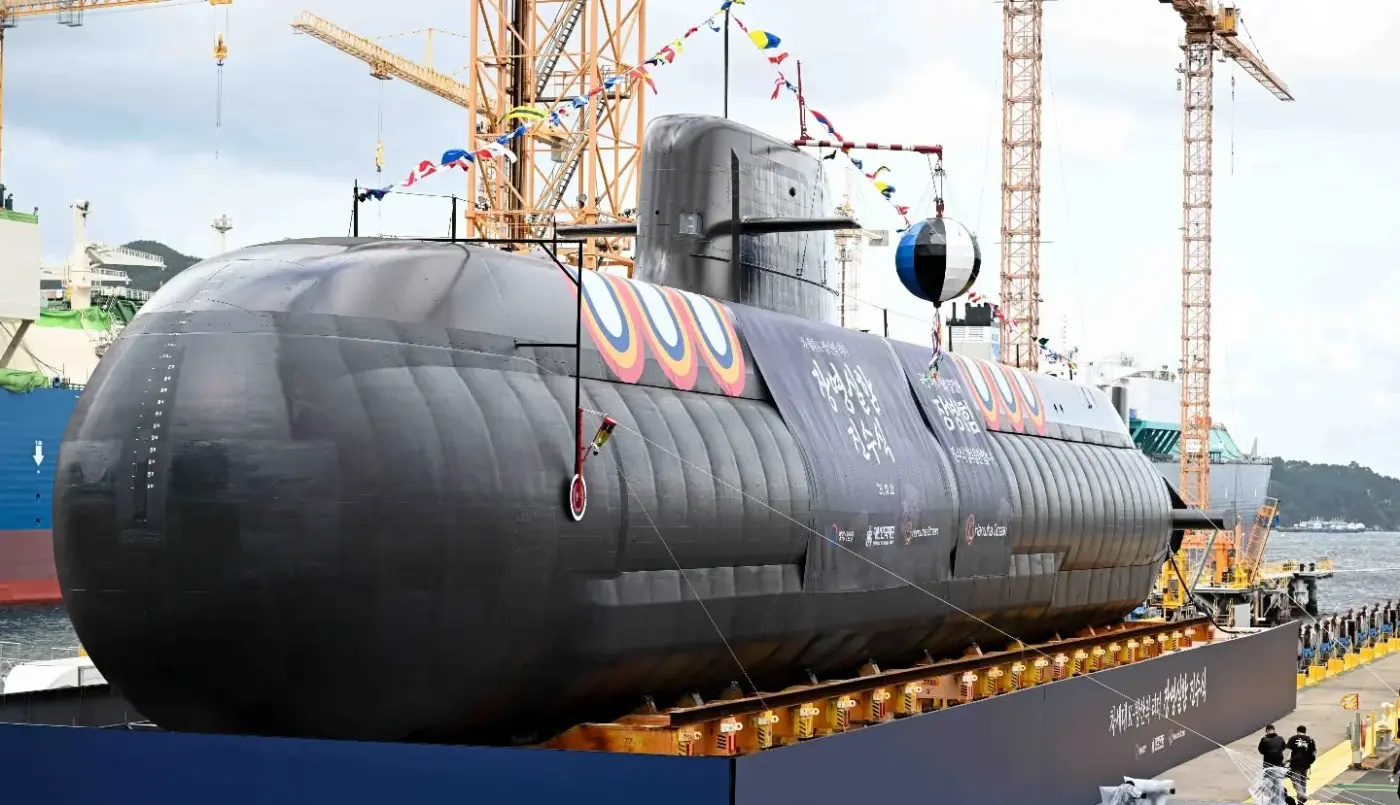
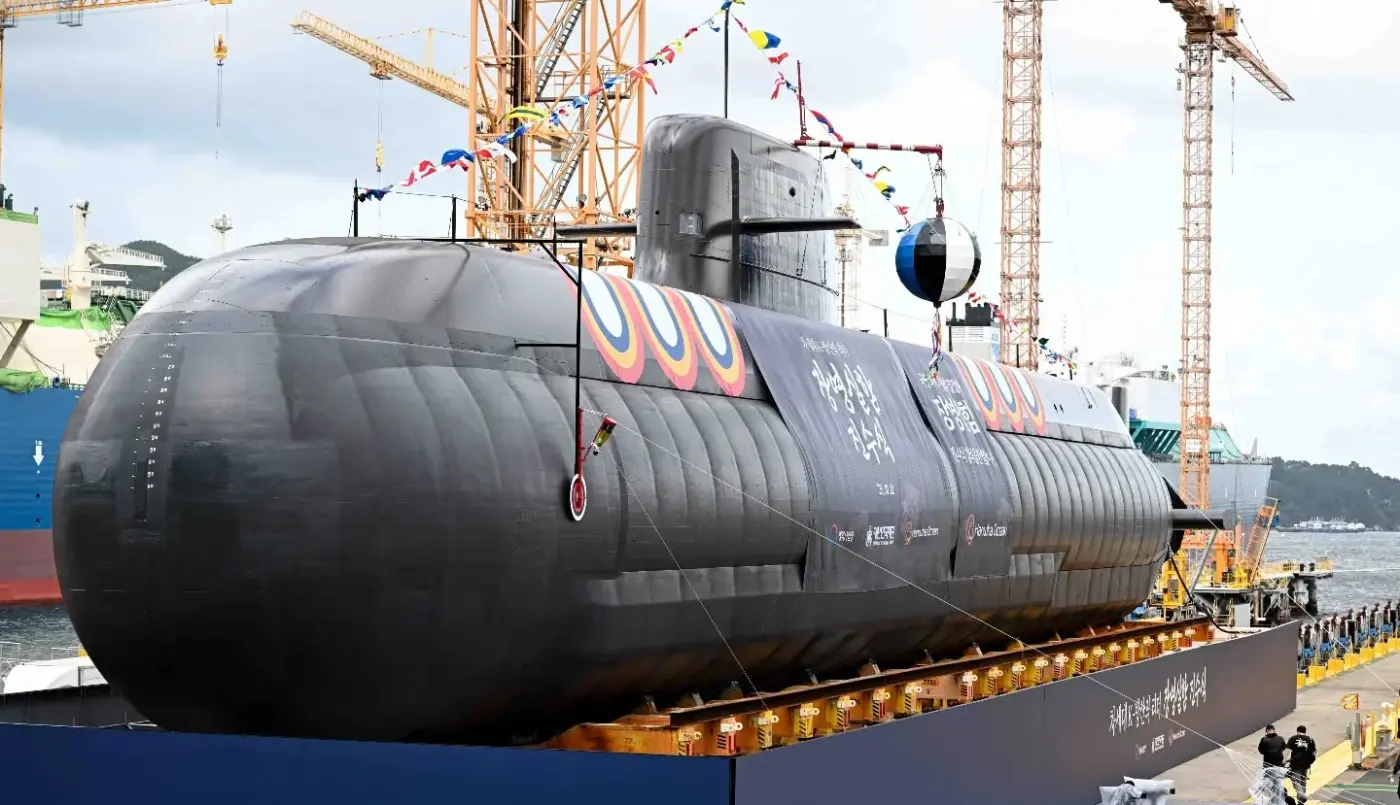
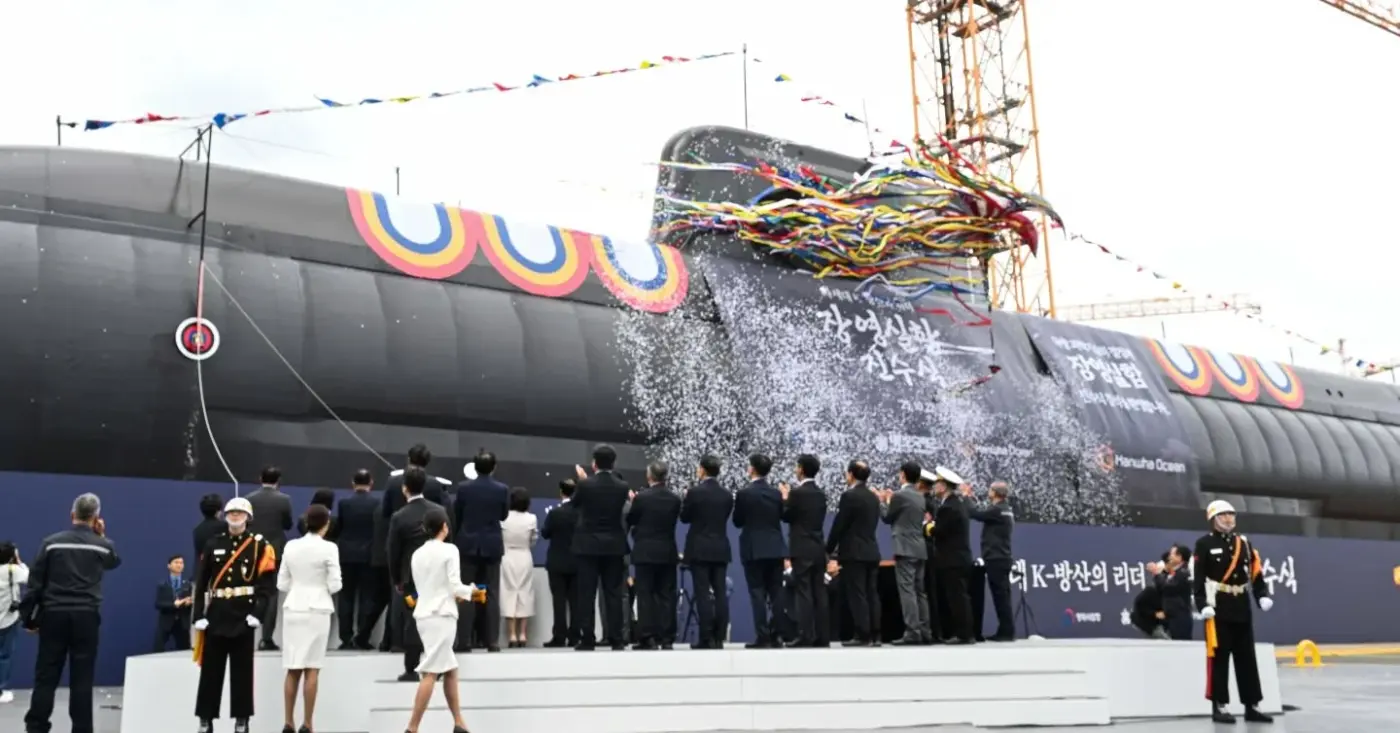
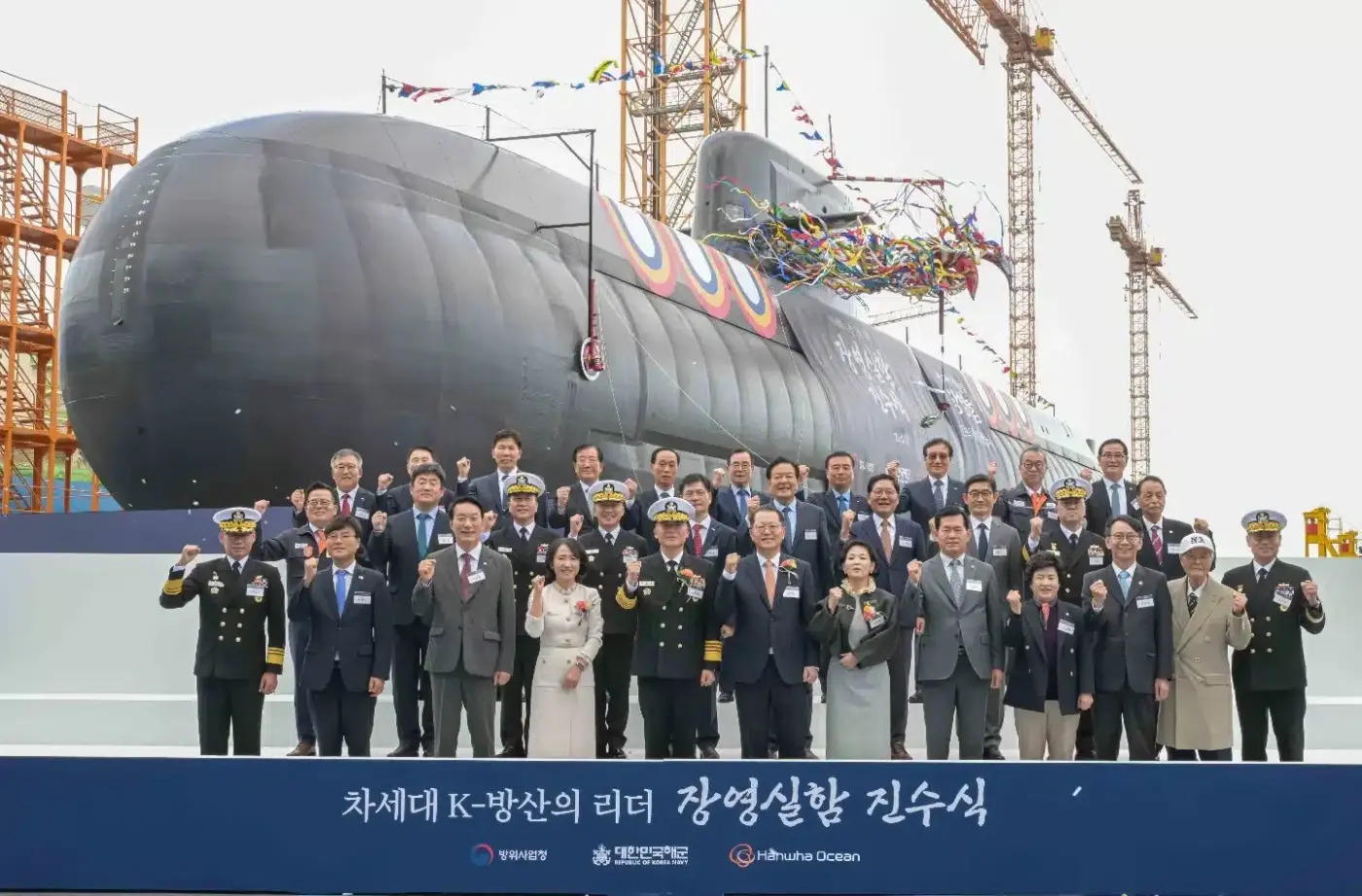
Hanwha Ocean has officially launched the first submarine of the second KSS-III series, the ROKS Jang Yeong-sil (SS-087), during a ceremony at its Geoje shipyard attended by senior military leaders, government officials, and industry representatives.
navy worldwide shipbuilding industry defense industry news23 october 2025 | 07:07 | Source: Gazeta Morska | Prepared by: Kamil Kusier | Print
fot. Hanwha Ocean
The event marked a major milestone for South Korea’s indigenous submarine program and showcased the country’s growing self-reliance in high-technology naval construction.
3,600 tons of indigenous technology
The ROKS Jang Yeong-sil is the Republic of Korea Navy’s first 3,600-ton-class submarine, representing the opening unit of the KSS-III Batch-II program — an upgraded follow-on to the earlier Dosan Ahn Chang-ho-class (Batch I).
Construction began after the contract was signed in 2019, with steel cutting in 2021 and keel-laying in 2023. The submarine measures approximately 89 meters in length, larger than its predecessors, and features a wide range of performance and automation improvements.
Designed and built entirely in South Korea, the Jang Yeong-sil underscores Hanwha Ocean’s ability to deliver world-class diesel-electric submarines with minimal foreign input.
Smarter, stealthier, and more survivable
The Batch-II design incorporates a new combat management system — described as the “brain” of the vessel — and an upgraded sonar suite, its “eyes and ears.”
Together, these systems significantly enhance target detection, information processing, and land-attack strike capability.
The submarine employs lithium-ion battery technology and an air-independent propulsion (AIP) system, allowing extended submerged endurance and higher sustained underwater speeds.
Noise-reduction and vibration-isolation technologies have been applied to cut acoustic signatures, improving stealth and survivability.
A newly installed auxiliary propulsion system enables the submarine to maneuver even if the main propulsion system fails — a key safety feature for crew and mission assurance.
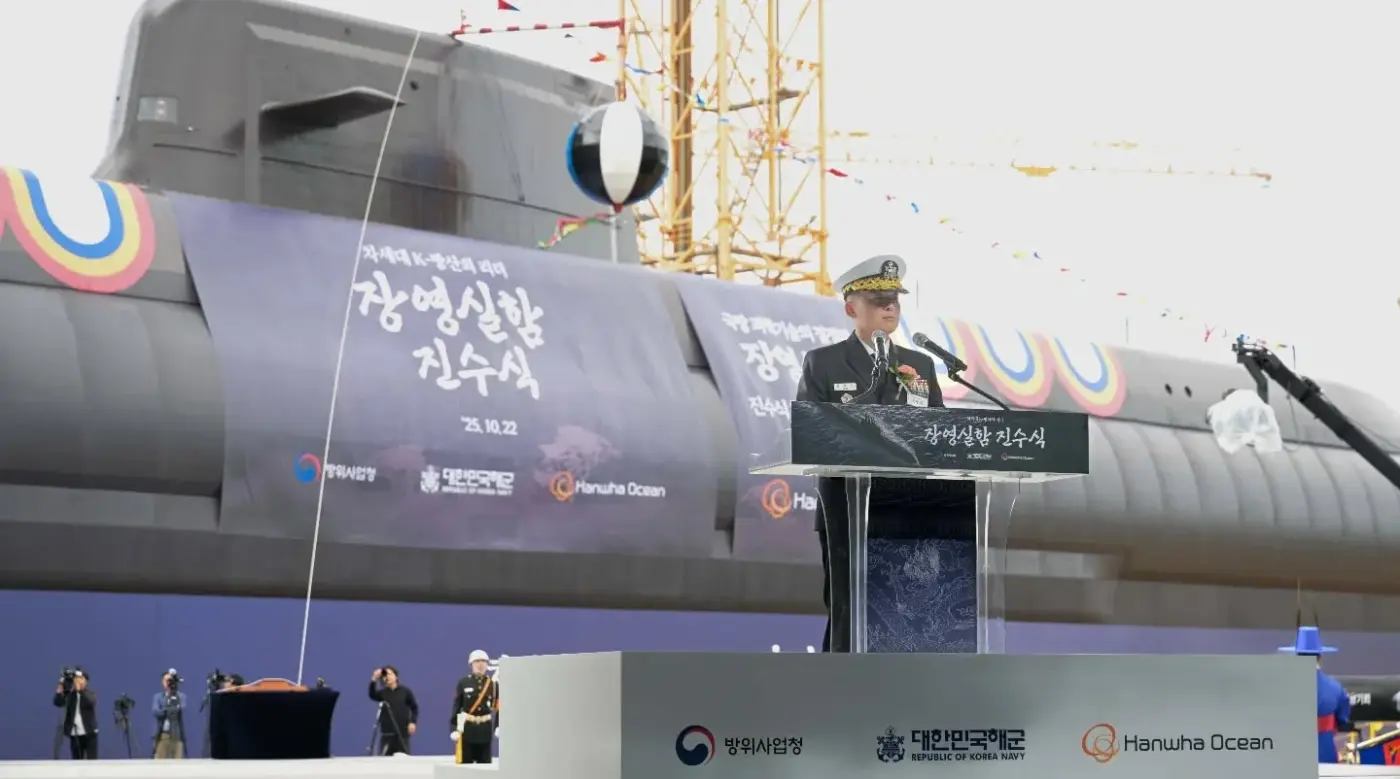
In his remarks, Admiral Kang Dong-gil, Chief of Naval Operations of the Republic of Korea Navy, emphasized the strategic and technological importance of the launch:
- Admiral Son Won-il, the father of our Navy, once said that ‘the Navy itself is created through the integration of the finest and most advanced elements of modern science. I am confident that ROKS Jang Yeong-sil, built with our own technology, will act as a signal flare for the Navy’s leap toward becoming a smart, elite force, and will serve as a core asset in safeguarding the Republic of Korea’s maritime sovereignty.
Mr. Lee Sang-woo, Director General of the KSS-III Submarine Project Team at DAPA, added:
- ROKS Jang Yeong-sil is a world-class diesel-electric submarine and a culmination of Korea’s advanced scientific and technological excellence.
This launching ceremony showcases the outstanding capabilities of Korea’s defense industry to our people and to the world. We expect Korean submarines to become key strategic assets contributing to global security and peace while expanding Korea’s defense exports.
Toward full technological autonomy
A central objective of the Batch-II program is maximizing the use of locally developed systems.
According to Hanwha Ocean and DAPA, over 80 percent of the vessel’s components are domestically designed and manufactured — a major step toward technological independence and industrial resilience.
This localization not only strengthens South Korea’s defense capabilities but also enhances its export competitiveness in the global submarine market.
Export outlook — Hanwha’s offer for Poland’s ORKA Program
Hanwha Ocean’s experience with the KSS-III series directly supports its bid to supply new submarines to Poland under the ORKA program, which seeks to modernize the Polish Navy’s undersea fleet.
The company has proposed a variant derived from the KSS-III Batch-II platform, tailored to Polish operational and logistical requirements. The offer reportedly includes technology transfer, local industrial participation, and potential construction of units in Polish shipyards — aligning with Warsaw’s ambitions for domestic capability growth.
Thanks to its modular design and open architecture, the KSS-III platform can integrate Western weapons and communication systems, giving it high adaptability for NATO partners.
If selected, the cooperation would represent the largest maritime defense project between South Korea and Poland, expanding on the successful partnerships established around the K2 Black Panther tanks and K9 Thunder howitzers.
Sea trials and delivery schedule
Following the launch, Jang Yeong-sil will undergo extensive harbor and sea trials through 2027.
Once the evaluation phase is complete, the submarine will be formally delivered to the Republic of Korea Navy for operational deployment.
Hanwha Ocean is already constructing the second Batch-II unit, laid down in 2024, while steel cutting for the third and final submarine took place later that same year.
All three Batch-II submarines are scheduled for commissioning before the early 2030s.
Strategic implications
The launch of ROKS Jang Yeong-sil confirms South Korea’s position among the limited number of nations capable of independently designing and building advanced submarines.
With the Batch-II class, the country not only strengthens its national defense but also asserts itself as a credible supplier in the international naval market.
In combination with growing exports of frigates, destroyers, and surface combat systems, the KSS-III series may become a cornerstone of South Korea’s future maritime export portfolio — and a compelling option for navies seeking proven, modern, non-nuclear submarines.
see also
Buy us a coffee, and we’ll invest in great maritime journalism! Support Gazeta Morska and help us sail forward – click here!
Kamil Kusier
redaktor naczelny
gallery

comments
Add the first comment
see also
Strait of Hormuz at a strategic crossroads: sinking of IRIS Dena and implications for maritime transport
Austal partners with Damen for local construction of LST 100 for Australian Army
The submarine contract of the decade? Canada weighs South Korea against Germany
When two powers clash, Poland must be ready to act. Military security must be the priority
Commodore Przemysław Karaś appointed deputy commander of the Maritime Operations Centre - Naval Component Command
Mine countermeasure vessel Jaskółka begins sea acceptance trials
March 1: Remembering the “cursed soldiers”. A legacy that also resonates with today’s navy
Naval Academy cadets take military oath in Gdynia
French Navy expands global operations from the Pacific to the Red Sea
Navantia and Fincantieri deepen cooperation on the european patrol corvette programme
ADVERTISEMENT
ADVERTISEMENT