Greece launches digital campaign to deter irregular migration by sea
The Greek government has launched a targeted digital information campaign aimed at deterring irregular migrants from attempting sea crossings from North Africa to Greece. The initiative, reported by eKathimerini, responds to growing online activity by smuggling networks that portray Greece as a welcoming and safe destination for undocumented arrivals by sea.
security worldwide politics news05 august 2025 | 12:26 | Source: Gazeta Morska / PAP | Prepared by: Kamil Kusier | Print
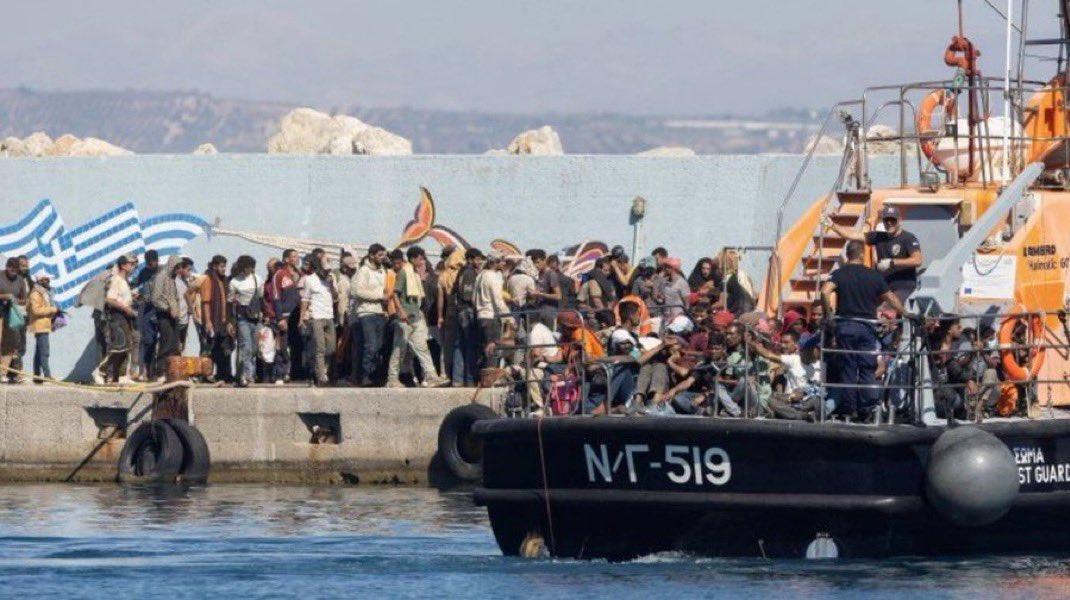
fot. Polemiko Naftiko
Smugglers use social media – so does Greece
According to Greek officials, trafficking networks have increasingly turned to platforms such as TikTok, Facebook, Instagram, and YouTube to promote Greece as an accessible entry point to the European Union. These videos often present the sea route to Crete as simple and low-risk, while downplaying the Greek government’s enforcement policies. In contrast, they discourage migration toward Italy, portraying it as a more difficult and hostile destination.
In a strategic countermeasure, Greek authorities have launched their own multilingual content targeting social media users in countries such as Libya, Egypt, Sudan, and Pakistan. These messages communicate the suspension of asylum processing, the legal risks associated with illegal entry, and the harsh realities faced by migrants intercepted at sea or caught on Greek territory.
Maritime arrivals drop following campaign launch
Initial data suggests the campaign is already yielding results. Between July 1 and July 11, more than 2,600 people arrived irregularly in Greece. In the following weeks (July 11–31), arrivals fell sharply to below 900.
Prime Minister Kyriakos Mitsotakis addressed the issue in parliament on July 9, stating:
- The route to Greece is closing. Migrants who enter illegally will be arrested and detained. He emphasized that the message was directed not only at would-be migrants but also at the smuggling networks operating in the region.
New legal measures in development
In parallel, Greece’s Ministry of Migration and Asylum is preparing legal amendments that would criminalize remaining in Greece after a rejected asylum application. The proposed law would introduce penalties of up to five years in prison for non-compliance, reinforcing the country’s efforts to reduce secondary migration and prevent settlement by unauthorized individuals.
These legislative changes reflect a broader shift in Greece’s approach to irregular migration, focusing on deterrence, enforcement, and the protection of maritime borders—an issue of growing concern across the Eastern Mediterranean.
A potential model for EU maritime states?
Greece’s digital-first approach to countering misinformation and disrupting human smuggling activity could provide a template for other EU member states with exposed maritime borders. By engaging potential migrants through the same channels used by smugglers, authorities may be able to influence decisions before dangerous journeys are undertaken—potentially saving lives and reducing unauthorized entries.
Buy us a coffee, and we’ll invest in great maritime journalism! Support Gazeta Morska and help us sail forward – click here!
Kamil Kusier
redaktor naczelny
comments
Add the first comment
see also
Strait of Hormuz at a strategic crossroads: sinking of IRIS Dena and implications for maritime transport
The submarine contract of the decade? Canada weighs South Korea against Germany
When two powers clash, Poland must be ready to act. Military security must be the priority
Commodore Przemysław Karaś appointed deputy commander of the Maritime Operations Centre - Naval Component Command
Radmor hosts delegation from the Republic of Turkey. Advancing maritime security cooperation
French Navy expands global operations from the Pacific to the Red Sea
"Let everyone know we will prevail". Poland’s armed forces set strategic course for 2026-2039
“Army 500” and strategic transformation: Poland sets the course for long-term deterrence and allied readiness
Medical evacuation from offshore vessel in the Baltic. Rescue 511 helicopter and m/s Huragan deployed
Karol Nawrocki: “The strength of the republic lies in its armed forces”. Security requires national unity
ADVERTISEMENT
ADVERTISEMENT