Fujian crosses Taiwan Strait. China’s most advanced carrier nears operational status
China’s third and most advanced aircraft carrier, Fujian, has sailed through the Taiwan Strait en route to the South China Sea to conduct “research trials and training missions,” the People’s Liberation Army Navy (PLAN) confirmed on Friday. The deployment underscores Beijing’s ongoing naval modernization efforts and has drawn close scrutiny from regional maritime observers.
navy shipbuilding industry defense industry news14 september 2025 | 15:27 | Source: Gazeta Morska / PAP | Prepared by: Krzysztof Pawliszak | Print
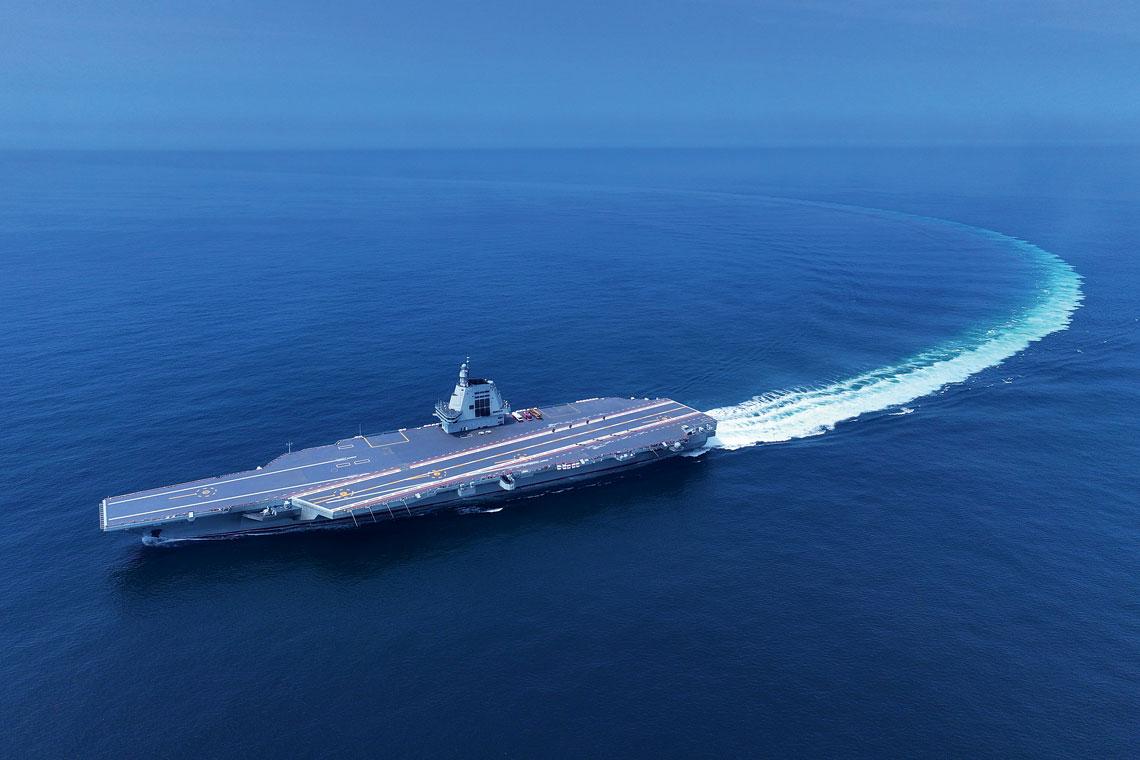
fot. Wikimedia
In an official statement, the PLAN stressed that the carrier’s activities are “routine” and “not directed against any particular target.” Nevertheless, the transit comes amid heightened regional military activity: the U.S. and Japan are holding joint exercises near Okinawa, while Taiwan’s Ministry of National Defense confirmed the carrier’s presence and stated that its movements are being closely monitored.
Japan’s Ministry of Defense reported that two guided-missile destroyers accompanied Fujian as it crossed the East China Sea, suggesting the operation was a carefully coordinated trial rather than a simple transit.
A leap in Chinese carrier capability
Fujian represents a major technological step forward for China’s blue-water navy. Unlike its predecessors – Liaoning (commissioned in 2012) and Shandong (2019) – the new carrier is equipped with electromagnetic catapults, allowing heavier aircraft to launch with full fuel and weapons loads. This capability significantly expands the PLAN’s operational envelope, enabling the deployment of airborne early warning aircraft and fifth-generation stealth fighters from the carrier’s deck.
Analysts estimate Fujian’s defensive and strike reach extends beyond 600 km, giving China a powerful tool for power projection. The timing of this mission is noteworthy: Shandong undertook a similar cruise roughly a month before its own commissioning, suggesting Fujian may soon enter active service.
Regional security implications
Chinese naval activity in the East and South China Seas, combined with regular coast guard patrols near disputed islands, continues to raise concerns in Tokyo, Taipei, and Manila. Regional powers are responding by strengthening their own maritime capabilities and deepening security cooperation under the U.S.-led alliance network.
China now fields over 370 surface ships and submarines, making the PLAN the world’s largest navy by fleet size. With Fujian nearing operational readiness, Beijing will gain enhanced capacity for sustained operations beyond its near seas — a development that could further complicate the strategic balance in the Indo-Pacific and intensify concerns over a potential attempt to forcibly reunify Taiwan.
see also
Buy us a coffee, and we’ll invest in great maritime journalism! Support Gazeta Morska and help us sail forward – click here!
Kamil Kusier
redaktor naczelny
comments
Add the first comment
see also
Strait of Hormuz at a strategic crossroads: sinking of IRIS Dena and implications for maritime transport
Austal partners with Damen for local construction of LST 100 for Australian Army
The submarine contract of the decade? Canada weighs South Korea against Germany
When two powers clash, Poland must be ready to act. Military security must be the priority
Commodore Przemysław Karaś appointed deputy commander of the Maritime Operations Centre - Naval Component Command
Mine countermeasure vessel Jaskółka begins sea acceptance trials
March 1: Remembering the “cursed soldiers”. A legacy that also resonates with today’s navy
Naval Academy cadets take military oath in Gdynia
French Navy expands global operations from the Pacific to the Red Sea
Navantia and Fincantieri deepen cooperation on the european patrol corvette programme
ADVERTISEMENT
ADVERTISEMENT