









Equinor and Polenergia are investigating what lies beneath the seabed
Equinor and Polenergia are conducting geophysical seismic surveys of the seabed as part of preparations for the construction of the Bałtyk 2 and Bałtyk 3 projects. The surveys will determine what lies on and beneath the seabed at the planned foundation sites for the Bałtyk 2 and Bałtyk 3 wind farms.
In brief
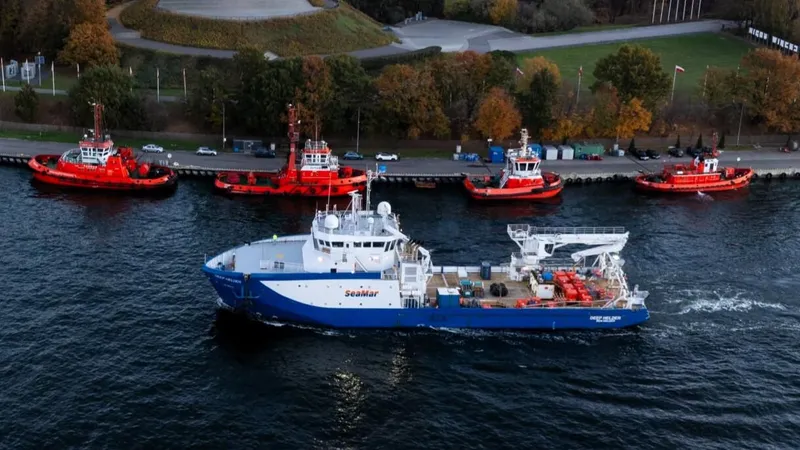
Equinor and Polenergia are carrying out geophysical seismic surveys of the seabed ahead of the construction of the Bałtyk 2 and Bałtyk 3 offshore wind farms. The high-resolution 3D seismic surveys are being performed by the vessel Deep Helder, and their aim is to detect boulders and identify the geological structure down to the depth the turbine foundations will reach. The collected data will be used to select the locations of monopile foundations. A marine mammal observer and a passive acoustic monitoring operator work aboard the vessel Deep Helder, listening for animal vocalisations at night and in limited visibility.
High-resolution 3D seismic surveys are being conducted by the vessel Deep Helder, utilizing advanced technologies that have rarely been used in offshore wind research to date.
The purpose of these surveys is to detect boulders and analyze the geological structure to the depth where turbine foundations will be placed. The collected data will be used, among other things, for the precise selection of monopile foundation locations within the Bałtyk 2 and Bałtyk 3 offshore wind farm areas.
Additionally, a specially trained marine mammal observer is on board the vessel to monitor their presence in the geophysical survey area, assess populations, and identify specific locations where these animals occur.
The vessel is also equipped with a passive acoustic monitoring operator who conducts continuous listening for marine mammal vocalizations during nighttime and periods of reduced visibility during the day, such as fog. These measures aim to minimize potential environmental impacts.
Source: Polenergia / Gazeta Morska · Compiled by: Kamil Kusier
Related articles
 Energy and offshore Equinor takes over Bałtyk 2 and 3 O&M base in Łeba. Port to serve 1.44 GW of offshore wind for 30 years
 Navy and defence Port Gdański Eksploatacja secures NATO NCAGE code. Gdańsk port company lines up for defence tenders
 Shipbuilding industry Ex-Enterprise towed to Mobile under $418.5m contract. Test case for Nimitz-class disposal begins
 Energy and offshore Energa renames Gdańsk gas plant company as foundations for 6,000-tonne turbine and boiler are laid
 Equipment and technology WB Group takes Polish drones from Tokyo to SOFEX in Jordan in a single week
 Ports and logistics PGE books Gdańsk’s T5 terminal for the long haul: Baltica 2 first, then more offshore wind farms
Comments (0)
The discussion is moderated by the editors: a comment appears after review. Your e-mail address is not published.
Nobody has commented on this article yet.