Dynamic Mercy 2025: NATO enhances maritime SAR interoperability in the Baltic Sea
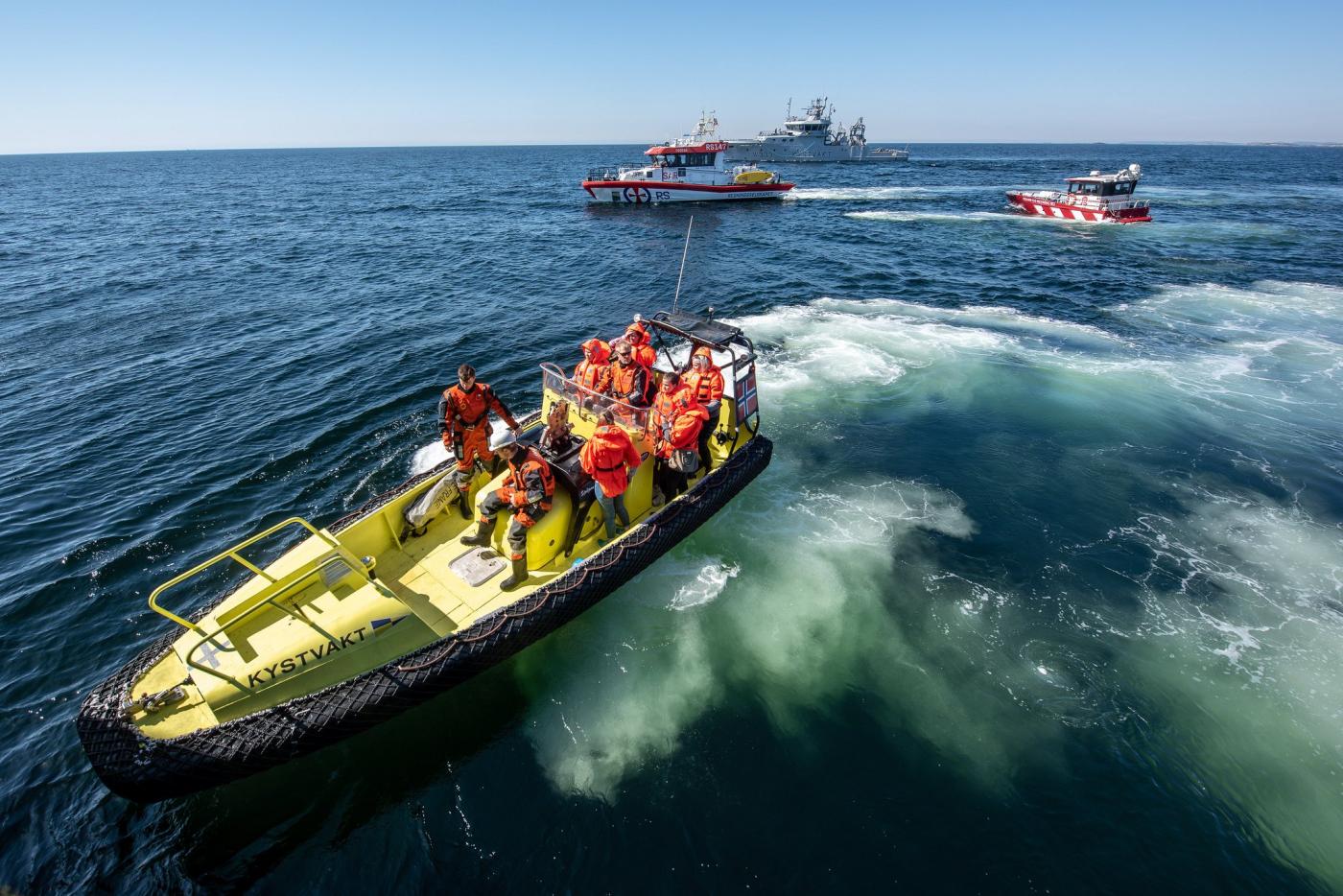
NATO’s annual maritime search and rescue (SAR) exercise, Dynamic Mercy, commenced on April 28 in the Baltic Sea. Conducted under the direction of NATO’s Allied Maritime Command (MARCOM), the live exercise brings together naval and civilian rescue units to test and improve multinational coordination in life-saving operations at sea.
security navy nato maritime rescue news01 may 2025 | 09:32 | Source: Gazeta Morska | Prepared by: Kamil Kusier | Print
fot. NATO Maritime Command
Dynamic Mercy simulates realistic SAR scenarios that transcend national boundaries, requiring seamless collaboration between Rescue Coordination Centres (RCCs) and mobile response units from participating nations. The exercise plays a vital role in refining joint procedures, strengthening interoperability, and fostering a unified response framework in a region characterized by complex maritime dynamics.
- This exercise is a critical venue for bringing together regional Allies and enhancing cooperation in a search and rescue capability that frequently operates beyond national borders, said U.S. Navy Cmdr. Thomas Yale, lead planner at MARCOM. - Although participating nations have different SAR structures, they share a common goal: to save lives.
This year’s iteration involves ships, aircraft, and personnel from Denmark, Estonia, Finland, France, Germany, Latvia, Lithuania, Norway, Poland, Sweden, and the United States. Activities will take place across dispersed operational centers in the Baltic and are set to conclude on May 9.
Conducted in accordance with the International Aeronautical and Maritime Search and Rescue Manual (IAMSAR), the exercise emphasizes operational readiness across shared Search and Rescue Region (SRR) boundaries. Importantly, national and civilian rescue organizations are also integrated into the training, underscoring the importance of civil-military cooperation in real-world maritime emergencies.
Dynamic Mercy reaffirms NATO’s commitment to regional maritime safety, delivering a robust platform to enhance collective preparedness and ensure a coordinated, rapid response to incidents on the high seas.
Buy us a coffee, and we’ll invest in great maritime journalism! Support Gazeta Morska and help us sail forward – click here!
Kamil Kusier
redaktor naczelny
comments
Add the first comment
see also
Strait of Hormuz at a strategic crossroads: sinking of IRIS Dena and implications for maritime transport
The submarine contract of the decade? Canada weighs South Korea against Germany
When two powers clash, Poland must be ready to act. Military security must be the priority
Commodore Przemysław Karaś appointed deputy commander of the Maritime Operations Centre - Naval Component Command
Radmor hosts delegation from the Republic of Turkey. Advancing maritime security cooperation
French Navy expands global operations from the Pacific to the Red Sea
"Let everyone know we will prevail". Poland’s armed forces set strategic course for 2026-2039
“Army 500” and strategic transformation: Poland sets the course for long-term deterrence and allied readiness
Medical evacuation from offshore vessel in the Baltic. Rescue 511 helicopter and m/s Huragan deployed
Karol Nawrocki: “The strength of the republic lies in its armed forces”. Security requires national unity
ADVERTISEMENT
ADVERTISEMENT