









CRIST to build Estonia’s first fully electric passenger ferry
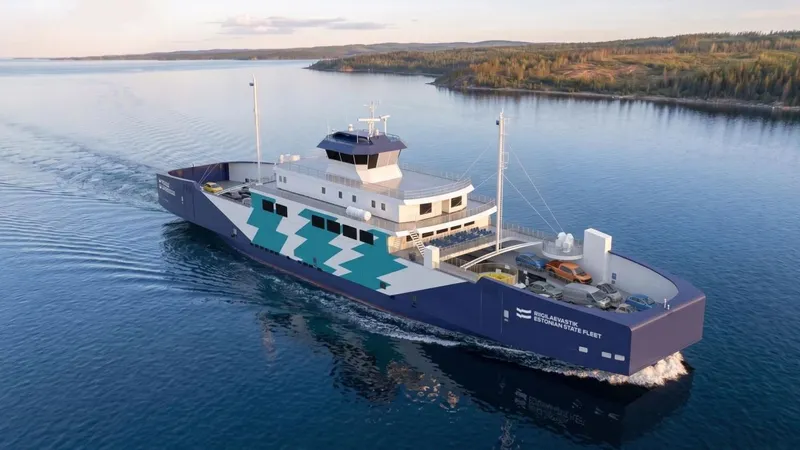
Polish shipbuilder CRIST S.A. has secured a contract from Riigilaevastik, the Estonian State Fleet, to construct Estonia’s first fully electric passenger and vehicle ferry. The vessel, scheduled for delivery in 2028, will operate year-round on domestic Baltic routes and represents another major step toward the decarbonisation of regional maritime transport.
In brief
CRIST S.A. shipyard in Gdynia will build a fully electric passenger and car ferry for the Estonian state operator Riigilaevastik, the first such vessel in Estonia. Delivery of the vessel is planned for 2028, and the ferry will serve year-round connections between the Estonian mainland and the islands on the Baltic Sea. The ferry will receive batteries with a capacity of about 3 MWh, charged from shore, as well as biodiesel backup systems for winter conditions. The vessel's capacity is about 380 passengers and up to 110 passenger cars or eight heavy vehicles.
Polish shipyard strengthens green shipping portfolio
The agreement further strengthens CRIST’s position in the growing market for low-emission and electrically powered vessels. The Gdynia-based shipyard has been steadily expanding its expertise in offshore units, specialised vessels and hybrid or fully electric ferry construction.
The Estonian project will become the country’s first ferry specifically designed for fully electric daily operations.
Designed for zero-emission operations
The vessel will rely on shore-based charging infrastructure, enabling regular service without direct emissions during standard operations. According to available project information, the ferry will be equipped with approximately 3 MWh of battery capacity and an energy-efficient propulsion system optimised for short-sea ferry routes.
Backup biodiesel-powered generators will provide additional operational security during severe weather and demanding winter conditions.
Built for Baltic winter conditions
The newbuild will feature an ice-class hull and systems adapted for year-round operations in northern Baltic waters. The design focuses on operational reliability, manoeuvrability and energy efficiency under challenging environmental conditions.
The ferry will accommodate around 380 passengers and up to 110 passenger vehicles or eight heavy trucks. Passenger comfort and accessibility for persons with reduced mobility are also key elements of the design.
Baltic ferry market moves toward electrification
The contract reflects the accelerating electrification of ferry transport across Northern Europe. Nordic countries have already become global frontrunners in deploying electric and hybrid ferries as part of broader maritime decarbonisation strategies.
For CRIST, the Estonian order represents both an important export reference and a strategic opportunity to strengthen its presence in the rapidly developing green shipping sector. The project also underlines the growing role of Polish shipyards in delivering technologically advanced vessels aligned with Europe’s climate transition goals.
Source: Gazeta Morska · Compiled by: Kamil Kusier
Related articles
 Energy and offshore Equinor takes over Bałtyk 2 and 3 O&M base in Łeba. Port to serve 1.44 GW of offshore wind for 30 years
 Navy and defence Port Gdański Eksploatacja secures NATO NCAGE code. Gdańsk port company lines up for defence tenders
 Shipbuilding industry Ex-Enterprise towed to Mobile under $418.5m contract. Test case for Nimitz-class disposal begins
 Energy and offshore Energa renames Gdańsk gas plant company as foundations for 6,000-tonne turbine and boiler are laid
 Equipment and technology WB Group takes Polish drones from Tokyo to SOFEX in Jordan in a single week
 Ports and logistics PGE books Gdańsk’s T5 terminal for the long haul: Baltica 2 first, then more offshore wind farms
Comments (0)
The discussion is moderated by the editors: a comment appears after review. Your e-mail address is not published.
Nobody has commented on this article yet.