









Brussels tightens the screw on Russian LNG. The ban will reach EU operators worldwide
The European Commission has clarified that the EU's upcoming ban on Russian LNG reaches well beyond imports into the bloc. Operators based in the EU will not be able to carry, trade or market Russian liquefied natural gas anywhere in the world, including to buyers outside the Union. The move hits European gas-carrier operators and complicates the Arctic supply chain of Yamal LNG.
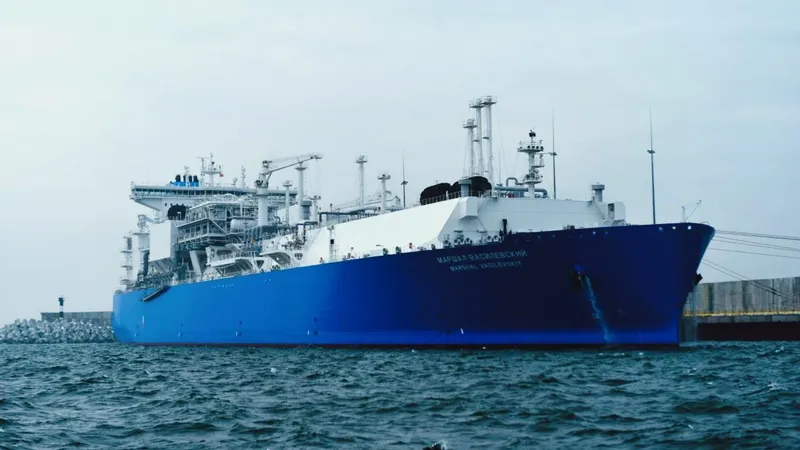
In brief
The European Commission has confirmed that the EU ban on Russian LNG covers carriage, trading and sale by European Union entities worldwide, including to buyers outside the Community. The position was set out in a letter of 1 June from the office of Energy Commissioner Dan Jørgensen to the firm Poten & Partners. A full ban on imports of Russian LNG will apply from the beginning of 2027, and for short-term contracts concluded before 17 June 2025 from 25 April 2026. In 2025 Russia was the second-largest LNG supplier to the European Union with a share of about 14 percent, compared with about 45 percent before 2022.
The letter that closes the loophole
The uncertainty was settled by a 1 June letter from the office of EU Energy Commissioner Dan Jørgensen to the broker and advisory firm Poten & Partners. Brussels stated that the transport of Russian LNG by EU operators is prohibited regardless of the destination port, and that EU companies may not trade Russian gas or sell it in third countries. Whether the cargo is bound for the Union or beyond it is irrelevant. That closes a route some companies had hoped to use: redirecting contracted cargoes to non-European markets once the import ban takes effect.
Who is affected
The sharpest impact falls on Arctic logistics. Most of the specialised Arc7 icebreaking gas carriers serving the Yamal LNG project are operated or managed by European firms, among them Greece's Dynagas and the UK's Seapeak, while some vessels are run by Japan's MOL. Once the ban is in force, EU operators and European buyers holding long-term contracts will no longer be able to carry, sell or redirect Russian volumes to customers outside the bloc.
This is particularly significant for France's TotalEnergies, which holds around 20% of Yamal LNG and had been weighing its options ahead of the 2027 deadline. Germany's SEFE and Spain's Naturgy, both major buyers of Russian LNG on long-term contracts, are also under pressure; Naturgy has warned that the phase-out could affect purchase commitments worth more than €10 billion. In response, some operators may move their specialised vessels to subsidiaries or operators outside the EU.
Timeline and scale
The clarification fits into the bloc's staged ban. A full prohibition on Russian LNG imports takes effect from the start of 2027; for short-term contracts concluded before 17 June 2025 imports are banned from 25 April 2026, and for long-term contracts from 1 January 2027, in line with the 19th sanctions package. The regulation was formally adopted in January.
The scale is far from trivial. In 2025 Russia was the EU's second-largest LNG supplier, with a share of around 14%, though that is a fraction of the old dependence, when before 2022 Russian gas and LNG accounted for roughly 45% of the bloc's imports. Tellingly, deliveries from Yamal to Europe still rose in the first five months of 2026, despite the declared move away from Russian fuels.
The limits of enforcement
The Commission argues that allowing EU firms to keep trading Russian LNG abroad would undermine the purpose of the legislation. The difficulty is that Brussels controls only the conduct of its own companies, not Russia's ability to find other buyers, intermediaries or shipping routes. Volumes may be rerouted through non-EU firms, and the real effect will depend on access to vessels, financing, insurance and terminals, and on the willingness of third-country players to step in for European operators.
Why it matters in the Baltic
For a region that has long pushed to cut its dependence on Russian gas, not least through the LNG terminal at Świnoujście, the direction of travel is welcome. But the consequences reach shipping itself: any reflagging of Arc7 tonnage and the withdrawal of European operators from Russian cargoes mean a reshuffle in the gas-carrier market and in supply chains, worth watching from the perspective of Polish ports and gas buyers too.
Source: Gazeta Morska · Compiled by: Kamil Kusier
Related articles
 Energy and offshore Equinor takes over Bałtyk 2 and 3 O&M base in Łeba. Port to serve 1.44 GW of offshore wind for 30 years
 Navy and defence Port Gdański Eksploatacja secures NATO NCAGE code. Gdańsk port company lines up for defence tenders
 Shipbuilding industry Ex-Enterprise towed to Mobile under $418.5m contract. Test case for Nimitz-class disposal begins
 Energy and offshore Energa renames Gdańsk gas plant company as foundations for 6,000-tonne turbine and boiler are laid
 Equipment and technology WB Group takes Polish drones from Tokyo to SOFEX in Jordan in a single week
 Ports and logistics PGE books Gdańsk’s T5 terminal for the long haul: Baltica 2 first, then more offshore wind farms
Comments (0)
The discussion is moderated by the editors: a comment appears after review. Your e-mail address is not published.
Nobody has commented on this article yet.