









Bayraktar TB3 breaks barriers. The first tactical UCAV to launch supersonic missiles from the sea
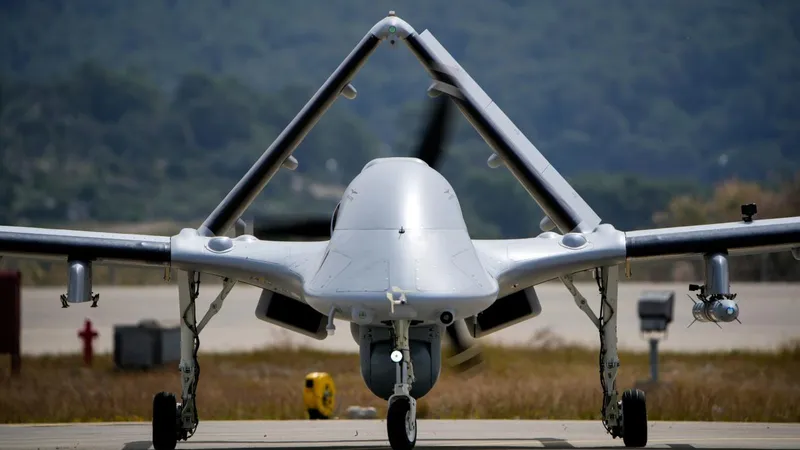
The Bayraktar TB3, the world’s first tactical UCAV capable of operating from a short runway aboard a naval vessel, has successfully conducted another round of live-fire tests with the UAV-122 supersonic missile. In a historic breakthrough for military aviation, the unmanned aircraft struck a target over 50 kilometers away while flying below the line of sight.
In brief
The Bayraktar TB3 unmanned combat system struck a floating target measuring 6x6 metres with a Roketsan UAV-122 supersonic missile, taking off from the Dalaman base in Muğla province. An earlier test on 25 March confirmed a hit on the target from a distance of more than 50 kilometres, with laser guidance provided by a Bayraktar TB2. The Bayraktar TB3 took off on 19 November 2024 from the 12-degree ramp of the ship TCG Anadolu and landed without assistance systems. Manufacturer Baykar earned USD 1.8 billion in export revenue in each of 2023 and 2024.
Successful strike below the line of sight
On March 27, 2025, the Bayraktar TB3 took off from Dalaman Air Base in Muğla, carrying the UAV-122 supersonic missile developed by Roketsan. During the test, the UCAV successfully hit a floating 6x6-meter target, demonstrating its operational capabilities. A previous test conducted on March 25 also ended in success, with the TB3 striking a target from over 50 kilometers away.
Bayraktar TB2 and TB3 synergy
The tests showcased the highly effective coordination between different UCAV models. The target was laser-designated by the Bayraktar TB2, while the Bayraktar TB3 launched the missile, achieving a precise hit. This milestone highlights the ability of unmanned combat systems to conduct coordinated aerial operations.
Operations from TCG Anadolu – a naval aviation breakthrough
The Bayraktar TB3 has made history as the first UCAV capable of taking off and landing on a short-runway naval vessel. On November 19, 2024, the aircraft successfully launched from the 12-degree ski-jump ramp aboard TCG Anadolu and returned to the deck without the use of landing assistance systems. Subsequent trials off the coast of Çanakkale further validated its shipborne operational capabilities, with TB3 completing two additional takeoffs and landings.
Advanced capabilities – altitude, flight endurance, and smart systems
In June 2024, the Bayraktar TB3 reached an altitude of 36,310 feet during a high-altitude performance test, powered by the domestically developed PD-170 engine from TEI. The altitude record for Turkish UCAVs remains with the Bayraktar Akıncı, which reached 45,118 feet.
With an impressive total flight time of 968 hours, the TB3 has demonstrated exceptional endurance. In a long-endurance flight test on December 20, 2023, it remained airborne for 32 hours, covering a distance of 5,700 kilometers. Additionally, on March 26, 2024, the TB3 conducted its first flight with the ASELFLIR-500 electro-optical targeting system, developed by Aselsan, which surpasses global competitors in performance.
A new dimension in naval operations and Baykar’s export success
With its foldable wings and beyond line-of-sight (BLOS) communication capabilities, the Bayraktar TB3 significantly enhances naval operational capabilities. Its autonomous reconnaissance, surveillance, and strike missions make it a key component of Türkiye’s defense strategy.
Baykar, a global leader in the UCAV market, has financed all its projects independently, achieving remarkable export success. In 2023 and 2024, the company generated $1.8 billion in exports each year, accounting for 83% and 90% of its total revenues, respectively. Baykar has secured export agreements with 36 countries, including 34 for the Bayraktar TB2 and 11 for the Bayraktar Akıncı, further solidifying its position as the world’s leading manufacturer of unmanned combat aerial vehicles.
The Bayraktar TB3 represents the future of naval aviation, offering a new level of maritime operational capability. With its advanced strike capabilities, extended endurance, and successful missile tests, it is set to become a key asset for modern armed forces worldwide.
Source: Gazeta Morska · Compiled by: Kamil Kusier
Related articles
 Shipbuilding industry Poland christens ro-pax ferry Bursztyn Unity in Szczecin on Independence Day. Ystad service starts 18 November
 Energy and offshore Orlen Neptun deploys V-LiDAR buoys at Baltic West ahead of Poland's 2027 offshore wind auction
 Energy and offshore Equinor takes over Bałtyk 2 and 3 O&M base in Łeba. Port to serve 1.44 GW of offshore wind for 30 years
 Navy and defence Port Gdański Eksploatacja secures NATO NCAGE code. Gdańsk port company lines up for defence tenders
 Shipbuilding industry Ex-Enterprise towed to Mobile under $418.5m contract. Test case for Nimitz-class disposal begins
 Energy and offshore Energa renames Gdańsk gas plant company as foundations for 6,000-tonne turbine and boiler are laid
Comments (0)
The discussion is moderated by the editors: a comment appears after review. Your e-mail address is not published.
Nobody has commented on this article yet.