Equinor and Polenergia reach final investment decision for Baltic 2 and 3 offshore wind farms
Equinor, the Norwegian energy major, and Polenergia, Poland’s largest privately owned energy group, have announced the final investment decision (FID) for their flagship offshore wind projects – Baltic 2 and Baltic 3. The FID marks the transition from planning to construction for two of the largest renewable energy infrastructure developments in Poland's history.
business power engineering maritime economy offshore news20 may 2025 | 00:32 | Source: Gazeta Morska | Prepared by: Kamil Kusier | Print
fot. Equinor
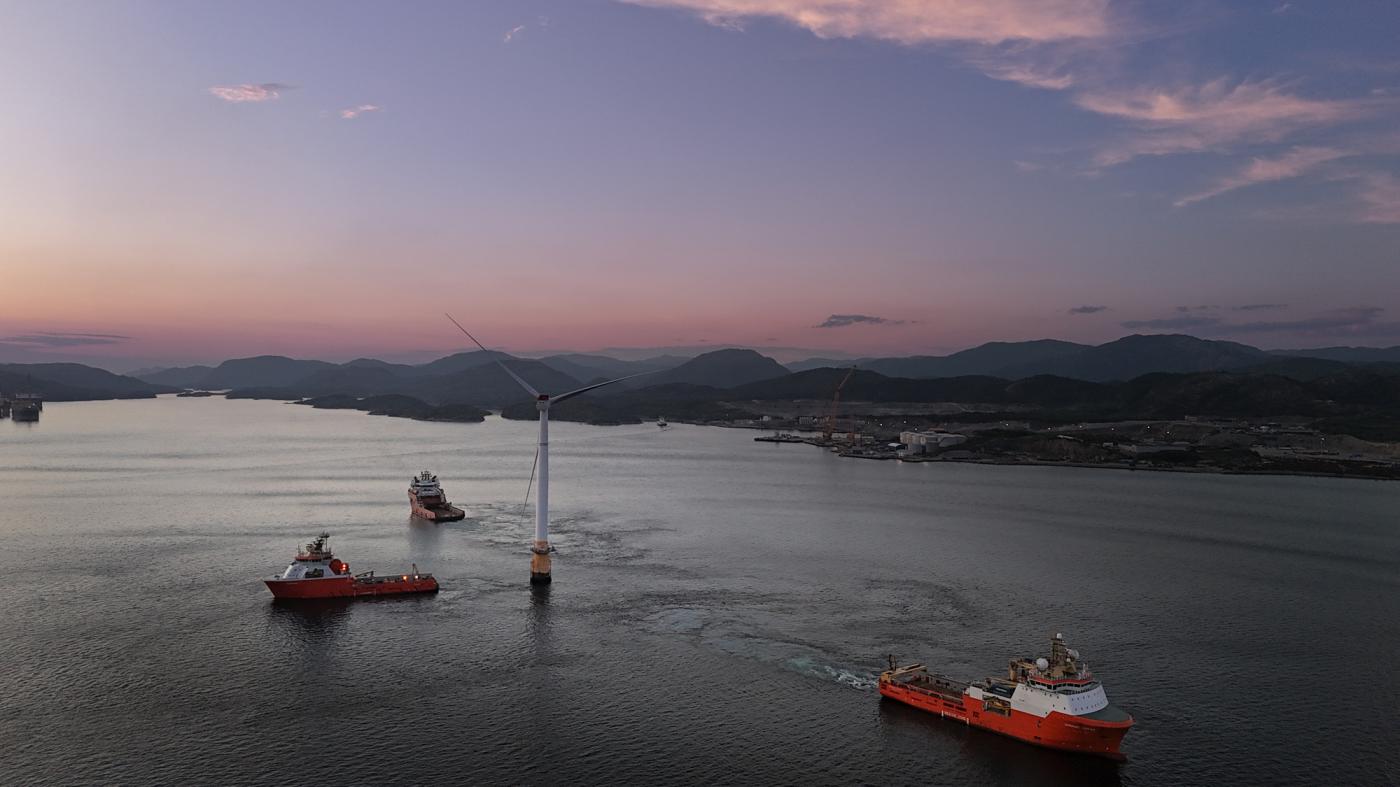
Together, Baltic 2 and Baltic 3 will deliver a combined installed capacity of 1,440 MW, with 100 state-of-the-art wind turbines standing 260 meters tall – significantly taller than Warsaw’s Palace of Culture and Science. A single rotation of one turbine’s rotor will generate enough clean energy to power a home for four days. The farms will be located in Poland’s exclusive economic zone of the Baltic Sea, approximately 22 km and 37 km offshore. Full commissioning is expected by 2028.
The total investment value is approximately PLN 27 billion (excluding financing costs). The projects will be developed under a project finance model, with further details to be disclosed upon financial close. The offshore wind farms are backed by 25-year Contracts for Difference (CfD), ensuring long-term revenue stability.
– The world belongs to those bold enough to leap into the unknown and build their wings on the way down. I am filled with gratitude as a dream – one shared by my father, myself, and many extraordinary people – is becoming a reality. Thanks to the projects implemented by Polenergia and Equinor, Poland can and will be powered by clean energy, produced in harmony with nature and in service of future generations. This is a profoundly symbolic moment that crowns years of planning and preparation and opens a new chapter in Polenergia’s dynamic growth. The Baltic offshore wind farm project is a bold investment and a compelling example of how perseverance, commitment, and strong Polish-Norwegian partnership can turn a once-distant vision into tangible progress – said Dominika Kulczyk, Chair of the Supervisory Board of Polenergia S.A.
– The Baltic 2 and 3 offshore wind farms we are building represent some of the largest infrastructure projects in Poland’s history. Their execution will strengthen the country’s energy security and independence, create jobs in a promising new sector, and deliver green, renewable energy that enhances the competitiveness of the Polish economy. As the future operator of these wind farms, we are proud to take this crucial step toward establishing a robust offshore wind hub in the Baltic Sea. In the coming months and years, we will work closely with partners, including numerous Polish companies and institutions, to safely and efficiently deliver key project milestones – added Michał Jerzy Kołodziejczyk, Country Manager of Equinor in Poland.
As part of the project scope, the developers will build two of the largest offshore substations (OSS) in Poland, each with a capacity of 720 MW, as well as two onshore substations (ONS) and a 14 km underground cable route. The landfall point near Ustka will feature a horizontal directional drilling (HDD) operation beneath the beach, using trenchless methods to protect the local environment. The power generated by the farms will be transmitted to the national grid via the existing PSE substation at Słupsk Wierzbięcino.
A dedicated operations and maintenance base is under construction in Łeba. Developed by Equinor, it will support both the construction and long-term operational phases of the wind farms. The operational life of both projects is expected to span at least 30 years.
Equinor and Polenergia have engaged over a dozen key contractors, including leading Polish firms such as Tele-Fonika Kable and Enprom. The projects prioritize local content, boosting the competitiveness of Poland’s industrial supply chain and anchoring offshore wind development within the national economy.
Once operational, Baltic 2 and 3 will generate clean electricity for over 2 million Polish households, significantly supporting the country’s energy transition and helping reduce carbon emissions.
Buy us a coffee, and we’ll invest in great maritime journalism! Support Gazeta Morska and help us sail forward – click here!
Kamil Kusier
redaktor naczelny
comments
Add the first comment
see also
Navantia and Fincantieri deepen cooperation on the european patrol corvette programme
Galeon Yachts and Meyer Shank Racing: merging luxury yachts with motorsport expertise
Unmanned systems and naval firepower modules. WB Group showcases integrated capabilities at Enforce Tac 2026
Swedish ports record lowest ship calls in 18 years. Implications for the maritime sector
February in Szczecin’s shiprepair sector. Ice, overhauls and North Sea expansion
Advanced ROV trials conducted at CTO to validate subsea technologies for offshore applications
University of Gdańsk and PGZ Naval Shipyard join forces for innovation and security
Stadt Naval to deliver electric propulsion system for Polish rescue vessel Ratownik
Gdańsk port’s Basen Górniczy to gain modern port infrastructure
First month of Jantar Unity operations. Polsca ferry paves the way for Batory program units
ADVERTISEMENT
ADVERTISEMENT