









Baltic West files environmental reports. ORLEN Neptun's second farm to deliver 4 GW after 2034
ORLEN Neptun has filed environmental impact assessment reports with the competent authority for the four areas of its Baltic West project, the company's second offshore wind farm. It is a key step towards the environmental decisions that open further administrative proceedings and entry to the offshore wind auction. The four areas are to reach a combined capacity of around 4 GW, enough for more than five million households, with first power expected in 2034 and beyond.
In brief
ORLEN Neptun has filed environmental impact assessment reports for the four areas of the Baltic West offshore wind farm. The four Baltic West areas are to reach a combined capacity of about 4 GW, with first power expected in 2034 and later. Filing the reports allows the project to move towards environmental decisions and participation in the offshore wind auction, said Baltic West project director Marcin Sowiński. The environmental surveys for Baltic West were prepared by the Polish company MEWO.
In the week in which Poland's first farm, Baltic Power, completed the installation of all 76 turbines, the same developer's second farm moves from surveys to documents. Baltic Power has 1.2 GW; Baltic West, more than three times larger, already belongs to the second wave of Polish offshore wind, the one that will compete for contracts for difference in auctions rather than receive support allocated administratively, as the first projects did.
- Filing the environmental impact assessment reports is another important step in the development of the Baltic West project, allowing us to move to the next stage of the investment process, including further administrative proceedings and obtaining the environmental decisions necessary for the investment and for participation in the offshore wind auction - said Marcin Sowiński, Baltic West project director.
Mammals, birds and the seabed surveyed by ship and from the air
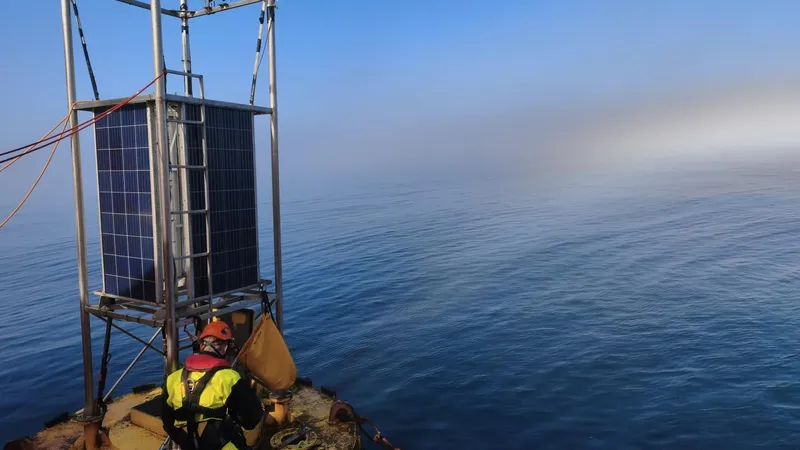
The reports were preceded by comprehensive surveys of the marine environment in the areas designated for the investment: monitoring of marine mammals, birds and seabed organisms, conducted from research vessels and from an aircraft taking aerial photographs. The surveys and the documentation for all environmental components were prepared by the Polish company MEWO, the same firm that worked on Baltic Power and one of the few domestic entities with full capacity for offshore surveys. The results served to assess the project's impact and set the conditions for its construction and operation; the developer says the solutions adopted will ensure delivery without significant effect on the environment.
In Polish offshore wind the environmental report is the document on which everything else depends: without an environmental decision there is no building permit, no grid connection agreement and no place in an auction. For a farm with four areas that means four proceedings, each with public participation and consultations, and for sites near the maritime border also with neighbouring states.
6 GW in the Baltic and 12.8 GW in renewables
Baltic West is part of a plan in which the ORLEN Group wants 12.8 GW of installed renewable capacity by 2035. With five secured sites in the Baltic, the group's offshore wind potential is to exceed 6 GW: 1.2 GW in the operating Baltic Power, around 4 GW in Baltic West and the rest in further areas. That scale makes Orlen the largest offshore developer in Polish waters and one of the larger ones in the Baltic.
For the maritime economy the schedule matters in practice. First power from Baltic West in 2034 and beyond means construction starting around 2031, when the installation terminal in Świnoujście will be past its first projects, Polish suppliers will have Baltic Power behind them, and schools such as the Maritime School Complex in Świnoujście, with which ORLEN Neptun has just extended its educational cooperation, will be graduating their first offshore-trained year groups. Four gigawatts means several hundred turbines, several hundred foundations and years of work for ports, yards and vessels, the second wave of orders after Baltic Power that Polish maritime industry has time to prepare for.
Source: Gazeta Morska · Compiled by: Kamil Kusier
Related articles
 Energy and offshore Equinor takes over Bałtyk 2 and 3 O&M base in Łeba. Port to serve 1.44 GW of offshore wind for 30 years
 Navy and defence Port Gdański Eksploatacja secures NATO NCAGE code. Gdańsk port company lines up for defence tenders
 Shipbuilding industry Ex-Enterprise towed to Mobile under $418.5m contract. Test case for Nimitz-class disposal begins
 Energy and offshore Energa renames Gdańsk gas plant company as foundations for 6,000-tonne turbine and boiler are laid
 Equipment and technology WB Group takes Polish drones from Tokyo to SOFEX in Jordan in a single week
 Ports and logistics PGE books Gdańsk’s T5 terminal for the long haul: Baltica 2 first, then more offshore wind farms
Comments (0)
The discussion is moderated by the editors: a comment appears after review. Your e-mail address is not published.
Nobody has commented on this article yet.