Babcock secures £114m contract for nuclear submarine defueling
Babcock has been awarded a £114 million, three-year contract by the UK Ministry of Defence to support the first nuclear defueling of a decommissioned submarine in over two decades. The operation, to be carried out at the company’s Devonport site in Plymouth, marks a critical step in the Submarine Dismantling Project and the safe disposal of the Royal Navy’s retired nuclear fleet.
business worldwide shipbuilding industry defense industry news10 june 2025 | 14:39 | Source: Gazeta Morska | Prepared by: Kamil Kusier | Print
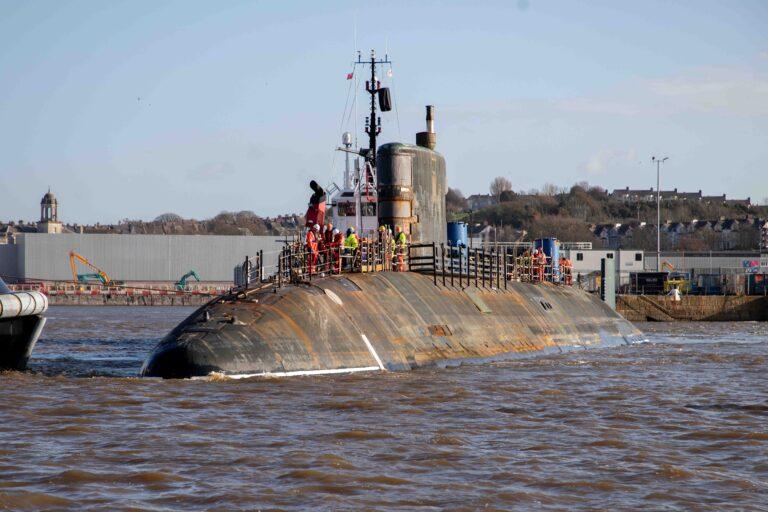
fot. Babcock
The contract will see Babcock work closely with the Defence Nuclear Enterprise and industry partners to prepare for defueling four Trafalgar-class submarines, with operations expected to recommence in 2026. Defueling is an essential prerequisite to full dismantling and long-term disposal.
The programme runs in parallel with significant infrastructure upgrades at Devonport, aimed at modernising the UK’s nuclear support facilities.
Minister for Defence Procurement and Industry, Maria Eagle MP, said: – This contract enables the first nuclear defueling of a British submarine in over 20 years, underlining this Government’s commitment to responsibly manage the legacy of our nuclear fleet. The work will also create more than 150 new jobs and help build critical skills in the South West.
– The operations at Devonport will support over 300 supply chain jobs and help attract new talent into the UK’s nuclear industry, sharing expertise across the submarine enterprise - commented David Lockwood, Babcock CEO.
Sir Chris Gardner KBE, CEO of the Submarine Delivery Agency, added: – Signing this contract is a key milestone in safely defueling the decommissioned submarines and reflects our commitment to dismantle the fleet in the most responsible and sustainable way.
Babcock is also progressing a demonstrator dismantling project at its Rosyth facility, where HMS Swiftsure will be the first nuclear-powered submarine in the UK to be fully dismantled. The project aims to recover or recycle approximately 90% of the vessel’s components, supporting long-term environmental and cost-efficiency goals.
Buy us a coffee, and we’ll invest in great maritime journalism! Support Gazeta Morska and help us sail forward – click here!
Kamil Kusier
redaktor naczelny
comments
Add the first comment
see also
Navantia and Fincantieri deepen cooperation on the european patrol corvette programme
Galeon Yachts and Meyer Shank Racing: merging luxury yachts with motorsport expertise
Unmanned systems and naval firepower modules. WB Group showcases integrated capabilities at Enforce Tac 2026
Swedish ports record lowest ship calls in 18 years. Implications for the maritime sector
February in Szczecin’s shiprepair sector. Ice, overhauls and North Sea expansion
Advanced ROV trials conducted at CTO to validate subsea technologies for offshore applications
University of Gdańsk and PGZ Naval Shipyard join forces for innovation and security
Stadt Naval to deliver electric propulsion system for Polish rescue vessel Ratownik
Gdańsk port’s Basen Górniczy to gain modern port infrastructure
First month of Jantar Unity operations. Polsca ferry paves the way for Batory program units
ADVERTISEMENT
ADVERTISEMENT