









Arctic shipping route: from China to Northern Europe in 20 days
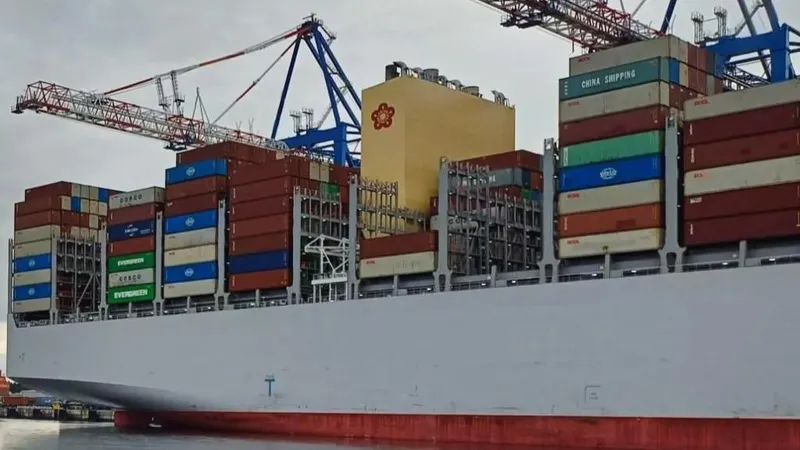
A new container route via the Northern Sea Route could soon reshape Asia–Europe maritime transport. Singapore-based carrier Sea Legend, represented in Poland by ATC Cargo, is launching a pilot service linking Chinese ports Qingdao, Shanghai, and Ningbo with major European hubs: Felixstowe, Rotterdam, Hamburg, and Gdańsk.
In brief
Singapore's Sea Legend is launching a trial container service via the Northern Sea Route from Qingdao, Shanghai and Ningbo to Felixstowe, Rotterdam, Hamburg and the Port of Gdańsk. The first voyage leaves Qingdao on 16 September and is due at the Port of Gdańsk on 13 October, cutting transit to 18 to 20 days versus 40 to 50 days via the Suez Canal and 25 days by rail. Sea Legend claims CO₂ emissions about 50 percent below the Suez Canal route and regular seasonal sailings in 2026 to 2030, May to October. Dominik Landa, Port of Gdańsk strategy and development director, points to variable ice conditions and geopolitical factors.
Faster transit and market advantages
The route, running along the Russian Arctic coast, is expected to reduce transit times from China to Northern Europe to 18–20 days, compared with 40–50 days via the Suez Canal or the Cape of Good Hope, and 25 days by intercontinental rail.
– Reducing transit time provides a tangible advantage for high-demand goods requiring fast distribution, such as electronics and apparel – says Dominik Landa, Strategy and Development Director at Port of Gdańsk. – At the same time, we are aware of Arctic shipping limitations, including variable ice conditions and geopolitical factors. Environmental considerations are also key – the carrier estimates CO₂ emissions will be around 50% lower compared with traditional Suez or Cape routes.
Pilot service with potential
The first vessel will depart Qingdao on September 16 and is scheduled to reach Port of Gdańsk on October 13, coinciding with peak pre-holiday export season from China. If the pilot receives positive market feedback, Sea Legend plans to launch regular, seasonal Arctic services from 2026 onwards (May–October).
The new route also offers an alternative to intercontinental rail, providing similar transit times with significantly higher cargo capacity. Additionally, it addresses growing risks in the Red Sea, where attacks by Houthi rebels increase costs and shipping hazards.
A shipping route of the future
The Northern Sea Route has long been a niche option, primarily used by Chinese and Russian operators. However, climate change and a shortening Arctic ice season are opening new commercial opportunities.
– For Port of Gdańsk, participating in this project is not only a matter of prestige but also a strategic step in strengthening its position in global supply chains – adds Dominik Landa.
Sea Legend, founded three years ago in response to the Red Sea crisis, was created to meet growing demand for alternative shipping routes. Its fleet has already proven effective in challenging Arctic conditions, and the carrier plans to introduce vessels powered by alternative fuels in the near future.
Source: Gazeta Morska · Compiled by: Oskar Wojciechowski
Related articles
 Energy and offshore Equinor takes over Bałtyk 2 and 3 O&M base in Łeba. Port to serve 1.44 GW of offshore wind for 30 years
 Navy and defence Port Gdański Eksploatacja secures NATO NCAGE code. Gdańsk port company lines up for defence tenders
 Shipbuilding industry Ex-Enterprise towed to Mobile under $418.5m contract. Test case for Nimitz-class disposal begins
 Energy and offshore Energa renames Gdańsk gas plant company as foundations for 6,000-tonne turbine and boiler are laid
 Equipment and technology WB Group takes Polish drones from Tokyo to SOFEX in Jordan in a single week
 Ports and logistics PGE books Gdańsk’s T5 terminal for the long haul: Baltica 2 first, then more offshore wind farms
Comments (0)
The discussion is moderated by the editors: a comment appears after review. Your e-mail address is not published.
Nobody has commented on this article yet.