









Allianz Trade: China could redirect exports to EU as US tariffs bite
In response to new U.S. tariffs, Chinese exporters may increasingly redirect goods toward the European Union, according to a recent analysis by Allianz Trade. The shift could result in a 6% annual increase in Chinese exports to the EU over the next three years.
In brief
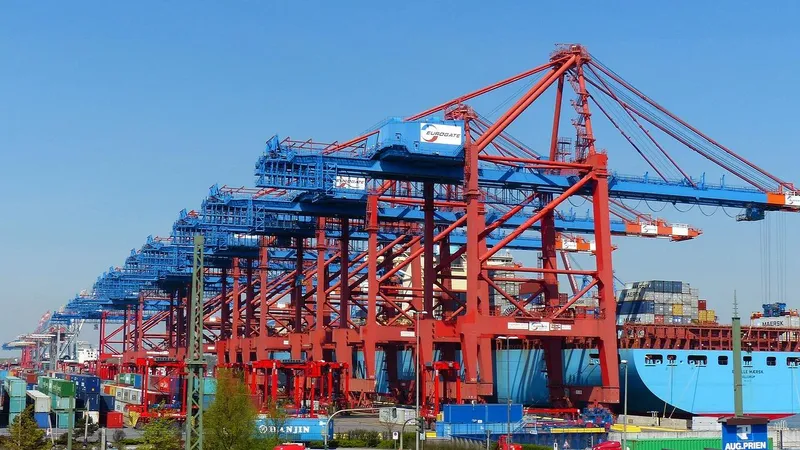
Imports from China to the European Union and other markets could grow by as much as 6 percent a year for three years if China redirects exports blocked by American tariffs there, according to an analysis by Allianz Trade. Allianz Trade analysts estimate the effective United States tariff rate on imports from China at 103 percent, and the losses to Chinese exports to the United States at 234 billion dollars. Chinese companies could reroute up to 64 percent of exports through other Asian countries, which would overload ports and increase the vulnerability of supply chains and maritime shipping.
While the U.S. administration recently introduced tariff exemptions on select products — including laptops, tablets, and smartphones — the average effective U.S. tariff on Chinese imports remains high at 103%.
Asian exporters have benefitted unevenly from these exemptions. The share of U.S. imports exempted from the new tariff hikes now includes: 70% from Taiwan (up from 18%), 45% from Thailand (up from 18%), 39% from Vietnam (up from 12%), 58% from Malaysia (up from 33%), 48% from the Philippines (up from 23%), and 44% from China (up from 23%).
Despite potential trade negotiations between the U.S. and China expected later this year, Allianz Trade estimates that the effective tariff rate on Chinese imports will remain roughly 60 percentage points higher than before Donald Trump's second presidency began.
To soften the blow, Chinese companies could reroute up to 64% of their exports via neighboring Asian economies with more favorable tariff treatment. However, analysts warn this would likely strain port capacity and expose global supply chains to heightened disruption risks.
The strategy would involve outsourcing final assembly and shipping operations to third countries, allowing goods to reach the U.S. under lower tariffs. This workaround is most feasible for high-margin, low-volume products — like certain electronics or home appliances. But scaling such rerouting faces significant logistical and geopolitical challenges, from limited port infrastructure to intensified regulatory scrutiny by U.S. authorities.
Another pathway is for China to reorient exports toward other receptive markets. Likely destinations include the EU, UK, Vietnam, Taiwan, Malaysia, Indonesia, Mexico, Singapore, Saudi Arabia, and Nigeria. Allianz forecasts these regions could absorb redirected exports at a pace of up to 6% annual growth, assuming the diversion persists for three years.
Emerging markets undergoing rapid industrialization and urbanization are seen as key drivers of demand for Chinese machinery, infrastructure materials, and consumer goods.
During the 2017–2019 U.S.-China trade war, China's share of U.S. imports fell by 2.2 percentage points to 16.8%. Simultaneously, its exports to other markets like the EU28, Vietnam, and Mexico rose by 3.3 percentage points to 34%, outpacing growth from the 2000–2017 period.
Should China redirect an estimated $234 billion in exports away from the U.S. over the next three years, Allianz believes other regions could see significant import surges from China.
Despite global supply diversification trends, China remains the industrial engine for key sectors. It houses 35% of global electronics manufacturing, 32% of home appliances, and 31% of textile production. That imbalance means U.S. consumers may face higher prices for these products amid tariff hikes — especially given the limited domestic production base (6%, 3%, and 9%, respectively).
If American consumers resist paying higher prices and China fails to offset lost U.S. demand, the result could be overproduction in Chinese factories until output levels are adjusted.
On average, no major U.S. industry has more than 12% of its production facilities located in China. But electronics and textiles stand out, with U.S. firms relying on China for 10% and 11% of production capacity, respectively — leaving them particularly vulnerable to cost increases or supply disruptions.
Major players like Apple and Intel are deeply exposed. Apple sources almost 11% of its manufacturing from China, with 33% of its cost of goods sold coming from Hon Hai. Intel derives around 30% of its revenue from China, despite sourcing just 6% of components there.
From a strategic standpoint, Apple and Intel are seen as critical to U.S. technological leadership, innovation, and national security — and are likely to remain shielded from the most severe effects of trade frictions. Textiles, however, remain a highly exposed sector without similar protection.
U.S. apparel producers may struggle to find local suppliers at competitive rates, potentially forcing margin compression or reshoring under costly conditions.
Source: PAP / Gazeta Morska · Compiled by: Kamil Kusier
Related articles
 Energy and offshore Equinor takes over Bałtyk 2 and 3 O&M base in Łeba. Port to serve 1.44 GW of offshore wind for 30 years
 Navy and defence Port Gdański Eksploatacja secures NATO NCAGE code. Gdańsk port company lines up for defence tenders
 Shipbuilding industry Ex-Enterprise towed to Mobile under $418.5m contract. Test case for Nimitz-class disposal begins
 Energy and offshore Energa renames Gdańsk gas plant company as foundations for 6,000-tonne turbine and boiler are laid
 Equipment and technology WB Group takes Polish drones from Tokyo to SOFEX in Jordan in a single week
 Ports and logistics PGE books Gdańsk’s T5 terminal for the long haul: Baltica 2 first, then more offshore wind farms
Comments (0)
The discussion is moderated by the editors: a comment appears after review. Your e-mail address is not published.
Nobody has commented on this article yet.