









76 turbines stand in the Baltic. Baltic Power completes its offshore campaign and enters commissioning
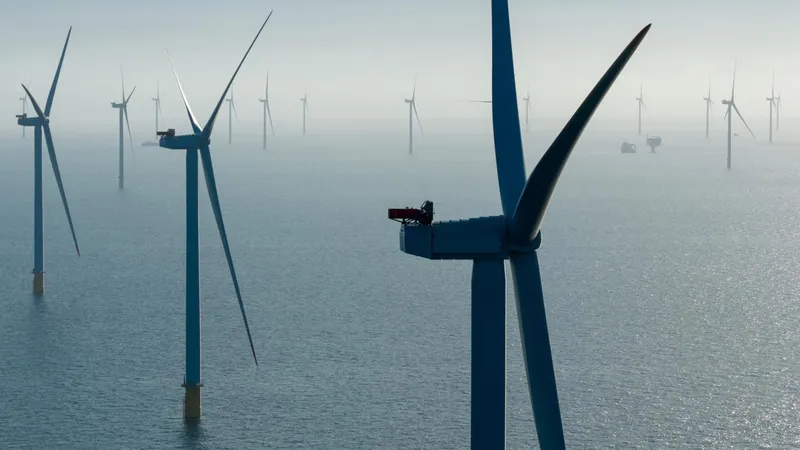
After less than two years of work at sea, all 76 turbines of Baltic Power, Poland's first offshore wind farm, are installed. The last turbine closed the largest offshore campaign in the history of the Polish Baltic: around seven thousand workers and 110 vessels. The farm, with a capacity of up to 1.2 GW, is now in commissioning and under test, and within months is to supply enough electricity for more than 1.5 million households.
In brief
All 76 turbines of Baltic Power, Poland's first offshore wind farm, have been installed after less than two years of work at sea. The Baltic Power offshore campaign involved about seven thousand workers and 110 vessels. The Orlen and Northland Power farm, with a capacity of up to 1.2 GW, is in commissioning and testing and, once fully running, is to generate up to 4 TWh a year. The share of Polish companies in Baltic Power project spending is estimated at about 21 percent.
The first power from offshore wind reached the national grid before installation was complete, because the turbines are started up in sequence, string by string, and connected to the offshore substations as they become ready. Each goes through a series of tests, including the decisive 240-hour reliability test, after which it is handed to the operations team for decades of service.
- Thanks to Baltic Power every Polish town has gained access to the sea. All of us will use electricity from Baltic Power. It is an entirely new source of electricity that has given rise to a whole sector of the Polish economy. The companies working with us and our Canadian partner have gained competences that allow them to grow, reach further and support the national economy - said Ireneusz Fąfara, chief executive of Orlen.
More than 250 metres above the water, 100 metres below it
The farm consists of 76 Vestas turbines of 15 MW each, the largest and most advanced model commercially available, built by European suppliers. The blades are around 115 metres long, and the area swept by one rotor is 43,000 square metres, more than six football pitches. The turbines stand on foundations up to 100 metres long, and the total height from sea level to blade tip exceeds 250 metres.
The upper sections of some towers were made from recycled steel; Baltic Power was the first project in the world to use this solution, which reduces the turbines' carbon footprint. At full operation the farm is to generate up to 4 TWh a year, around 3 per cent of Poland's current electricity demand.
- Baltic Power is a breakthrough project for Poland and an excellent example of what can be achieved through strong partnerships. Together with Orlen we are building a safer and more independent energy future for Poland, creating lasting value for future generations - said Christine Healy, chief executive of Northland Power.
Nacelles from Szczecin, steel from Gdańsk
More than a third of the nacelles came from the Vestas factory in Szczecin, for which Baltic Power was among the first projects it supplied. The share of Polish companies in spending over the project's whole life cycle is estimated at around 21 per cent and covers steel structures, cables and turbine components, work on foundations, substations and the service base, and construction, research and logistics services. Contractors include Baltic Industrial Group from the Gdańsk Shipyard, Smulders Polska with plants in Niemodlin and Żary, Protea from Kluczbork, Enprom, Erbud and MEWO.
That thread matters more to the Polish maritime industry than the turbines themselves. The Gdańsk Shipyard, which spent years looking for its place in the market, built steel structures for this farm; companies from Opole and Silesia entered an offshore supply chain they had no access to before. Orlen says the experience gained on the first farm is to let the same companies bid for contracts on its next investments and on the European market.
Łeba: a hundred jobs for thirty years
The operations and maintenance base in Łeba is to provide around a hundred permanent jobs servicing the farm and, over almost thirty years of operation, generate orders for local service, transport, logistics and municipal companies. For the coastal municipalities it also means tax revenue and income from leases. Łeba, which until now lived off the summer, gets an industry that works all year.
Baltic Power, developed by Orlen and Canada's Northland Power, is the most advanced of Poland's offshore wind projects and the first to produce electricity. Under Polish law, during commissioning and before the regulator's licence is granted, power may be generated and sold on the basis of a special permit and after payment of a pre-licence fee. Behind the farm come the other projects of the first phase of Polish offshore wind, all of which will draw on the ports, yards and companies that learned the sector on Baltic Power.
Source: Gazeta Morska · Compiled by: Kamil Kusier
Related articles
 Energy and offshore Equinor takes over Bałtyk 2 and 3 O&M base in Łeba. Port to serve 1.44 GW of offshore wind for 30 years
 Navy and defence Port Gdański Eksploatacja secures NATO NCAGE code. Gdańsk port company lines up for defence tenders
 Shipbuilding industry Ex-Enterprise towed to Mobile under $418.5m contract. Test case for Nimitz-class disposal begins
 Energy and offshore Energa renames Gdańsk gas plant company as foundations for 6,000-tonne turbine and boiler are laid
 Equipment and technology WB Group takes Polish drones from Tokyo to SOFEX in Jordan in a single week
 Ports and logistics PGE books Gdańsk’s T5 terminal for the long haul: Baltica 2 first, then more offshore wind farms
Comments (0)
The discussion is moderated by the editors: a comment appears after review. Your e-mail address is not published.
Nobody has commented on this article yet.