Vice Admiral René Tas: Uncrewed Systems Are the Future of Naval Power - The Vision of the Koninklijke Marine
- Drones—operating on, under, and above the water—play an increasingly vital role in the maritime domain. Their deployment significantly boosts our operational power and, consequently, our security, said Vice Admiral René Tas, Commander of the Royal Netherlands Navy and Admiral of the BENELUX, during today’s Uncrewed Day in Den Helder.
security navy worldwide defense industry equipment and technology news11 july 2025 | 12:37 | Source: Gazeta Morska | Prepared by: Kamil Kusier | Print
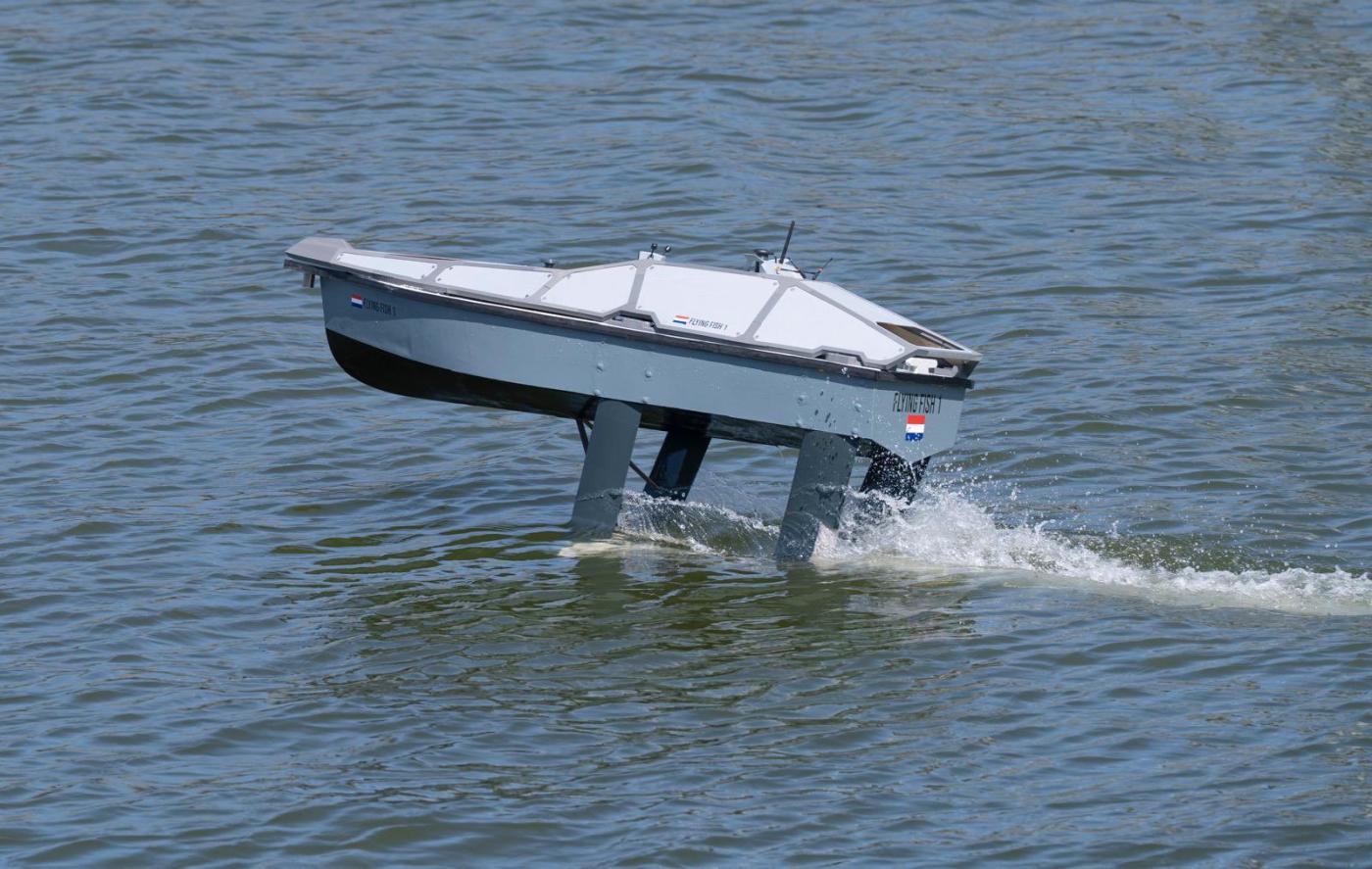
fot. Koninklijke Marine
This dedicated event served as a platform for live demonstrations, operational training, and intersectoral collaboration focused on integrating uncrewed systems into naval warfare, patrol, and reconnaissance missions. The Royal Netherlands Navy has firmly committed to the strategic development of autonomous maritime technologies, emphasizing close partnerships with research institutions, industry stakeholders, and international allies.
- It’s encouraging to see such strong cooperation between centers of knowledge, industry, and the Ministry of Defence. Only through joint effort can we achieve operational superiority and build the technological foundation our armed forces require, Vice Admiral Tas noted.
Taskforce Maritime Uncrewed: Vision for Operational Integration
The event featured a strategic briefing by the Taskforce Maritime Uncrewed, a working group launched earlier this year and composed of technical and operational experts. Its goal: to fast-track the deployment of uncrewed systems across naval operations.
The briefing, delivered to an audience of approximately 180 participants at the naval port, outlined the taskforce’s vision for the future deployment of uncrewed systems in key operational domains: mine and anti-submarine warfare, seabed protection in the North Sea, air defense against drones and missiles, and amphibious operations. The next step is to share this roadmap with industry to align strategic innovation and capability development.
Critically, the speakers emphasized that technology development is not the goal in itself. Uncrewed systems are seen as essential tools for deterrence and conflict resolution—but their true value lies in their interoperability with each other and with human operators. Only then can they achieve real battlefield effectiveness.
Innovation Requires Deep Collaboration
Vice Admiral Tas was joined by Vice Admiral Jan-Willem Hartman, Commander of the Defence Materiel and IT Command. Both leaders stressed that innovation cannot happen in isolation and must be rooted in close public-private cooperation.
- Innovative procurement is not just about acquiring new technology; it requires deep and ongoing collaboration, said Hartman. - Not only within the walls of the Ministry of Defence, but especially with industry. Together we can accelerate acquisitions and enhance our military capabilities. This is critically important, because uncrewed systems are already shaping today’s battlefields—and their role will only increase.
Vice Admiral Tas underscored the urgency of modernization in the face of both conventional and hybrid threats:
- We will soon need to defend against both conventional and uncrewed systems. That means acting now—not waiting. Thankfully, the transformation has already begun, and we’re seeing the first results. Let’s be clear: uncrewed systems won’t replace crewed ones. This is not either-or. It’s both working together.
Demonstrating the Future Fleet
The event concluded with live demonstrations showcasing some of the most advanced uncrewed maritime platforms in development or deployment. These included:
- Shield AI’s V-BAT, a vertical take-off and landing drone,
- A subsurface drone from Lobster Robotics, deployed by the Defence Diving Group,
- An intercept vessel with integrated drone system presented by Fugro and Damen,
- The DSS Galatea, a civilian patrol vessel currently leased by the Ministry of Defence,
- And uncrewed systems under development through the Dutch Naval Design Programme.
With the rapid evolution of hybrid threats, undersea sabotage, and geopolitical instability, the role of uncrewed systems in securing maritime infrastructure and operational advantage is growing rapidly. The Royal Netherlands Navy is not only adapting to this shift—it is actively shaping the future of uncrewed naval warfare.
Through a clear strategic vision, joint innovation, and demonstrated operational readiness, the Koninklijke Marine is positioning itself—and NATO—with a decisive edge in the uncrewed maritime domain.
see also
Buy us a coffee, and we’ll invest in great maritime journalism! Support Gazeta Morska and help us sail forward – click here!
Kamil Kusier
redaktor naczelny
gallery


comments
Add the first comment
see also
"Let everyone know we will prevail". Poland’s armed forces set strategic course for 2026-2039
“Army 500” and strategic transformation: Poland sets the course for long-term deterrence and allied readiness
Medical evacuation from offshore vessel in the Baltic. Rescue 511 helicopter and m/s Huragan deployed
Karol Nawrocki: “The strength of the republic lies in its armed forces”. Security requires national unity
Human trafficking, money laundering, millions frozen. Successful operation by border guard and tax administration
Evening SAR operation in the Baltic. Two kitesurfers stranded offshore
Medical evacuation from sailing ship in Gdynia port. 17-year-old safely transported
Medical evacuation from Danish-flagged vessel Skoven off Łeba. Joint SAR operation in the Baltic Sea
Almost 2.5 million travellers cleared in 2025 by the Maritime Border Guard
Frontex officers train with Polish Maritime Border Guard
ADVERTISEMENT
ADVERTISEMENT