Rescue under pressure: OSP Łeba responds to cardiac arrest on Łącka Dune
A routine medical alert turned into one of the most demanding operations for OSP Łeba. When a sudden cardiac arrest occurred at the summit of Łącka Dune in the Słowiński National Park, the call quickly escalated into a test of endurance, skill, and logistics – all under the relentless conditions of Poland’s coastal desert.
security pomerania maritime rescue news11 may 2025 | 16:24 | Source: Gazeta Morska | Prepared by: Kamil Kusier | Print
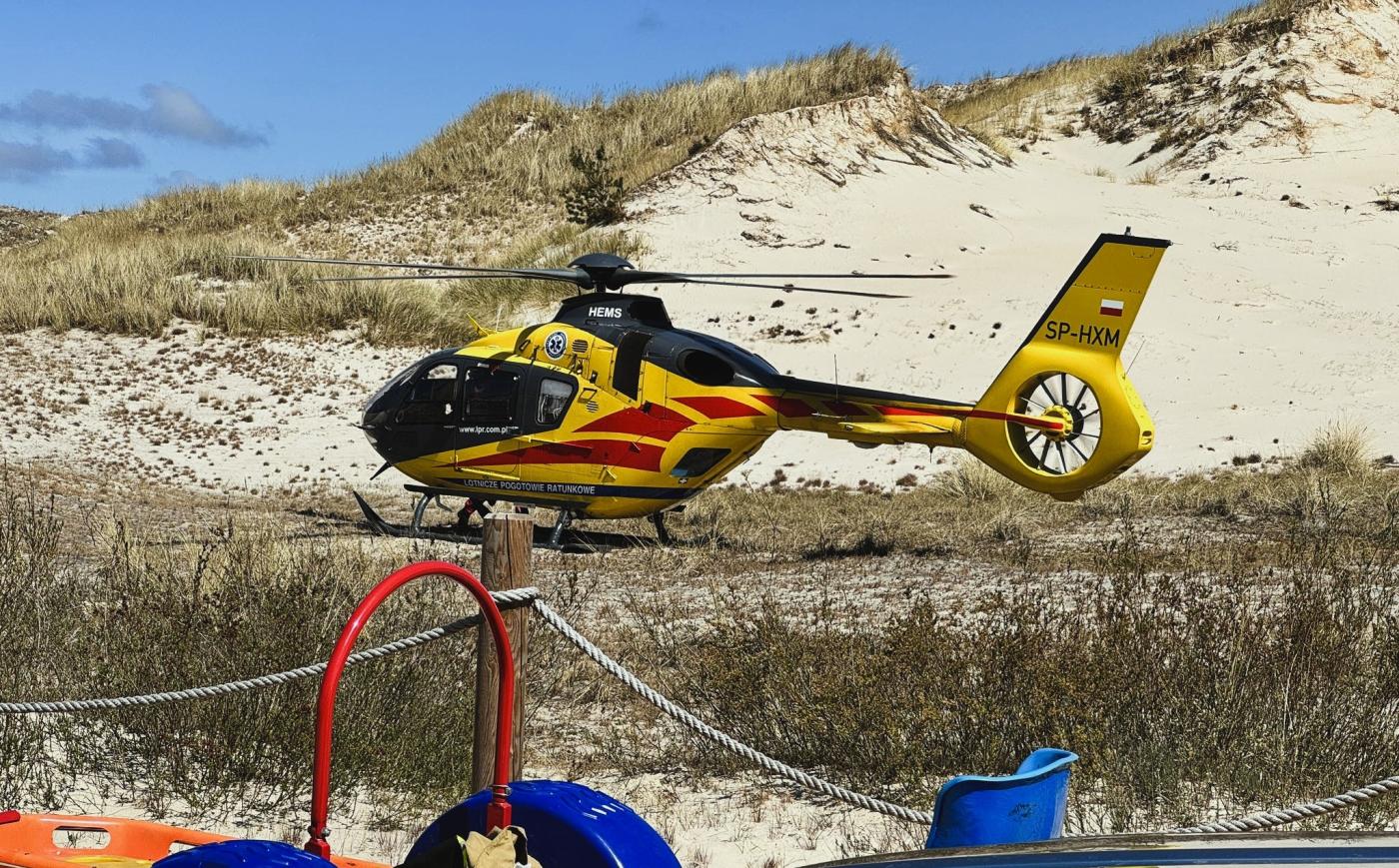
fot. Sebastian Kluska / MSPiR SAR / X
Cardiac arrest in a remote location
– For most, cardiac arrest is just a medical term. But when we heard “CPR on top of Łącka Dune,” we knew we were heading into the toughest situation imaginable – said Sebastian Kluska, commander of OSP Łeba. – No roads, just sand, crowds of tourists, and a long, exhausting approach on foot. There’s no backup. You rely on what you carry and what you know.
The scene was inaccessible to standard emergency vehicles. Even quad bikes can’t reach the top of the dune. That left the rescuers with one option: run uphill, through sand, carrying life-saving gear.
Physical limits pushed to the edge
– Anyone who’s ever climbed Łącka Dune with a medical bag knows what kind of punishment that is. Every step drains you. But knowing someone’s heart has stopped up there means you don’t slow down – said Kluska.
CPR began immediately upon arrival. For Janek, one of the youngest volunteers, it was his first real-life resuscitation attempt. Despite the pressure, training kicked in, and the team worked with precision and discipline.
Helicopter rescue buys precious time
– That day, help truly came from the sky – said Kluska. – When we saw the LPR helicopter approaching, we knew we had a fighting chance. But we had to hold the line until then. For long minutes, we were the entire chain of survival.
The helicopter’s arrival was a turning point, but conditions were just right. Not every situation offers that kind of support, and the initial minutes always fall to the local responders.
One quad bike is not enough
– A single quad bike is not a solution. We need a purpose-built vehicle for this type of terrain – lightweight but capable of transporting medics and equipment across sand – emphasized Sebastian Kluska. – If we can’t build roads in the national park, we must find new mobility strategies.
The issue isn’t new, but remains unresolved. Tourist traffic increases year by year, yet the emergency infrastructure remains minimal.
Słowiński National Park: beauty meets operational risk
– It’s a stunning place – but from a rescue standpoint, it’s hostile. There’s no support infrastructure, no real access paths, and no reliable way to evacuate a patient in a timely manner – said Kluska. – The risks are growing, but our equipment hasn’t kept pace.
Emergency teams are calling for investment in tools adapted to this unique landscape – not just for comfort, but for critical life-saving capability.
This time, a life was saved. But that’s no guarantee
– We succeeded. But we know we might not be that lucky next time – warned Sebastian Kluska. – Skill, strength, and teamwork only go so far. Without the right gear, someone might die simply because we couldn’t get there fast enough.
For the firefighters of OSP Łeba, this wasn’t just another call. It was a live-fire test of everything they train for – knowledge, coordination, physical resilience. And a stark reminder that the natural beauty they protect comes with unforgiving terrain and real operational risk.
Fire brigade calls for national strategy on remote rescue logistics
– Places like Łącka Dune demand different tools than a city street. Different risks, different timelines. We need decision-makers to understand that – said Sebastian Kluska.
The rescue ended in success thanks to the determination and professionalism of the responders. But it also raised a warning flag: without support, the next emergency might not have a happy ending.
see also
Buy us a coffee, and we’ll invest in great maritime journalism! Support Gazeta Morska and help us sail forward – click here!
Kamil Kusier
redaktor naczelny
comments
Add the first comment
see also
"Let everyone know we will prevail". Poland’s armed forces set strategic course for 2026-2039
“Army 500” and strategic transformation: Poland sets the course for long-term deterrence and allied readiness
Medical evacuation from offshore vessel in the Baltic. Rescue 511 helicopter and m/s Huragan deployed
Karol Nawrocki: “The strength of the republic lies in its armed forces”. Security requires national unity
Human trafficking, money laundering, millions frozen. Successful operation by border guard and tax administration
Evening SAR operation in the Baltic. Two kitesurfers stranded offshore
Medical evacuation from sailing ship in Gdynia port. 17-year-old safely transported
Medical evacuation from Danish-flagged vessel Skoven off Łeba. Joint SAR operation in the Baltic Sea
Almost 2.5 million travellers cleared in 2025 by the Maritime Border Guard
Frontex officers train with Polish Maritime Border Guard
ADVERTISEMENT
ADVERTISEMENT