









Tender controversy at Gdynia ferry terminal: POLSCA overshadowed by Swedes? Port authorities defend decision
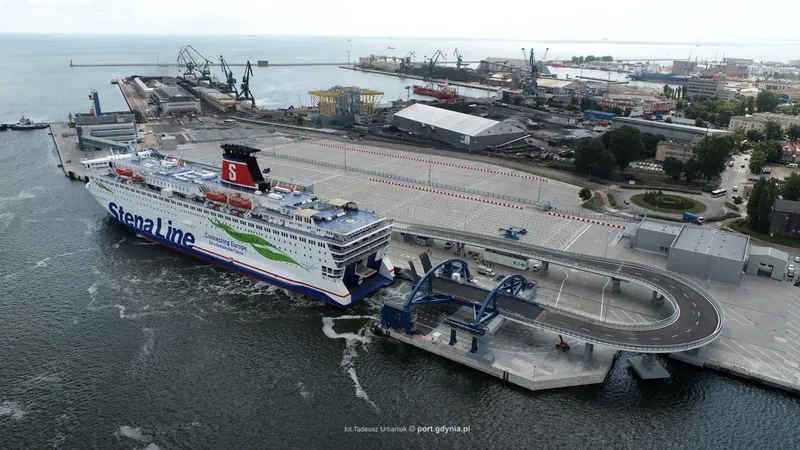
The recent outcome of the tender for a five-year operating contract at Gdynia’s Public Ferry Terminal has sparked sharp debate in Poland’s maritime and political circles. Swedish operator Stena Line secured the deal, despite reports that a consortium of Polish state-owned companies submitted a financially more favorable bid.
In brief
The Port of Gdynia defended the tender for a five-year operating contract at the Public Ferry Terminal, won by Swedish operator Stena Line. The port authority said the procedure complied with Polish law and EU funding rules, with the transport offer and the start date of operations as the key evaluation criterion and pricing set by a single tariff. Polish MPs Dorota Arciszewska-Mielewczyk and Kacper Płażyński attempted a parliamentary inspection at the port's management offices, reporting restricted access to documents and staff. The Port of Gdynia stressed that uninterrupted terminal operations from 1 January 2026 were the priority.
Parliamentary oversight blocked
Polish MPs Dorota Arciszewska-Mielewczyk and Kacper Płażyński (both PiS) attempted to carry out a parliamentary inspection at the Port of Gdynia’s management offices. According to their account, access to key documents was restricted and not all staff were authorized to provide information. Several board members were reportedly unavailable at the time.
- We wanted to clarify the details of the tender, which awarded a strategic facility to a foreign operator, and address concerns about the procedure and the decision-making process, said MP Kacper Płażyński.
Dorota Arciszewska-Mielewczyk stressed that their intervention was in response to significant public interest and mounting doubts about the tender.
Port of Gdynia: process fully compliant
The Port Authority countered criticism, insisting that the procedure was fully compliant with Polish law and EU funding requirements.
- The key evaluation criterion was the transport offer, particularly the start date of operations. Pricing in this case is unified and set by tariff, the authority said in a statement.
The new contract framework allows the port to phase out earlier concessions and apply full tariff rates, which management argues will boost revenues. Any deviation from the procedure, they warned, could have jeopardized EU co-financing for the terminal.
Wider industry implications
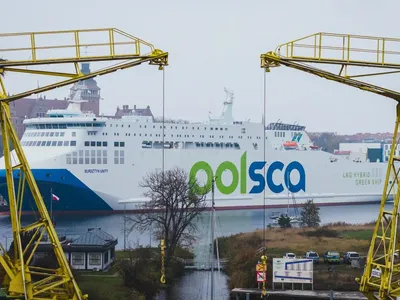
The decision has wider significance for Poland’s maritime policy. The government has repeatedly pledged to increase the role of Polish industry in the ferry and shipping sectors. Just months ago, it launched POLSCA, a state-backed venture intended to strengthen domestic ferry capacity.
Critics argue that awarding a five-year contract to a foreign operator undermines those ambitions. Port Gdynia, however, maintains that ensuring uninterrupted operations from 1 January 2026 was paramount—for both the port’s financial interests and its standing within European passenger and freight networks.
Source: Gazeta Morska · Compiled by: Kamil Kusier
Related articles
 Shipbuilding industry Poland christens ro-pax ferry Bursztyn Unity in Szczecin on Independence Day. Ystad service starts 18 November
 Energy and offshore Orlen Neptun deploys V-LiDAR buoys at Baltic West ahead of Poland's 2027 offshore wind auction
 Energy and offshore Equinor takes over Bałtyk 2 and 3 O&M base in Łeba. Port to serve 1.44 GW of offshore wind for 30 years
 Navy and defence Port Gdański Eksploatacja secures NATO NCAGE code. Gdańsk port company lines up for defence tenders
 Shipbuilding industry Ex-Enterprise towed to Mobile under $418.5m contract. Test case for Nimitz-class disposal begins
 Energy and offshore Energa renames Gdańsk gas plant company as foundations for 6,000-tonne turbine and boiler are laid
Comments (0)
The discussion is moderated by the editors: a comment appears after review. Your e-mail address is not published.
Nobody has commented on this article yet.