Talisman Sabre 25: integrated projection of maritime, informational, and allied power
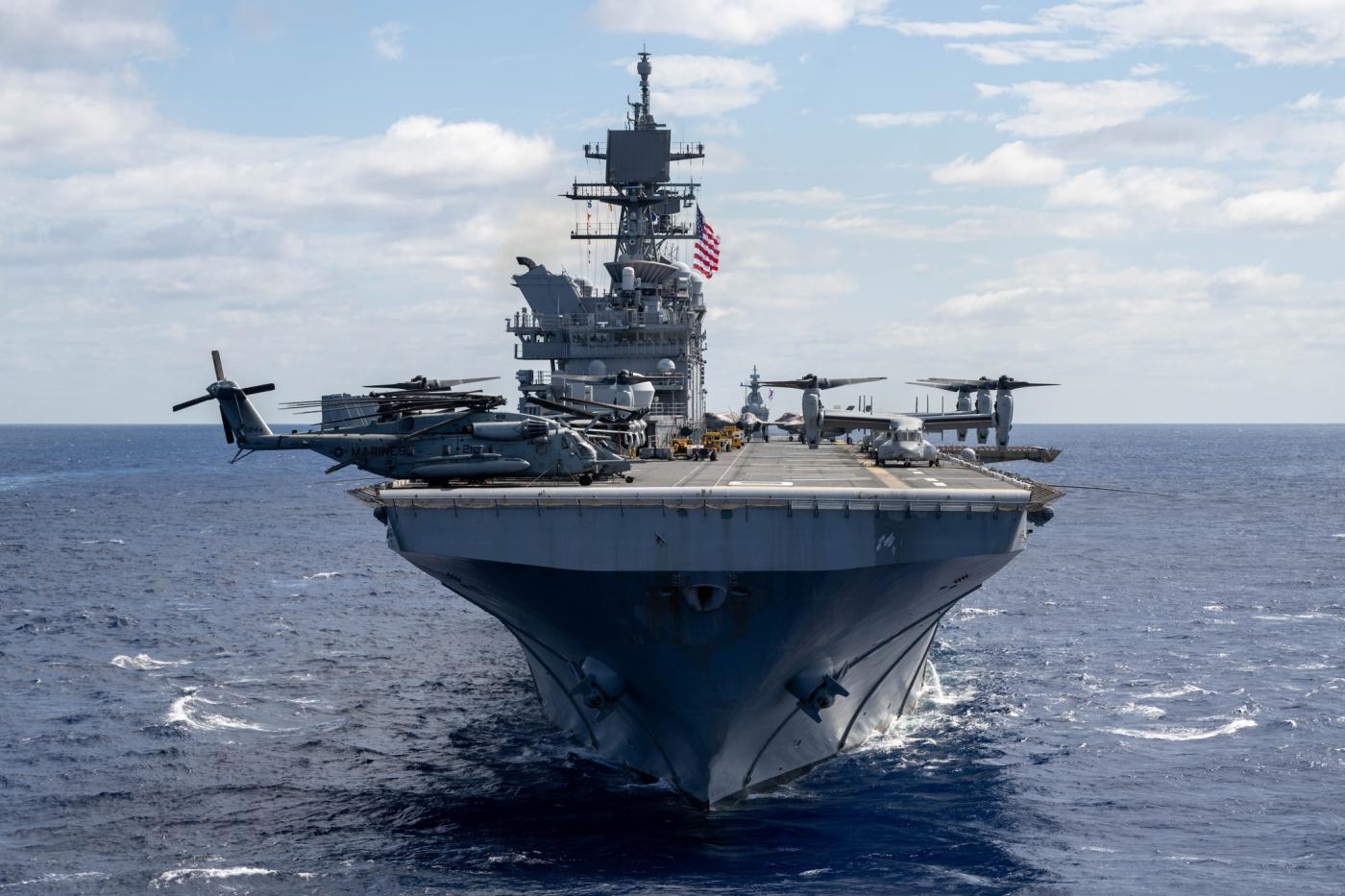
Exercise Talisman Sabre 2025 has emerged as a landmark event for joint maritime operations, with 19 partner nations deploying warships, aircraft, and amphibious forces to project a unified front in the increasingly contested Indo-Pacific. The exercise highlighted not only naval firepower but also information dominance and coalition cohesion across domains.
security navy worldwide nato news25 july 2025 | 20:34 | Source: Gazeta Morska | Prepared by: Kamil Kusier | Print
fot. fot. Royal Australian Navy
Double carrier strike power and Australia’s command role
This year marked a historic first for the Royal Australian Navy, with HMAS Sydney sailing in formation with both the UK’s HMS Prince of Wales and the US Navy’s USS George Washington. As the only Australian warship in the dual carrier strike group, Sydney commanded more than 30 multinational air assets, including F-35B Lightnings, Merlin and Wildcat helicopters.
- There are few exercises of this scale and complexity that take place this close to home, said Commander Ben Weller, commanding officer of Sydney. - It’s a strong reminder that we’re never alone at sea.
This rare operational opportunity demonstrated the increasing trust and interoperability between allied navies across NATO and Indo-Pacific partners.
CTG 628.1: amphibious power, allied precision
At the heart of Combined Task Group 628.1, a powerful formation of 13 warships executed complex manoeuvres—culminating in a striking “arrowhead” PHOTEX formation. The force included more than 6,000 sailors, soldiers and aviators and was centered around amphibious assault ships ROKS Marado, HMAS Canberra, and HMAS Choules. Escort ships such as USS Higgins and FNS Vendémiaire reinforced the formation.
- We are highly capable in all forms of maritime warfare. We are practised, we are lethal, and we are ready, declared Captain Chris Doherty, commander of the Australian Amphibious Task Force.
From amphibious landings and mine countermeasures to anti-submarine warfare with HMAS Farncomb, the task group completed all key mission rehearsals in preparation for full-spectrum operations.
MIOC: shaping the information environment
TS25 also saw the creation of the first-ever multinational Information Operations Centre (MIOC)—a breakthrough initiative that brought together 80 specialists from 12 nations to coordinate strategic messaging and counter-disinformation in real time.
- This centre reflects the trust and unity of purpose among allies to operate in the information environment just as we do at sea, said LtCol Katherine Redding (US Army), MIOC co-director.
MIOC integrates cyber, space, electromagnetic spectrum, and operational security functions to shape perceptions, protect friendly actions, and deliver strategic narratives aligned with collective interests. It is, as Redding noted,
- A state-of-the-art capability built on diversity of thought and multinational problem-solving.
Naval twins, cultural bridges: HMAS Sydney and ESPS Méndez Núñez
An unexpected moment of camaraderie emerged when HMAS Sydney and Spanish Navy’s ESPS Méndez Núñez sailed side-by-side. Built on the same Navantia-designed hull, the two guided missile destroyers—commissioned 14 years apart—offered a rare opportunity for crew exchanges.
Sailors traded patches, swapped caps, and explored each other’s ships.
- It felt like stepping into an alternate version of our own ship, said Able Seaman Kedsara Sathukan. - They had bright walls, hanging sausages, and even legs of ham carved on demand—it was surreal.
For Senior Chief Petty Officer Daniel Saco Goday, the visit was a step back in time:
- Sydney is newer, and some features have clearly evolved, but the core design is immediately familiar.
Strategic takeaways: readiness through unity
From precision amphibious operations to unified information effects, Talisman Sabre 25 served as a live demonstration of coalition lethality, adaptability, and strategic coordination.
It reaffirmed the Indo-Pacific as a theatre of multinational military readiness, not only in kinetic terms but also across the cognitive and cyber domains.
For maritime industries, the exercise reinforces the growing demand for:
- multi-role naval platforms
- interoperable systems
- advanced C4ISR integration
- information domain capabilities
- agile logistics and sustainment at sea
As technology and threats evolve, so too must the alliances that secure maritime freedom. Talisman Sabre 25 proved one thing: when navies operate as one—across nations, platforms, and domains—they project not just power, but purpose.
Buy us a coffee, and we’ll invest in great maritime journalism! Support Gazeta Morska and help us sail forward – click here!
Kamil Kusier
redaktor naczelny
gallery


comments
Add the first comment
see also
"Let everyone know we will prevail". Poland’s armed forces set strategic course for 2026-2039
“Army 500” and strategic transformation: Poland sets the course for long-term deterrence and allied readiness
Medical evacuation from offshore vessel in the Baltic. Rescue 511 helicopter and m/s Huragan deployed
Karol Nawrocki: “The strength of the republic lies in its armed forces”. Security requires national unity
Human trafficking, money laundering, millions frozen. Successful operation by border guard and tax administration
Evening SAR operation in the Baltic. Two kitesurfers stranded offshore
Medical evacuation from sailing ship in Gdynia port. 17-year-old safely transported
Medical evacuation from Danish-flagged vessel Skoven off Łeba. Joint SAR operation in the Baltic Sea
Almost 2.5 million travellers cleared in 2025 by the Maritime Border Guard
Frontex officers train with Polish Maritime Border Guard
ADVERTISEMENT
ADVERTISEMENT