









Strategic Alliance of Polish Seaports: A New Era of Competitiveness, Resilience and Growth
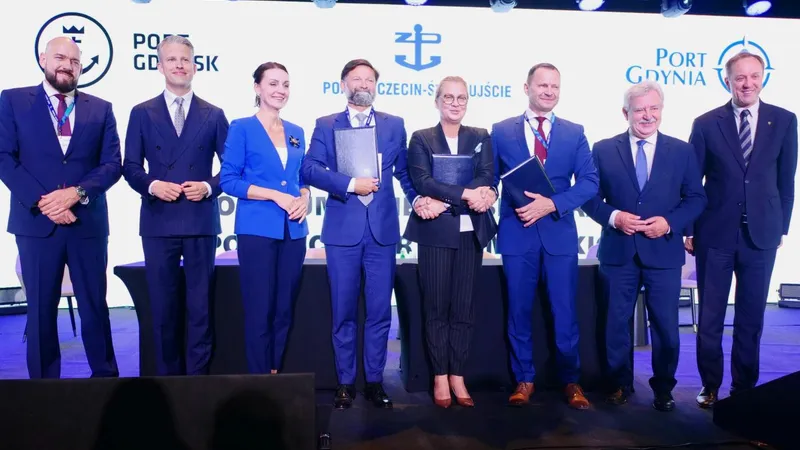
On June 24, 2025, the four Polish seaports of Gdańsk, Gdynia, Szczecin and Świnoujście – all designated as ports of fundamental importance to the national economy – signed a Landmark Cooperation Agreement aimed at strengthening their role in the European and global transport and logistics networks.
In brief
The ports of Gdańsk, Gdynia, Szczecin and Świnoujście signed a cooperation agreement on 24 June 2025 covering energy transition, digitalisation, infrastructure development and joint representation before national and EU institutions. The initiative was announced during the Polish Ports 2030 Congress, where Deputy Minister of Infrastructure Arkadiusz Marchewka spoke of smart cooperation strengthening Poland's voice on the international stage. The signatories announced a development programme for Polish seaports to 2035 with an outlook to 2060, construction of the Droga Czerwona road in Gdynia, modernisation of railway line 201 and lease agreements of at least 30 years.
The agreement opens the door to joint initiatives focused on competitiveness, port infrastructure, innovation, resilience, and security, while laying a foundation for coordinated strategic engagement in both national and international frameworks.
– This is about smart cooperation, said Arkadiusz Marchewka, Deputy Minister of Infrastructure, during the opening of the Polish Ports 2030 Congress. - Healthy competition remains essential, but stronger collaboration will make the Polish voice more influential on the international stage and help us reach new customers with a more attractive offer.
Unified Vision, Strategic Objectives
The cooperation framework targets key priorities: sustainable port development, transport accessibility, technological modernization, and advocacy at the EU level. With ports facing complex challenges in an increasingly interconnected and turbulent global economy, the alliance responds with coordinated strategic action.
– We must align our positions on key issues like sustainable growth and the blue economy to enhance efficiency and harmonize standards, noted Dorota Pyć, CEO of the Port of Gdańsk Authority. - Working together is more crucial than ever in the face of geopolitical and economic volatility.
– Strong ports mean a strong state – that’s not just a slogan, it's an economic and security reality, added Piotr Gorzeński, CEO of the Port of Gdynia. - Joint actions will help us secure long-term influence within the European transport ecosystem.
Looking to 2060: Long-Term Roadmap
A core element of the agreement is the joint creation of a “Polish Seaport Development Program until 2035 with a vision to 2060.” This long-term strategy will prioritize:
- Critical infrastructure investments (e.g., the Red Road in Gdynia, new Island Port link in Gdańsk, modernization of rail line 201 and the Nadodrzanka corridor)
- Southern European connections
- Integration with the Rail Baltica network
Port authorities have also agreed to explore the implementation of a unified methodology for rail infrastructure access charges – a move that could simplify operations for logistics operators.
Green Transition and Renewable Energy Infrastructure
The agreement places strong emphasis on energy transition. Signatories will jointly support the development of renewable energy facilities, including production, conversion, and storage infrastructure within port areas. Other key actions include:
- Deployment of Onshore Power Supply (OPS) systems for ships
- Establishment of alternative fuel bunkering infrastructure (LNG, methanol, hydrogen, ammonia)
- Legislative advocacy to remove regulatory barriers to green energy investments
Digital Transformation and Customs Innovation
Digitalisation is a critical pillar of the alliance. Ports will enhance their Port Community Systems (PCS), integrate with EU-wide IT solutions – particularly the European Maritime Single Window environment (EMSWe) – and introduce modern tools for managing maritime, rail, and road traffic as well as cargo processing.
AI-based tools will be implemented to combat customs fraud and optimize clearance procedures. The development of a national Customs Time Monitoring System is also in the pipeline, supporting tighter cooperation with border authorities.
– We aim to create the ports of the future – smart, sustainable, and fully integrated with European and domestic logistics corridors, said Jarosław Siergiej, CEO of the Szczecin and Świnoujście Seaports Authority. - One of our shared goals is the acceleration of strategic infrastructure projects and harmonization of digital systems.
Boosting Investment and Legal Clarity
To enhance investment attractiveness, the ports will coordinate changes in spatial development plans, align strategic documents, and offer long-term lease agreements (minimum 30 years) to incentivize private capital inflows.
In addition, the ports intend to push for improved legislative clarity and remove administrative bottlenecks, fostering a more efficient, transparent business environment within maritime logistics.
Poland Sends a Clear Signal to the Baltic and CEE Region
This agreement marks a milestone in the integration of the Polish maritime sector and a strong message to the international community: Poland is ready to lead as a key logistics and transport player in the Baltic Sea and Central and Eastern Europe.
With shared strategy, coordinated investment, and unified representation in EU forums, Polish seaports are poised to evolve into future-proof, digitally mature and climate-resilient logistics hubs for decades to come.
Source: Gazeta Morska · Compiled by: Kamil Kusier
Related articles
 Shipbuilding industry Poland christens ro-pax ferry Bursztyn Unity in Szczecin on Independence Day. Ystad service starts 18 November
 Energy and offshore Orlen Neptun deploys V-LiDAR buoys at Baltic West ahead of Poland's 2027 offshore wind auction
 Energy and offshore Equinor takes over Bałtyk 2 and 3 O&M base in Łeba. Port to serve 1.44 GW of offshore wind for 30 years
 Navy and defence Port Gdański Eksploatacja secures NATO NCAGE code. Gdańsk port company lines up for defence tenders
 Shipbuilding industry Ex-Enterprise towed to Mobile under $418.5m contract. Test case for Nimitz-class disposal begins
 Energy and offshore Energa renames Gdańsk gas plant company as foundations for 6,000-tonne turbine and boiler are laid
Comments (0)
The discussion is moderated by the editors: a comment appears after review. Your e-mail address is not published.
Nobody has commented on this article yet.