Storm surge, severe weather and winter instability affect the southern Baltic
Late December brings highly challenging hydro-meteorological conditions across the Southern Baltic Sea and Poland’s coastal zone. According to warnings issued by the Hydrological Forecast Office in Gdynia and the Marine Meteorological Forecast Office in Szczecin, the region is currently facing a combination of storm-force winds, elevated sea levels and highly dynamic winter weather.
security weather pomerania west pomerania news27 december 2025 | 11:38 | Source: Gazeta Morska | Prepared by: Kamil Kusier | Print
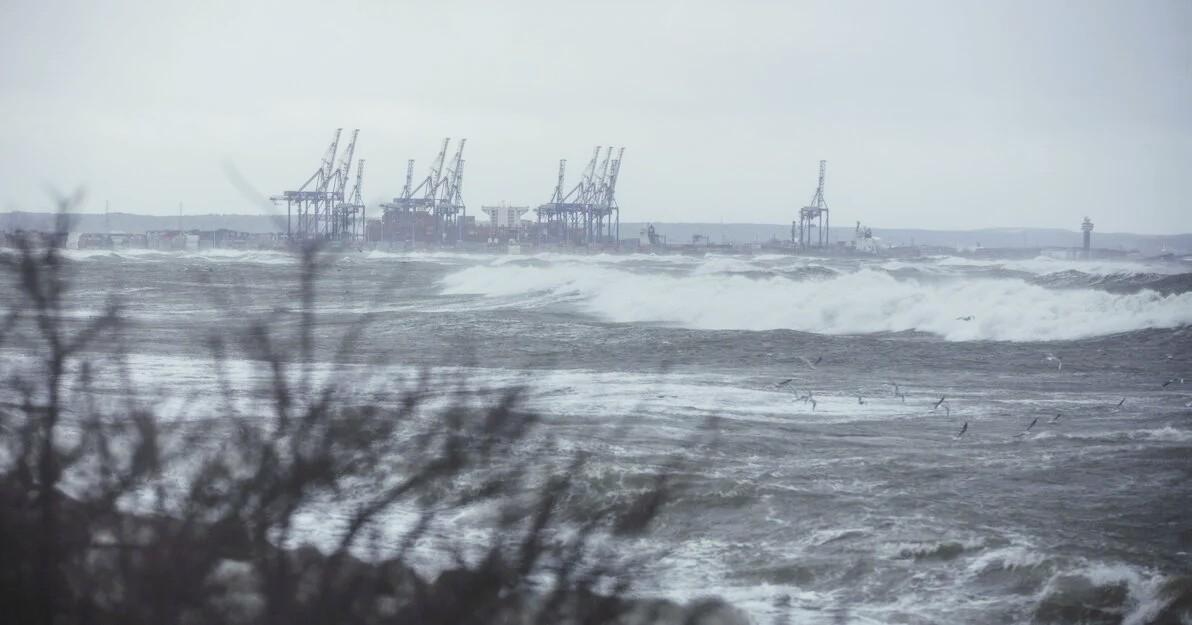
fot. gdansk.pl
A level-two hydrological warning has been issued for storm surges exceeding warning thresholds along the Polish coast and internal maritime waters, including the Southern and South-Eastern Baltic. Strong northerly winds are expected to force seawater toward the shoreline, leading to elevated water levels and, locally, the possibility of reaching alarm stages. Backwater effects pose a significant risk to ports, marinas, coastal infrastructure and low-lying river mouth areas.
At the same time, a level-two meteorological warning for a storm is in effect for the eastern coastal zone. Westerly winds veering north-west to north are forecast to reach 6–7 Beaufort, with gusts up to 8 Beaufort. Such conditions significantly limit safe navigation, port operations and offshore activities.
The situation is further intensified by an unstable synoptic pattern affecting much of the country. Poland remains under the influence of active low-pressure systems and associated frontal zones. Strong convection developing over the Baltic Sea is transporting various forms of precipitation inland, ranging from rain and sleet to heavy snowfall. Locally, well-developed convective cells may produce snowstorms accompanied by graupel or hail.
Moderate to strong winds are expected not only offshore but also across large parts of the country. Combined with low and highly variable near-surface temperatures, this increases the risk of icing on roads, pavements and port infrastructure. Freezing fog may also develop in some areas, causing rime and black ice, which is particularly hazardous for transport and technical operations.
Looking ahead, long-range model guidance suggests an increased risk of frost episodes in early January. Nevertheless, the current winter season is expected to remain highly variable, with periods of average temperatures rapidly alternating with sudden drops below freezing. Meteorologists emphasize that monthly forecasts carry considerable uncertainty and are subject to frequent adjustments.
For the maritime, port and coastal safety sectors, the coming days will require heightened vigilance, continuous monitoring of forecasts and a high level of operational readiness.
Buy us a coffee, and we’ll invest in great maritime journalism! Support Gazeta Morska and help us sail forward – click here!
Kamil Kusier
redaktor naczelny
comments
Add the first comment
see also
"Let everyone know we will prevail". Poland’s armed forces set strategic course for 2026-2039
“Army 500” and strategic transformation: Poland sets the course for long-term deterrence and allied readiness
Medical evacuation from offshore vessel in the Baltic. Rescue 511 helicopter and m/s Huragan deployed
Karol Nawrocki: “The strength of the republic lies in its armed forces”. Security requires national unity
Human trafficking, money laundering, millions frozen. Successful operation by border guard and tax administration
Evening SAR operation in the Baltic. Two kitesurfers stranded offshore
Medical evacuation from sailing ship in Gdynia port. 17-year-old safely transported
Medical evacuation from Danish-flagged vessel Skoven off Łeba. Joint SAR operation in the Baltic Sea
Almost 2.5 million travellers cleared in 2025 by the Maritime Border Guard
Frontex officers train with Polish Maritime Border Guard
ADVERTISEMENT
ADVERTISEMENT