









Stadt Naval to deliver electric propulsion system for Polish rescue vessel Ratownik
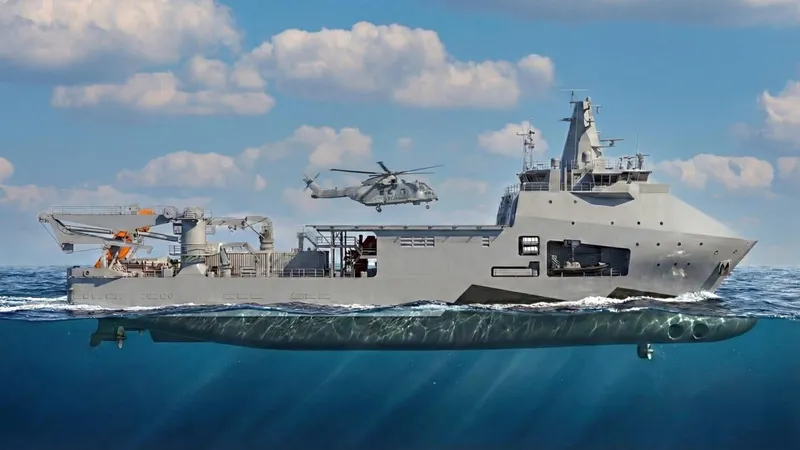
STADT Naval AS will supply a comprehensive electric propulsion system for the rescue vessel Ratownik under construction at PGZ Stocznia Wojenna. The contract strengthens Norwegian-Polish cooperation in maritime security technologies, particularly in the Baltic Sea region, which is gaining increasing strategic importance for NATO operations.
In brief
STADT Naval AS will supply an 8,000 kWe electric propulsion system for the rescue ship of the Ratownik programme being built at PGZ Stocznia Wojenna. The solution, based on Lean Propulsion technology, includes a 690 V AC switchboard and drives five controllable-pitch propellers, with power provided by four diesel generator sets of 3 MW each. The 96-metre vessel will be used for rescuing submarine crews, diving operations and protecting underwater infrastructure in the Baltic Sea. PGZ Stocznia Wojenna president Marcin Ryngwelski stressed that an exceptionally quiet electric drive is a necessity in such operations.
Military-grade electric propulsion technology
Under the agreement, STADT Naval will deliver an 8000 kWe energy and propulsion package based on its patented Lean Propulsion® technology, together with a main AC 690 V switchboard.
The system will drive five controllable pitch propellers powered by induction AC motors manufactured by STADT. The solution is designed without the use of rare earth elements, improving supply chain security and technological independence.
Unlike many propulsion architectures based on DC power distribution, the Lean Propulsion® system operates exclusively on AC power transmission. This architecture enables virtually silent propeller operation, eliminates electromagnetic interference (EMI), and ensures the lowest possible underwater radiated noise (URN), verified through testing by the Norwegian Navy.
The propulsion solution also provides very high reliability and energy efficiency, with reported drivetrain energy losses of only around 0.1% while maintaining reduced system complexity.
Electrical energy for the vessel will be generated by four diesel-powered generator sets, each rated at 3 MW. The produced electricity will supply the main controllable pitch propellers, a retractable stern propeller, bow thrusters, and other onboard systems.
Ratownik - a strategic asset for Baltic Sea operations
The 96-metre rescue vessel is designed to perform highly complex maritime missions.
The unit will support submarine rescue operations, advanced diving missions, and protection of subsea infrastructure in the Baltic Sea. Key operational requirements include high-precision dynamic positioning (DP), exceptional manoeuvrability, and extremely low acoustic signature to ensure safe operations in sensitive underwater environments.
- For the Ratownik project we are selecting top-tier solutions – an ultra-quiet electric propulsion system is essential for submarine rescue operations. This demonstrates that Polish shipyards are capable of delivering world-class maritime projects - said Marcin Ryngwelski, CEO of PGZ Stocznia Wojenna.
Continued expansion of STADT Naval in Poland
The Ratownik will be the 18th vessel equipped with a dynamic positioning system based on Lean Propulsion® technology.
At the same time, it will be the fourth naval project in Poland using STADT’s full energy and electric propulsion solutions, confirming the company’s strong market position in the Baltic region.
- This is the fourth naval project in Poland using our complete energy and electric propulsion portfolio, which confirms our strong international market position, especially in the Baltic countries. The project also contributes to further growth and new employment opportunities in Gjerdsvice and represents an excellent starting point for long-term cooperation between STADT Group, PGZ Stocznia Wojenna and Poland – said Hallvard L. Slettevoll, CEO of STADT Group.
Baltic Sea as a key technological and security zone
Industry experts emphasize that the development of advanced low-noise propulsion systems is becoming increasingly important in the context of Baltic Sea operational security.
Due to its strategic location, the Baltic Sea remains one of the key operational theatres within the NATO security framework. Investments in stealth maritime technologies and advanced rescue capabilities are strengthening the operational readiness of coastal states.
Source: Gazeta Morska · Compiled by: Kamil Kusier
Related articles
 Shipbuilding industry Poland christens ro-pax ferry Bursztyn Unity in Szczecin on Independence Day. Ystad service starts 18 November
 Energy and offshore Orlen Neptun deploys V-LiDAR buoys at Baltic West ahead of Poland's 2027 offshore wind auction
 Energy and offshore Equinor takes over Bałtyk 2 and 3 O&M base in Łeba. Port to serve 1.44 GW of offshore wind for 30 years
 Navy and defence Port Gdański Eksploatacja secures NATO NCAGE code. Gdańsk port company lines up for defence tenders
 Shipbuilding industry Ex-Enterprise towed to Mobile under $418.5m contract. Test case for Nimitz-class disposal begins
 Energy and offshore Energa renames Gdańsk gas plant company as foundations for 6,000-tonne turbine and boiler are laid
Comments (0)
The discussion is moderated by the editors: a comment appears after review. Your e-mail address is not published.
Nobody has commented on this article yet.