Saildrone - Lockheed Martin partnership marks a strategic shift in autonomous maritime defense
The newly announced partnership between Saildrone and Lockheed Martin represents a significant milestone in the evolution of unmanned surface vessel (USV) technologies. With a 50 million USD investment from Lockheed Martin, Saildrone’s proven autonomous ocean platforms—long used for scientific and environmental missions—are now entering a new phase of militarization and defense-oriented development.
security business investments worldwide defense industry equipment and technology news06 december 2025 | 09:09 | Source: Gazeta Morska | Prepared by: Oskar Wojciechowski | Print
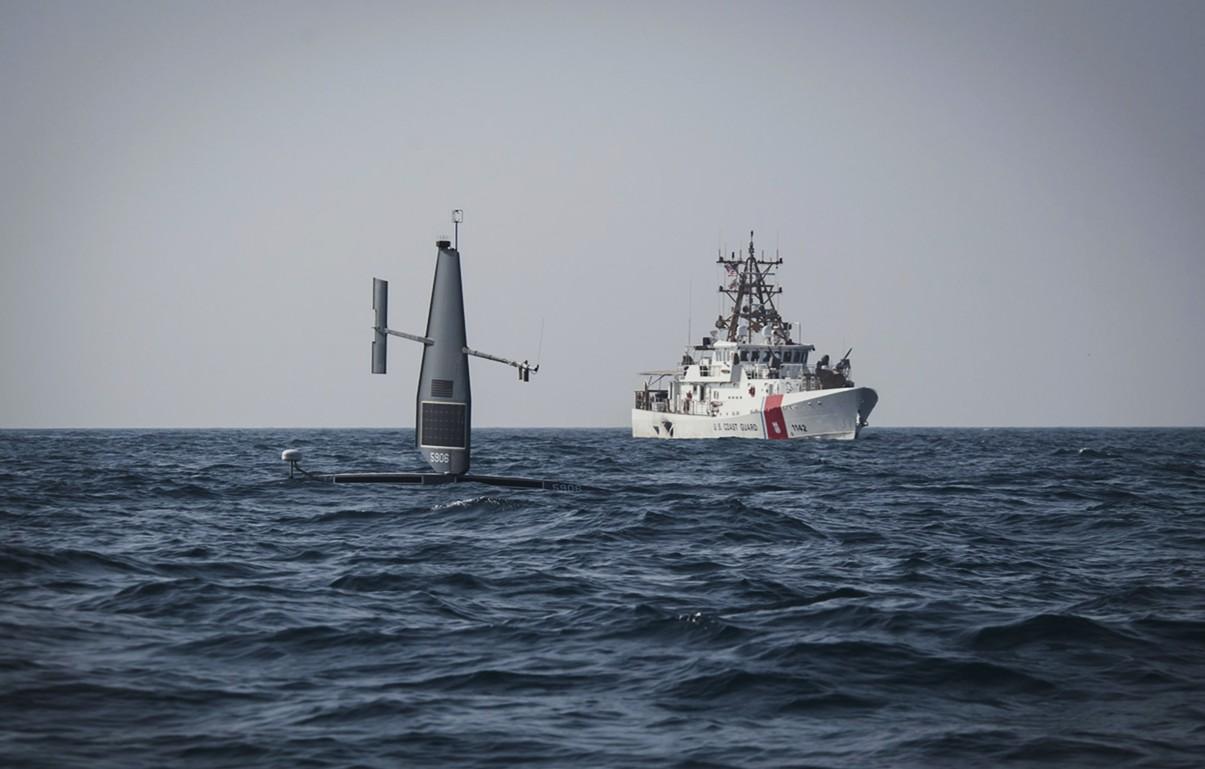
fot. Saildrone
A mature technology turns toward defense
For more than a decade, Saildrone has operated some of the world’s most advanced long‑endurance USVs. Powered by renewable energy and equipped with sophisticated sensor suites, these vessels have demonstrated exceptional reliability across multi‑month missions in harsh oceanic conditions.
According to Saildrone CEO Richard Jenkins, expanding into defense is a natural evolution. Technologies validated in climate research, ocean mapping and maritime observation can be rapidly adapted to military requirements—especially in persistent surveillance, intelligence gathering and domain awareness.
Integrating missile systems onto the Surveyor platform
The first phase of cooperation will focus on integrating combat systems—most notably the JAGM Quad Launcher—onto the Saildrone Surveyor, the company’s largest long‑range USV. Originally designed for deep‑ocean bathymetry and environmental monitoring, the Surveyor is now set to become a fully capable combat platform.
Future development paths include larger USVs with greater payload capacity, expanded support for anti‑submarine warfare missions, and the ability to operate as part of distributed naval formations alongside crewed vessels.
Operational implications for modern navies
Saildrone’s shift toward defense comes at a time when navies worldwide are accelerating investments in autonomous maritime systems. USVs promise lower operational costs, reduced risk to personnel, and the ability to maintain a constant presence in contested or strategically sensitive waters.
Thanks to their low acoustic and radar signatures, long endurance and potential for swarm tactics, autonomous vessels could become essential components for:
- protection of critical maritime infrastructure,
- wide‑area surveillance,
- anti‑piracy and interdiction missions,
- maritime domain awareness in grey‑zone environments.
Strategic context
Lockheed Martin’s investment underscores a broader defense‑industry trend: leveraging dual‑use civilian technologies to rapidly expand military capabilities. Transforming Saildrone’s research‑oriented platforms into armed naval assets could reshape the balance of maritime operations.
Over the next decade, USVs derived from the Saildrone line are likely to become indispensable tools for nations seeking scalable, cost‑effective and highly autonomous ocean‑presence solutions.
The Saildrone–Lockheed Martin partnership marks the emergence of a new class of unmanned naval platforms. By combining Saildrone’s expertise in autonomous navigation with Lockheed Martin’s experience in advanced weapons integration, the two companies are laying the groundwork for a generation of USVs capable of long‑duration missions, high‑autonomy operations and seamless integration with national defense architectures.
What once seemed experimental is rapidly becoming central to the future maritime battlespace.
Buy us a coffee, and we’ll invest in great maritime journalism! Support Gazeta Morska and help us sail forward – click here!
Oskar Wojciechowski
redaktor
comments
Add the first comment
see also
Radmor hosts delegation from the Republic of Turkey. Advancing maritime security cooperation
French Navy expands global operations from the Pacific to the Red Sea
"Let everyone know we will prevail". Poland’s armed forces set strategic course for 2026-2039
“Army 500” and strategic transformation: Poland sets the course for long-term deterrence and allied readiness
Medical evacuation from offshore vessel in the Baltic. Rescue 511 helicopter and m/s Huragan deployed
Karol Nawrocki: “The strength of the republic lies in its armed forces”. Security requires national unity
Human trafficking, money laundering, millions frozen. Successful operation by border guard and tax administration
Evening SAR operation in the Baltic. Two kitesurfers stranded offshore
Medical evacuation from sailing ship in Gdynia port. 17-year-old safely transported
Medical evacuation from Danish-flagged vessel Skoven off Łeba. Joint SAR operation in the Baltic Sea
ADVERTISEMENT
ADVERTISEMENT