Rescue Ship Program: a new chapter for Poland’s support fleet
After five decades of service by ORP Piast and ORP Lech, Poland is preparing to introduce one of the most advanced rescue vessels in the Baltic Sea region. The contract for the construction of the Ratownik (“Rescuer”), signed in December 2024 by the consortium of PGZ Naval Shipyard, Polska Grupa Zbrojeniowa, and the OBR CTM R&D Centre, responds to the Navy’s growing operational needs and the challenges associated with securing critical subsea infrastructure in the Baltic.
Content partner: PGZ Stocznia Wojenna navy pomerania shipbuilding industry defense industry tricity news25 november 2025 | 14:37 | Source: Gazeta Morska | Print
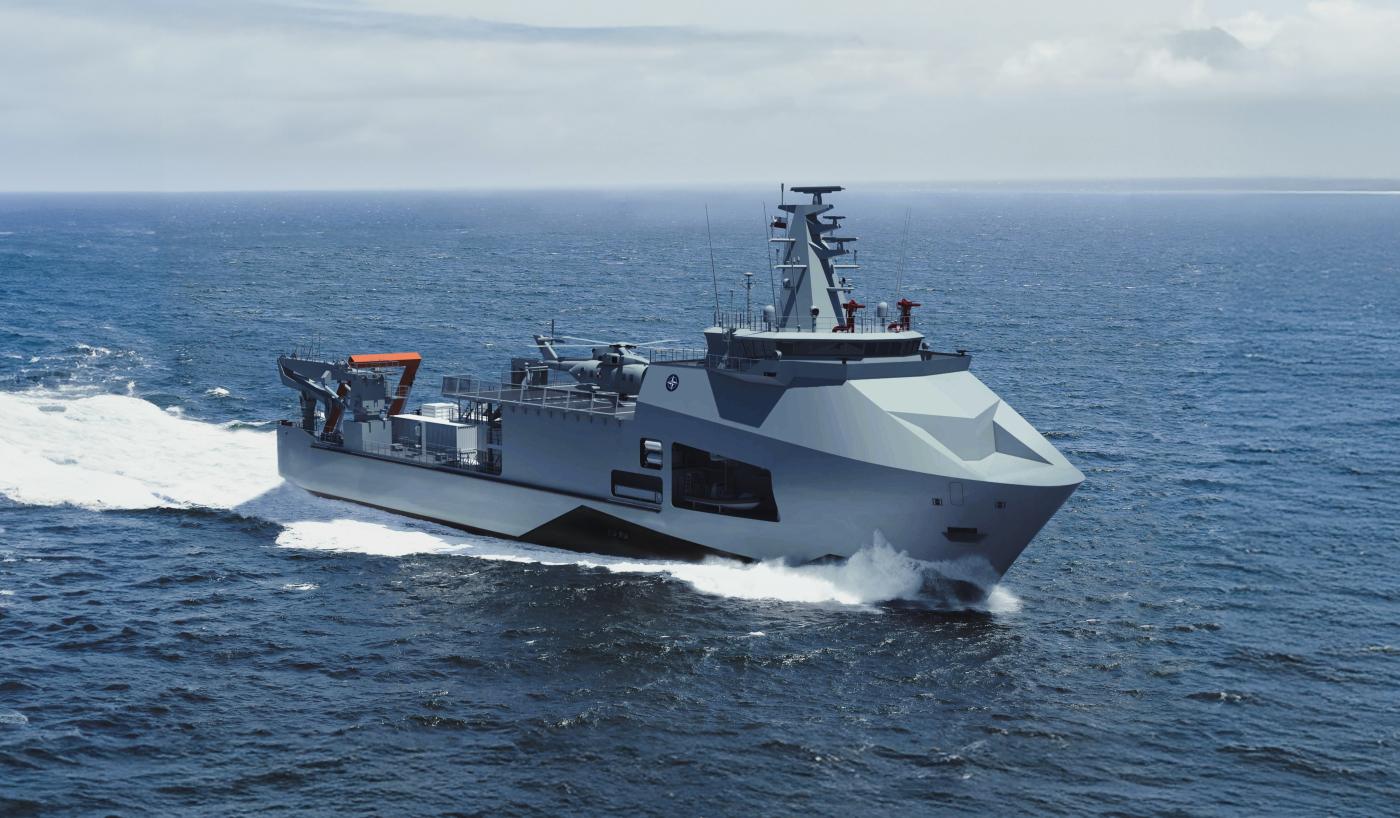
fot. PGZ Stocznia Wojenna
Rescue, protect, support
Maritime rescue operations encompass far more than the search-and-rescue actions known from media reports. A modern rescue ship is a mobile platform fitted with systems enabling operations across a wide range of scenarios.
The vessel’s primary mission is to provide dedicated support to submarine operations—from routine training to emergency situations that demand immediate intervention. Ratownik will be equipped with systems enabling the detection and localization of a distressed submarine in challenging conditions, maintaining communication with its crew, and conducting deep-water rescue operations.
A second key mission set concerns the protection of subsea infrastructure. Recent incidents—including the damage to the EstLink2 power cable linking Finland and Estonia and the Nord Stream pipeline explosions—have demonstrated how vulnerable seabed-laid critical infrastructure can be. Ratownik will employ advanced inspection systems capable of diagnostic and intervention tasks involving communication cables, pipelines, and other strategically important subsea assets.
The third operational dimension is the provision of support to NATO allies. The Baltic Sea is one of the most active naval theatres in the Alliance. Ratownik will participate in multinational rescue exercises, provide safety cover during joint manoeuvres, and support allied underwater rescue operations.
6,500 tons of rescue capability
Measuring 96 meters in length, with a beam of 19 meters and a displacement of 6,500 tons, Ratownik will be one of the largest rescue ships in the Baltic region. For comparison, the Polish Navy’s current vessels ORP Piast and ORP Lech displace around 1,800 tons and measure 73 meters. Sweden’s HSwMS Belos, regarded as a modern rescue ship, displaces approximately 4,300 tons.
A range of 6,000 nautical miles at economical speed will allow the vessel to conduct multi-week missions without refuelling, covering not only the entire Baltic Sea but also large portions of the North Sea. A maximum speed of 16 knots provides the mobility required for time-critical response.
The 100-person crew will include not only sailors but also deep-diving teams, ROV operators, rescue-system specialists, and medical personnel trained to support maritime accident victims. An additional nine berths are allocated for mission-specific specialists—submarine-system experts, subsea-infrastructure engineers, or extra medical teams depending on operational needs.
The vessel will feature advanced sonar suites, a dynamic positioning system essential for precision station-keeping, and facilities for the deployment and recovery of remotely operated vehicles capable of reaching areas inaccessible to divers.
Construction timeline
The first steel cutting is scheduled for 26 November 2025, marking the start of physical construction. The keel-laying ceremony will follow in February 2026. Launching is planned for 2027, after which the ship will enter the sea-trial phase. Delivery to the Polish Navy is expected in 2029.
The contract, valued at more than PLN 1 billion, is being executed by a consortium in which PGZ Naval Shipyard leads hull construction and systems integration, PGZ coordinates cooperation with combat-system suppliers, and OBR CTM provides specialist design expertise for rescue-system architecture.
Not all rescue ships are created equal
The commissioning of Ratownik in 2029 will significantly strengthen rescue capabilities not only for Poland but for the entire Baltic region. Rescue vessels currently operating in the Baltic vary widely in capability. Sweden’s HSwMS Belos, a dedicated rescue ship commissioned in 2019, is fitted with advanced submarine-rescue systems. Germany operates multipurpose EGV-type vessels combining rescue roles with mine-warfare support. Finland deploys smaller rescue units optimized for shallow-water operations.
Ratownik will complement these assets by offering full operational capability across all depths present in the Baltic—from shallow coastal waters to the 450-meter depressions in the central basin. This versatility is particularly important in the context of Poland’s future Orka-class submarines, which will require dedicated rescue coverage across their full operational depth envelope.
NATO cooperation in submarine rescue has strong traditions. Exercises such as SUBMAREX and DYNAMIC MONARCH regularly test procedures and technical readiness among allied rescue units. Ratownik will enhance Poland’s contribution to these efforts and enable participation in multinational rescue operations when required.
Ready for new challenges
Introducing Ratownik into service is not merely a platform replacement—it elevates the operational capabilities of the Polish Navy to a new level. Designed for contemporary challenges—from supporting future submarines to safeguarding subsea critical infrastructure—the vessel will serve as a cornerstone of the support fleet for decades.
In the coming years, Ratownik will also be the platform on which Poland builds the operational expertise needed for effective submarine operations. Its crews will conduct rescue drills, refine procedures, and test equipment that may one day decide the fate of a submarine’s crew in an emergency.
see also
Buy us a coffee, and we’ll invest in great maritime journalism! Support Gazeta Morska and help us sail forward – click here!
Redakcja Gazeta Morska
użytkownik
comments
Add the first comment
see also
Lithium at the core. TKMS and E3 Lithium align on Canada’s submarine ambitions
The end of a quiet era. Polish Navy harbour tugs in transition
105th life-saving mission. Naval Aviators conduct double "Heart Action" transport
Another successful medical evacuation over the Baltic Sea. Yet another intervention at offshore wind farms
Key leadership changes announced in the Polish Armed Forces
137 years since the Apia cyclone in Samoa: a lesson for modern shipping
RAS exercises in the Caribbean. Dutch patrol vessel Zr.Ms. Friesland conducts joint operations with French Navy
Royal Navy invests in uncrewed surface vessels. Project Beehive to accelerate development of the "Hybrid Navy"
French Navy increases operational activity from the Mediterranean to the Arctic
Polish Navy retires prototype minesweeper ORP Gopło after 44 years of service
ADVERTISEMENT
ADVERTISEMENT