Poland’s Orka submarine program. Final decision expected by year-end
Polish Prime Minister Donald Tusk has confirmed that the government will adopt a resolution this week obliging the Ministry of Defence to conclude the purchase of new submarines under the long-delayed Orka program by the end of 2025. This marks a turning point for the Polish Navy, which is currently operating only one obsolete submarine, ORP Orzeł, commissioned back in 1985.
navy shipbuilding industry defense industry news16 september 2025 | 16:40 | Source: Gazeta Morska | Prepared by: Kamil Kusier | Print
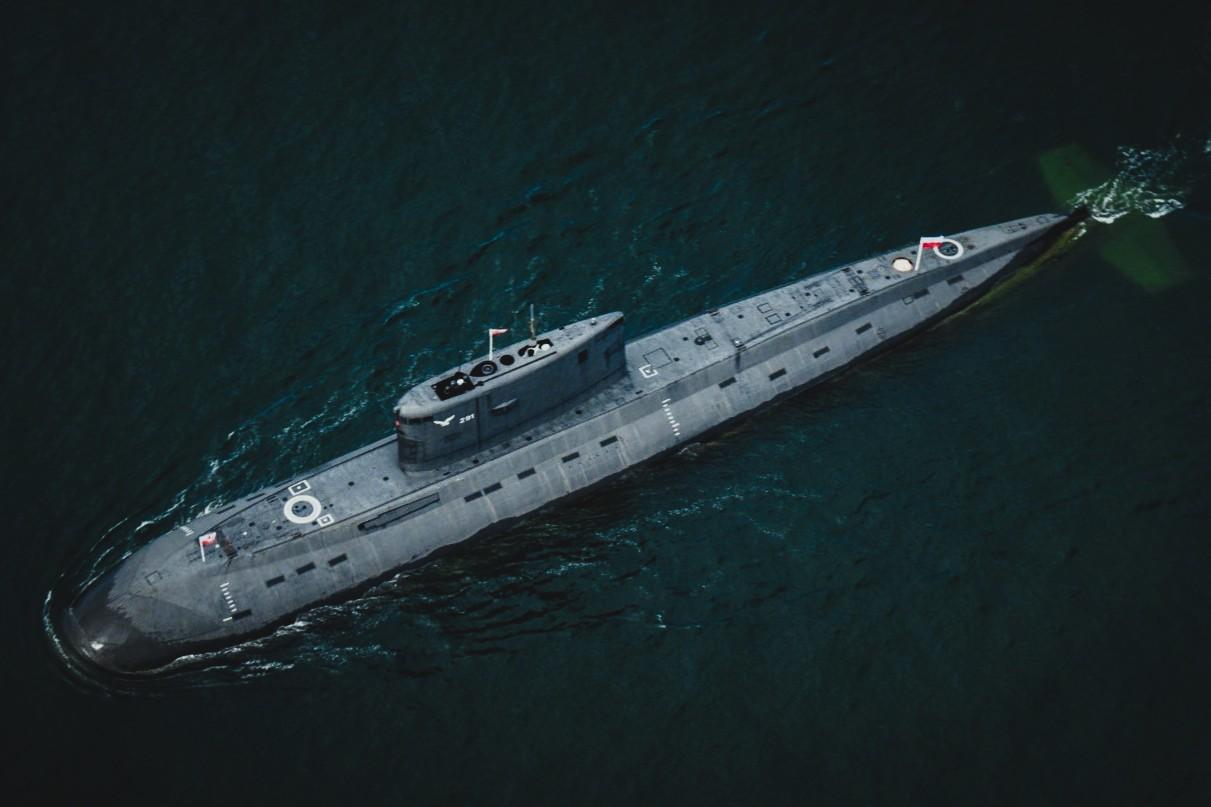
fot. mł. chor. Aleksander Perz / 18 Dywizja Zmechanizowana
Speaking during a visit to the Central Air Force Training Range in Ustka, Tusk underlined that all offers have already been reviewed in detail.
- Tomorrow the government will launch the Orka program. By the end of this year, we will select our final partner who will deliver new submarines to the Polish Navy, the Prime Minister announced.
According to the Ministry of Defence, four bids are considered the frontrunners: Hanwha Ocean from South Korea, Saab from Sweden, Fincantieri from Italy, and ThyssenKrupp Marine Systems (TKMS) from Germany. France’s Naval Group has also put forward its Scorpène-class submarines, but the offer is seen as less competitive at this stage.
Why Orka matters
The Orka program is considered one of the most urgent modernization efforts of the Polish Armed Forces. The Navy’s current capabilities are at risk of vanishing altogether – ORP Orzeł is increasingly unreliable, and the last Norwegian-built Kobben-class boats were decommissioned in 2021.
The new submarines are expected to:
- operate autonomously for at least 30 days,
- dive to depths exceeding 200 meters,
- be armed with heavyweight torpedoes and missiles capable of striking both naval and land targets.
The main offers in detail. Who will deliver new submarines to Poland?
- Hanwha Ocean (South Korea)
Hanwha is offering its KSS-III Batch-2 submarines – large, ocean-going conventional boats with air-independent propulsion (AIP) and lithium-ion batteries, providing more than 20 days of submerged endurance. With a displacement of around 3,600 tonnes, they are the largest under consideration.
The Koreans emphasize flexible financing and even propose a “bridge solution” – leasing an interim submarine for training Polish crews. Crucially, Hanwha has signed memoranda with PGZ Naval Shipyard and Nauta Shipyard to transfer part of the maintenance and overhaul capability to Poland. Deliveries could be completed within 8–9 years after contract signature.
- Saab (Sweden)
Sweden’s Saab offers the A26 Blekinge-class, purpose-built for the Baltic environment. With a displacement of around 2,500 tonnes, these boats use Stirling AIP engines, enabling up to 18 days of continuous submersion and a total autonomy of 45 days. A distinctive feature is the Multi-Mission Portal, allowing deployment of divers and unmanned underwater vehicles.
Armament includes 533 mm heavyweight torpedoes and, optionally, vertical launch modules for cruise missiles. Saab already cooperates with Polish suppliers such as Base Group and Famor, and promises a broad industrial partnership. The challenge, however, lies in Saab’s own schedule – the A26 program has suffered delays in Sweden, and the first boat for the Royal Swedish Navy is not yet delivered.
- Fincantieri (Italy)
Italy’s Fincantieri proposes the U212 Near Future Submarine (NFS), an advanced derivative of the proven German-Italian U212A design. The NFS incorporates upgraded stealth features and a combat management system by Leonardo.
Fincantieri stresses its readiness to establish a submarine support center in Poland and even offers a “stopgap” training unit within a year of contract signature. The company, however, is already heavily engaged in building NFS boats for the Italian Navy under an OCCAR-led program, raising concerns about delivery schedules for export clients.
- TKMS (Germany)
ThyssenKrupp Marine Systems presents its 212CD (Common Design) submarines, co-developed with Norway. These boats feature non-magnetic steel hulls, advanced automation and stealth, and a high degree of NATO interoperability.
TKMS promises cooperation with Polish industry in construction and sustainment, but its Kiel yard is already working on large orders for Germany and Norway. The first 212CD for Oslo is expected only in 2029, which may delay deliveries to Poland if the contract is signed late.
- Naval Group (France)
French shipbuilder Naval Group proposed its Scorpène-class submarines, widely exported to India, Brazil and Chile. Compact and versatile, they can be armed with MBDA Naval Cruise Missiles, offering long-range strike capability against land targets – a unique feature among contenders.
France emphasized extensive technology transfer and even local construction in Poland. However, costs of such a configuration would be very high, and Naval Group’s shipyards are currently focused on nuclear submarine and FDI frigate programs. As a result, Scorpène is seen as a less likely choice despite its attractive strike potential.
What’s next?
The Orka program has been stalled for more than a decade. This year, however, the government has committed to finalize the selection process. The decision will balance capability requirements, financing terms, industrial cooperation, and delivery schedules.
Whichever partner Poland selects, Orka will shape the future of the country’s naval deterrence – restoring submarine warfare capabilities that are now on the verge of extinction.
see also
Buy us a coffee, and we’ll invest in great maritime journalism! Support Gazeta Morska and help us sail forward – click here!
Kamil Kusier
redaktor naczelny
comments
Add the first comment
see also
Navantia and Fincantieri deepen cooperation on the european patrol corvette programme
"Let everyone know we will prevail". Poland’s armed forces set strategic course for 2026-2039
“Army 500” and strategic transformation: Poland sets the course for long-term deterrence and allied readiness
Karol Nawrocki: “The strength of the republic lies in its armed forces”. Security requires national unity
Polish Navy Divers complete intensive winter under-ice training
Stadt Naval to deliver electric propulsion system for Polish rescue vessel Ratownik
Medical evacuation from Danish-flagged vessel Skoven off Łeba. Joint SAR operation in the Baltic Sea
Damen Shipyards and Blue Water Autonomy announce license for Liberty-class autonomous vessel for the U.S. Navy
ITS Virginio Fasan and USS Bulkeley conduct PASSEX in eastern Mediterranean
NATO strengthens operations in the north: alliance boosts Arctic presence
ADVERTISEMENT
ADVERTISEMENT