Poland establishes maritime security center to safeguard critical offshore infrastructure
As geopolitical tensions rise in the Baltic Sea and hybrid threats increasingly target critical underwater and coastal infrastructure, Poland is launching a new institution designed to close a long-standing security gap. The newly announced maritime security center (MSC) will operate under the Polish Border Guard as a 24/7 coordination and surveillance hub focused on protecting the country’s most vital maritime assets—LNG terminals, subsea pipelines, power cables, offshore wind farms, and ports.
security pomerania west pomerania border guard news25 july 2025 | 10:59 | Source: Gazeta Morska | Prepared by: Kamil Kusier | Print
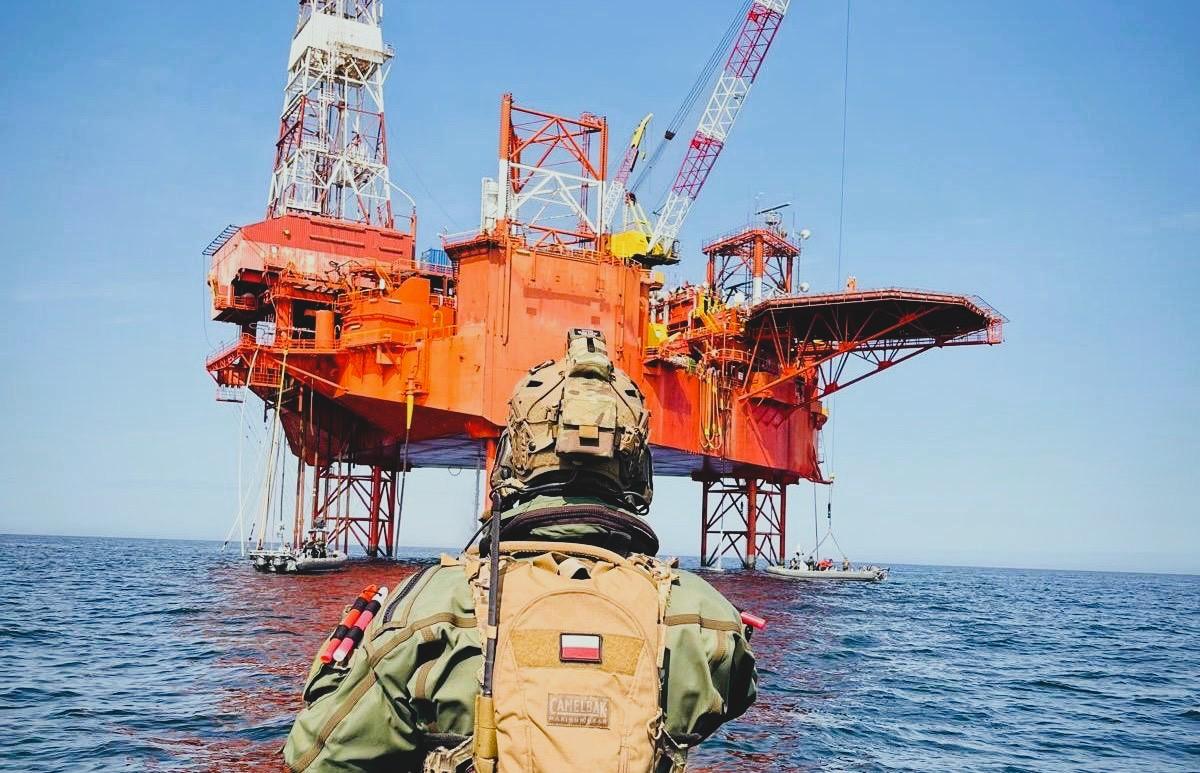
fot. MOSG
Baltic Sea: a strategic pressure point
The Baltic has become a testing ground for clandestine operations aimed at disrupting regional energy and logistics networks. The 2022 sabotage of the Nord Stream pipelines highlighted how vulnerable critical infrastructure is to hybrid attacks in the maritime domain. Poland, a key NATO frontline state and growing offshore energy hub, is now moving to strengthen its national maritime defense posture.
Deputy Interior Minister Mariusz Cichomski announced in parliament that the MSC would be established in the Pomeranian region—likely near Gdynia or Świnoujście, both of which host strategically vital port and energy infrastructure.
- The center will provide continuous surveillance and coordinated response capacity. This is a response to real-world threats, not hypothetical ones, Cichomski stated.
Mission and operational scope
Although administratively under the Border Guard, the MSC is envisioned as a multi-agency coordination hub. It will link civilian institutions, military forces, intelligence services, and international partners in a shared effort to protect maritime critical infrastructure.
Its core functions include:
- Round-the-clock situational awareness: real-time tracking using coastal radar, sonar systems, and satellite data
- Crisis coordination: managing incidents such as sabotage, cyberattacks, or infrastructure failures
- Protection of subsea assets: including energy pipelines, telecom cables, and offshore renewable installations
- International liaison: working with NATO’s undersea infrastructure coordination cell (CUICC), the European Maritime Safety Agency (EMSA), and regional partners
A proven and growing threat landscape
Between 2023 and 2024, at least six subsea cable cuts were reported in the Baltic—between Sweden, Finland, and Estonia. Investigations suggest involvement of "dark fleet" vessels—ships operating with deactivated AIS transponders and unclear flag registry.
Poland’s Baltic coast is now home to the Baltic Pipe, the Świnoujście LNG terminal, and soon, the country’s first large-scale offshore wind farms. All of these are classified as Tier 1 strategic assets and are potentially vulnerable to hybrid interference, yet until now, there has been no single agency responsible for their maritime protection.
Manpower and tech: the implementation challenge
While the MSC represents a major step forward, concerns have already been raised over staffing and technical readiness. The Polish parliament’s internal affairs committee recently reported serious personnel shortages within maritime Border Guard units—particularly the Pomeranian and Kashubian divisions.
Moreover, modern maritime security demands more than boots on the deck. It requires:
- unmanned systems such as USVs and ROVs
- multi-domain surveillance platforms
- interoperable command-and-control architecture integrated with NATO and EU systems
Without clear funding and procurement strategies, the MSC risks becoming under-resourced at inception.
Aligning with NATO and EU priorities
Poland’s MSC forms part of a broader regional response to maritime hybrid threats. NATO has prioritized the protection of undersea infrastructure since 2023, launching the CUICC in Northwood, UK, and promoting Baltic cooperation through initiatives like Baltic Sentry.
At the EU level, the 2023 Maritime Security Strategy Action Plan supports member states in building capability, enhancing data-sharing, and running joint exercises. Poland is expected to integrate the MSC with systems such as CISE, MARSUR, and relevant satellite constellations.
Conclusion: toward resilient maritime infrastructure
Poland’s maritime security center reflects a strategic shift in how the country approaches its role in NATO’s northern flank. The center is designed not only to respond to current threats, but to preempt them through enhanced awareness, interagency coordination, and rapid response capability.
Its success will depend on sustained investment, human resource development, and full integration into international maritime security networks. But the message is clear: Poland is ready to lead in protecting the Baltic’s critical offshore infrastructure—above and below the surface.
see also
Buy us a coffee, and we’ll invest in great maritime journalism! Support Gazeta Morska and help us sail forward – click here!
Kamil Kusier
redaktor naczelny
comments
Add the first comment
see also
"Let everyone know we will prevail". Poland’s armed forces set strategic course for 2026-2039
“Army 500” and strategic transformation: Poland sets the course for long-term deterrence and allied readiness
Medical evacuation from offshore vessel in the Baltic. Rescue 511 helicopter and m/s Huragan deployed
Karol Nawrocki: “The strength of the republic lies in its armed forces”. Security requires national unity
Human trafficking, money laundering, millions frozen. Successful operation by border guard and tax administration
Evening SAR operation in the Baltic. Two kitesurfers stranded offshore
Medical evacuation from sailing ship in Gdynia port. 17-year-old safely transported
Medical evacuation from Danish-flagged vessel Skoven off Łeba. Joint SAR operation in the Baltic Sea
Almost 2.5 million travellers cleared in 2025 by the Maritime Border Guard
Frontex officers train with Polish Maritime Border Guard
ADVERTISEMENT
ADVERTISEMENT