Polish-South Korean defence cooperation enters a strategic phase
The partnership between Poland and South Korea in defence procurement and industrial collaboration is entering a new phase of strategic relevance. Recent high-level talks confirmed both sides’ intent to deepen cooperation not only in modernising Poland’s armed forces but also in building long-term industrial capabilities – with particular emphasis on naval assets, including future submarine platforms for the Polish Navy.
security navy politics shipbuilding industry news03 august 2025 | 07:13 | Source: Gazeta Morska | Prepared by: Kamil Kusier | Print
fot. Hanwha Ocean
Advancing land and air platform programs
Poland’s Deputy Minister of National Defence, Paweł Bejda, met with Jong Gun Seok, Minister of South Korea’s Defence Acquisition Program Administration (DAPA), to review the progress of joint modernisation programmes currently underway.
Key among them was the signing, on 1 August, of a new executive contract for the delivery of an additional batch of K2 Black Panther main battle tanks. A portion of these vehicles will be produced in Poland at the Bumar-Łabędy plant, reflecting a shared commitment to localisation, industrial participation, and enhanced sovereignty in defence manufacturing.
Also reviewed was the rollout of the FA-50 light combat and trainer aircraft, which is being integrated into the Polish Air Force. These aircraft represent a major step forward in building a flexible, interoperable and modern training and light-attack capability within NATO standards.
ORKA submarine programme gains momentum
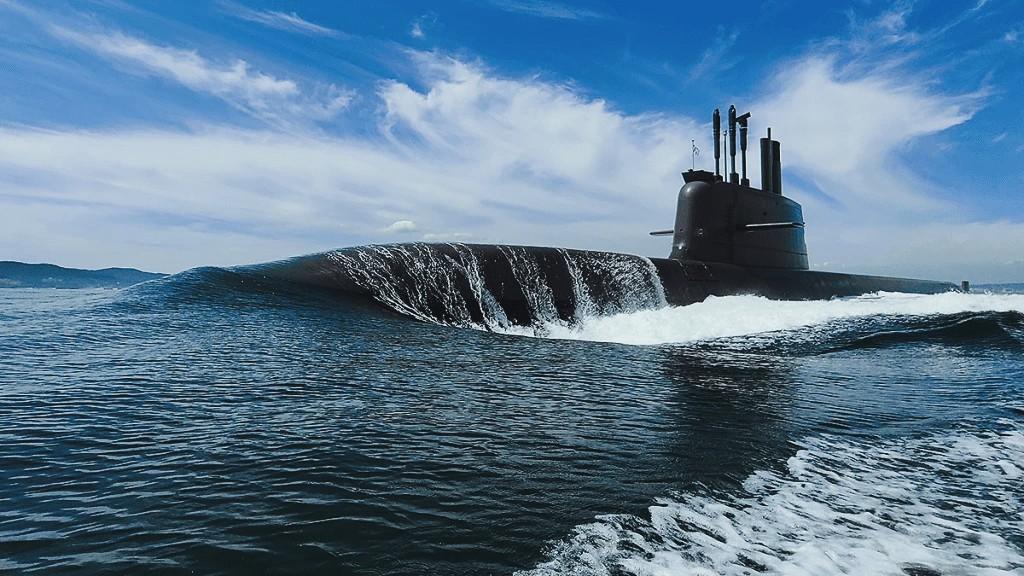
A particularly significant item on the agenda was South Korea’s proposal for the ORKA submarine programme, a flagship initiative to restore the operational capabilities of the Polish Navy’s underwater fleet.
Drawing on its experience with the KSS-II and KSS-III submarine classes, South Korea has offered comprehensive cooperation, including deep technology transfer, local production, and long-term support. The initiative opens the door for meaningful participation by Polish shipyards and defence firms, potentially revitalising national competencies in submarine construction and maritime defence systems integration.
Technology transfer and industrial integration
Deputy Minister Bejda reaffirmed that technology transfer, localisation of production, and supply chain integration remain top priorities for the Polish Ministry of National Defence. These principles apply across all strategic programmes and are seen as essential to developing a resilient, self-sufficient defence industrial base.
South Korea’s approach aligns with this vision, offering not just hardware, but also access to know-how, co-production frameworks, and future export cooperation. This model supports Poland’s broader goal of establishing itself as a regional hub for advanced defence manufacturing.
A long-term strategic partnership
The meeting between the two delegations underscored the strategic character of the Polish–South Korean defence relationship. What began as an arms procurement dialogue has evolved into a multi-dimensional industrial partnership covering land, air, and now maritime platforms.
For the Polish Navy, the ORKA programme—if realised with Korean support—could mark a historic step forward. It would not only fill a critical capability gap but also catalyse the rebirth of submarine shipbuilding expertise in Poland, positioning domestic industry for greater self-reliance and international competitiveness.
see also
Buy us a coffee, and we’ll invest in great maritime journalism! Support Gazeta Morska and help us sail forward – click here!
Kamil Kusier
redaktor naczelny
comments
Add the first comment
see also
"Let everyone know we will prevail". Poland’s armed forces set strategic course for 2026-2039
“Army 500” and strategic transformation: Poland sets the course for long-term deterrence and allied readiness
Medical evacuation from offshore vessel in the Baltic. Rescue 511 helicopter and m/s Huragan deployed
Karol Nawrocki: “The strength of the republic lies in its armed forces”. Security requires national unity
Human trafficking, money laundering, millions frozen. Successful operation by border guard and tax administration
Evening SAR operation in the Baltic. Two kitesurfers stranded offshore
Medical evacuation from sailing ship in Gdynia port. 17-year-old safely transported
Medical evacuation from Danish-flagged vessel Skoven off Łeba. Joint SAR operation in the Baltic Sea
Almost 2.5 million travellers cleared in 2025 by the Maritime Border Guard
Frontex officers train with Polish Maritime Border Guard
ADVERTISEMENT
ADVERTISEMENT