









Pakistan’s first Hangor-class submarine arrives in Karachi
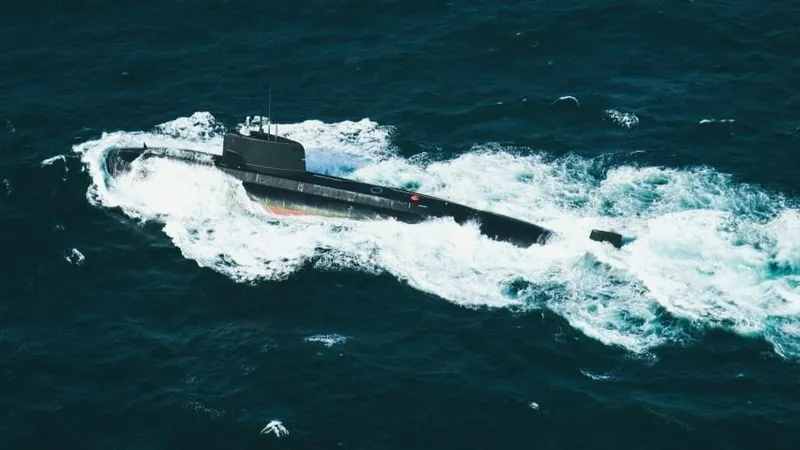
Pakistan Navy has welcomed its first Hangor-class submarine to Karachi, marking a major milestone in the country's naval modernization programme. The arrival of PNS/M Hangor highlights the growing defence partnership between Pakistan and China while significantly enhancing Pakistan’s future undersea warfare capabilities.
In brief
The Pakistan Navy has taken delivery of its first Hangor-class submarine, PNS/M Hangor, which arrived in Karachi and was welcomed by senior officers and cadets of the Pakistan Naval Academy. The programme covers eight boats: four are being built in China and four at Karachi Shipyard & Engineering Works under a technology transfer. Hangor-class submarines derive from the Chinese Yuan family and feature air-independent propulsion and solutions reducing their acoustic signature.
The submarine received a traditional naval welcome attended by senior naval officers, crew families and Pakistan Navy personnel. Cadets from the Pakistan Naval Academy rendered ceremonial honours, while naval helicopters conducted a fly-past over the ceremony.
Cornerstone of an ambitious submarine programme
PNS/M Hangor is the first vessel in an eight-submarine acquisition programme intended to reshape Pakistan’s underwater warfare capabilities over the coming decades. Four submarines are being constructed in China, while the remaining four are scheduled to be built domestically at Karachi Shipyard & Engineering Works through a technology transfer arrangement.
The programme represents one of the largest defence-industrial projects currently undertaken by Pakistan and is expected to strengthen both naval capabilities and domestic shipbuilding expertise.
Advanced capabilities beneath the surface
The Hangor class is derived from China's Yuan-class submarine family and incorporates a range of modern technologies designed to improve endurance, stealth and combat effectiveness.
One of the platform’s most important features is its Air Independent Propulsion (AIP) system, enabling prolonged submerged operations without the need to surface frequently. The submarines are also equipped with advanced sensors, modern combat management systems and enhanced acoustic stealth characteristics.
These capabilities are expected to improve Pakistan Navy’s ability to conduct surveillance missions, anti-surface warfare and anti-submarine operations across the Arabian Sea and surrounding waters.
Strategic implications for the region
Beyond its military significance, the Hangor programme reflects the deepening strategic and industrial cooperation between Beijing and Islamabad. China’s role extends beyond delivering submarines, encompassing technology transfer and support for Pakistan’s domestic naval-industrial base.
Regional analysts are closely monitoring the programme as South Asian navies continue investing in advanced underwater capabilities. The introduction of additional Hangor-class submarines is likely to influence the evolving maritime balance of power in the Indian Ocean region and further strengthen Pakistan’s naval deterrence posture.
Source: Gazeta Morska · Compiled by: Kamil Kusier
Related articles
 Energy and offshore Equinor takes over Bałtyk 2 and 3 O&M base in Łeba. Port to serve 1.44 GW of offshore wind for 30 years
 Navy and defence Port Gdański Eksploatacja secures NATO NCAGE code. Gdańsk port company lines up for defence tenders
 Energy and offshore Energa renames Gdańsk gas plant company as foundations for 6,000-tonne turbine and boiler are laid
 Equipment and technology WB Group takes Polish drones from Tokyo to SOFEX in Jordan in a single week
 Ports and logistics PGE books Gdańsk’s T5 terminal for the long haul: Baltica 2 first, then more offshore wind farms
 Investments Port of Gdańsk opens T5 offshore installation terminal, bringing Baltica 2 logistics home from Bornholm
Comments (0)
The discussion is moderated by the editors: a comment appears after review. Your e-mail address is not published.
Nobody has commented on this article yet.