Pakistan warns of possible Indian preemptive strike on key naval bases
The National Institute of Maritime Affairs (NIMA) – the official think tank of the Pakistan Navy – has warned that India, with its rapidly expanding fleet, could initiate any future conflict with Pakistan by launching preemptive strikes on the country’s principal naval bases in Karachi, Ormara, and Pasni.
security worldwide politics news02 september 2025 | 08:33 | Source: Gazeta Morska / PAP | Prepared by: Tadeusz Brzozowski | Print
fot. x.com
According to NIMA’s assessment, the highest-value target would be the Jinnah Naval Base in Ormara, home to Pakistan’s surface fleet and submarines essential for the western maritime defense. The Makran base in Pasni was identified as another likely target due to its strategic location along vital sea lines of communication in the Arabian Sea. Karachi, Pakistan’s main naval hub and submarine port, as well as a base for naval aviation, would also be an inevitable objective of an Indian strike.
Regional security outlet Defence Security Asia noted that simultaneous attacks on these three facilities could paralyze Pakistan’s naval infrastructure, severely limiting its ability to mount a credible counteroffensive.
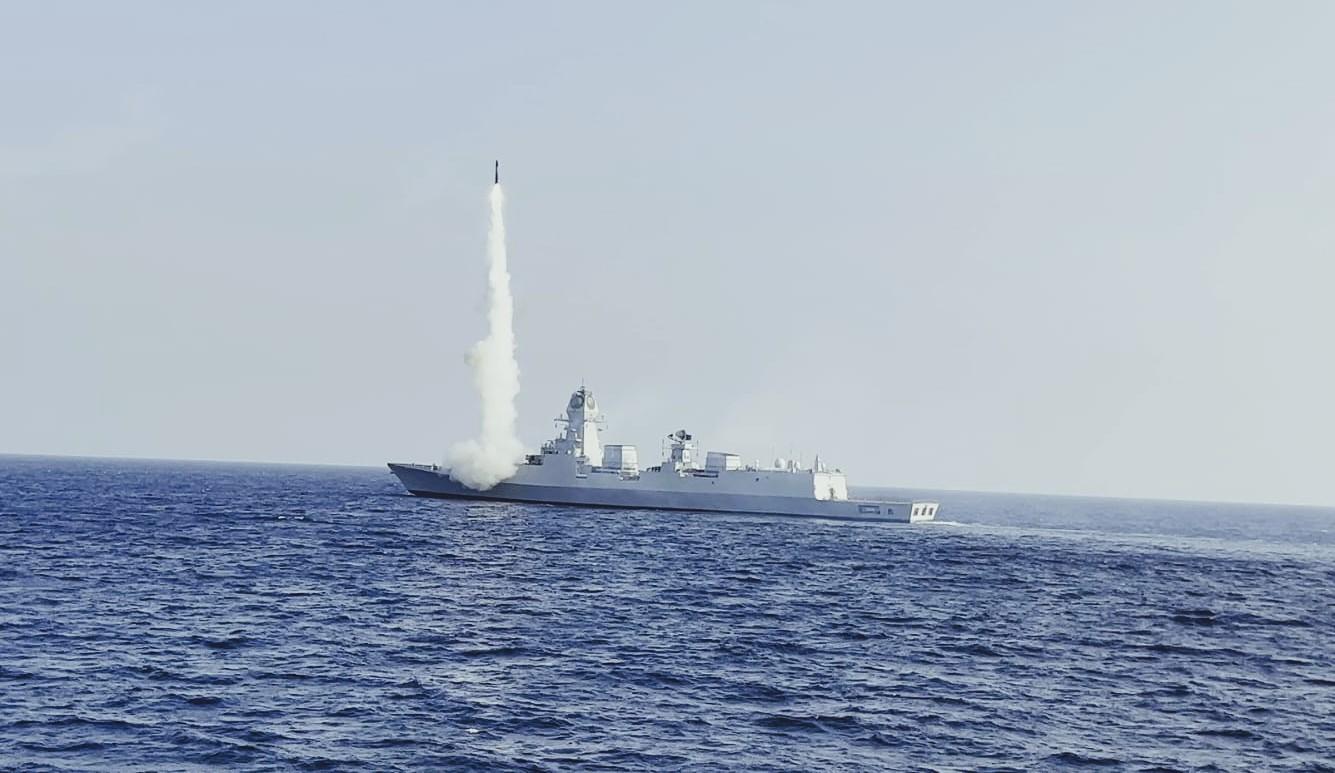
India currently operates over 67 warships, including two aircraft carriers and 18 submarines, with plans to expand its fleet to 160 vessels within the next decade. By 2030, all Indian warships are expected to be armed with BrahMos supersonic cruise missiles.
By contrast, Pakistan’s fleet remains much smaller, with no aircraft carriers and only eight submarines. To offset this disparity, Islamabad is pursuing new naval bases along the Makran coast and seeking international procurement opportunities. NIMA has recommended urgent acquisition of at least eight Chinese-built submarines and several Turkish corvettes, alongside measures such as dispersal of naval assets, construction of hardened bunkers capable of withstanding missile strikes, and integration of coastal defense with inland air and missile defense networks.
The report was released just ahead of the India–Pakistan leadership meeting at the Shanghai Cooperation Organisation (SCO) summit in Tianjin, China. Persistent tensions were further highlighted in June, when both navies conducted exercises in the Arabian Sea only 100 kilometers apart – barely two months after their most recent armed confrontation.
Buy us a coffee, and we’ll invest in great maritime journalism! Support Gazeta Morska and help us sail forward – click here!
Redakcja Gazeta Morska
użytkownik
comments
Add the first comment
see also
"Let everyone know we will prevail". Poland’s armed forces set strategic course for 2026-2039
“Army 500” and strategic transformation: Poland sets the course for long-term deterrence and allied readiness
Medical evacuation from offshore vessel in the Baltic. Rescue 511 helicopter and m/s Huragan deployed
Karol Nawrocki: “The strength of the republic lies in its armed forces”. Security requires national unity
Human trafficking, money laundering, millions frozen. Successful operation by border guard and tax administration
Evening SAR operation in the Baltic. Two kitesurfers stranded offshore
Medical evacuation from sailing ship in Gdynia port. 17-year-old safely transported
Medical evacuation from Danish-flagged vessel Skoven off Łeba. Joint SAR operation in the Baltic Sea
Almost 2.5 million travellers cleared in 2025 by the Maritime Border Guard
Frontex officers train with Polish Maritime Border Guard
ADVERTISEMENT
ADVERTISEMENT