









ORLEN Cuts All Ties with Russian Oil: Central Europe Now Fully Supplied from Alternative Sources
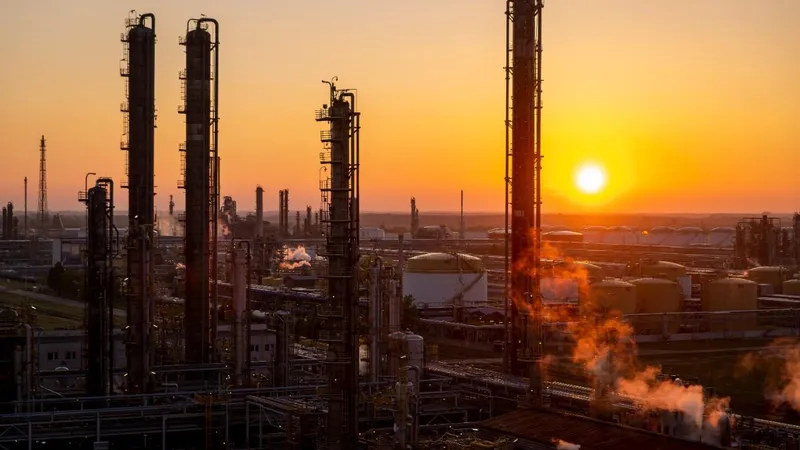
As of June 30, 2025, ORLEN Group has officially terminated its last remaining crude oil supply contract with Russian producer Rosneft, marking a complete departure from Russian oil across its operations. From July 1st onward, all of ORLEN’s refineries – located in Poland, the Czech Republic, and Lithuania – are fully supplied with crude from non-Russian sources, enhancing energy security across Central Europe.
In brief
ORLEN Group ended its last contract for crude oil supplies from Russia on 30 June 2025, covering Rosneft deliveries to the refinery in Litvinov in the Czech Republic. From 1 July 2025 all ORLEN Group refineries in Poland, the Czech Republic and Lithuania process only crude from alternative sources. The Litvinov refinery switched to non-Russian crude in March 2025 after the expansion of the Transalpine Pipeline by the company MERO. ORLEN CEO Ireneusz Fąfara said the group now processes crude from the Middle East, Africa, the Americas and the North Sea region.
– We have concluded the final legacy contract for Russian crude deliveries to the Czech Republic. As of July 1, 2025, ORLEN Group – and by extension the entire region – is free from Russian oil. We have closed this chapter and are now fully focused on building a secure, diversified future. Today, our refineries process crude sourced from the Middle East, the North Sea, the Americas, Africa, and the Mediterranean. This is the energy security we promised to deliver, said Ireneusz Fąfara, CEO of ORLEN Group.
The terminated agreement, signed in 2013, had supplied crude to the Litvínov refinery in the Czech Republic – a plant historically dependent on Russian Urals crude delivered via the Druzhba pipeline. In contrast, ORLEN’s second Czech facility in Kralupy has already been operating solely on non-Russian feedstock.
Following Russia’s full-scale invasion of Ukraine, the Czech government obtained a temporary exemption from EU sanctions, allowing continued Russian crude imports to ensure domestic fuel supply stability. During this period, the state-owned pipeline operator MERO undertook critical infrastructure expansion efforts to boost the capacity of the Transalpine Pipeline (TAL), which transports seaborne oil from the Italian port of Trieste through Austria and Germany into the Czech Republic.
Simultaneously, ORLEN retrofitted the Litvínov refinery to process a wider slate of crude blends. A series of technological upgrades and operational tests enabled the facility to fully switch to alternative sources in March 2025, once the TAL+ pipeline expansion came online.
– Our transition away from Russian energy was made possible through close cooperation with transmission system operators and support from the Polish government. Securing additional transport capacity was a decisive factor in this success, Fąfara added.
The strategic shift represents a major milestone not only for ORLEN but for energy independence in the broader Central European region. ORLEN’s current crude imports arrive via maritime terminals and overland pipelines, enabling flexible sourcing from global suppliers. Since April 2023, 100% of crude processed in ORLEN’s Polish and Lithuanian refineries has already been of non-Russian origin.
By completing the decoupling process, ORLEN reinforces regional energy security and mitigates geopolitical risks, positioning itself as a stable and diversified energy player in the evolving European landscape.
Source: Gazeta Morska · Compiled by: Kamil Kusier
Related articles
 Shipbuilding industry Poland christens ro-pax ferry Bursztyn Unity in Szczecin on Independence Day. Ystad service starts 18 November
 Energy and offshore Orlen Neptun deploys V-LiDAR buoys at Baltic West ahead of Poland's 2027 offshore wind auction
 Energy and offshore Equinor takes over Bałtyk 2 and 3 O&M base in Łeba. Port to serve 1.44 GW of offshore wind for 30 years
 Navy and defence Port Gdański Eksploatacja secures NATO NCAGE code. Gdańsk port company lines up for defence tenders
 Shipbuilding industry Ex-Enterprise towed to Mobile under $418.5m contract. Test case for Nimitz-class disposal begins
 Energy and offshore Energa renames Gdańsk gas plant company as foundations for 6,000-tonne turbine and boiler are laid
Comments (0)
The discussion is moderated by the editors: a comment appears after review. Your e-mail address is not published.
Nobody has commented on this article yet.