OPLS at the naval port in Gdynia. Polish Navy enhances CBRN contamination mitigation procedures
Advanced chemical, biological, and radiological (CBRN) contamination mitigation exercises were conducted at the naval port in Gdynia. The joint operation, involving chemical specialists from the 43rd Sappers Battalion and the crew of ORP Ślązak, aimed to refine threat identification protocols and enhance decontamination procedures aboard Polish Navy vessels.
security navy ports tricity news19 march 2025 | 15:17 | Source: Gazeta Morska | Prepared by: Kamil Kusier | Print
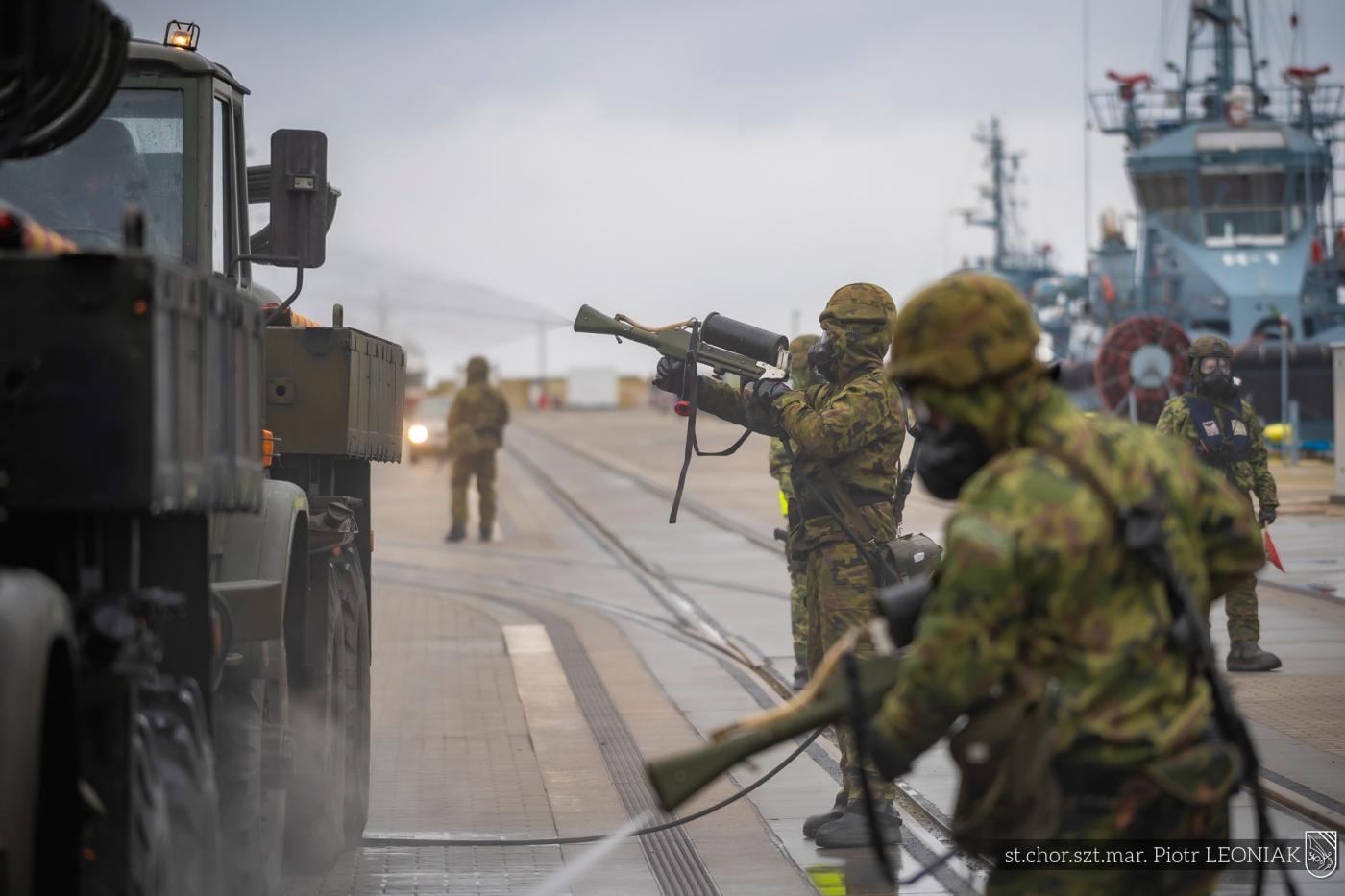
fot. st. chor. szt. mar. Piotr Leoniak / 3FO
The onboard contamination mitigation station (OPLS) is a key component of the navy’s defense system against CBRN threats. Its primary mission is the rapid detection of hazardous contamination, followed by effective decontamination, ensuring the vessel’s swift return to operational readiness.
The exercise encompassed a full decontamination cycle, including contamination identification, safety zone designation, and the application of specialized neutralizing agents. Regular training of this nature plays a crucial role in maintaining the operational readiness of naval units and ensuring the safety of their crews.
What is CBRN and what threats does it cover?
CBRN stands for chemical, biological, radiological, and nuclear threats. This term refers to hazardous substances and situations that pose serious risks to people, the environment, and infrastructure.
Types of CBRN threats:
- C (chemical) – Chemical substances, including chemical warfare agents (e.g., sarin, mustard gas) and toxic industrial chemicals.
- B (biological) – Biological warfare agents, pathogens (e.g., viruses, bacteria, toxins) capable of causing epidemics.
- R (radiological) – Radioactive materials, radiation contamination from accidents or terrorist attacks.
- N (nuclear) – Nuclear explosions, reactor failures, and fallout effects.
Armed forces, emergency response teams, and specialized military units (e.g., military chemists) train to identify, neutralize, and protect against such threats.
The continuous improvement of contamination mitigation procedures aligns with NATO’s strategy for enhancing the operational resilience of naval forces. Cooperation between specialized military units and the integration of modern CBRN protection technologies form the foundation of effective defense against chemical, biological, and radiological hazards.
Buy us a coffee, and we’ll invest in great maritime journalism! Support Gazeta Morska and help us sail forward – click here!
Kamil Kusier
redaktor naczelny
gallery


comments
Add the first comment
see also
"Let everyone know we will prevail". Poland’s armed forces set strategic course for 2026-2039
“Army 500” and strategic transformation: Poland sets the course for long-term deterrence and allied readiness
Medical evacuation from offshore vessel in the Baltic. Rescue 511 helicopter and m/s Huragan deployed
Karol Nawrocki: “The strength of the republic lies in its armed forces”. Security requires national unity
Human trafficking, money laundering, millions frozen. Successful operation by border guard and tax administration
Evening SAR operation in the Baltic. Two kitesurfers stranded offshore
Medical evacuation from sailing ship in Gdynia port. 17-year-old safely transported
Medical evacuation from Danish-flagged vessel Skoven off Łeba. Joint SAR operation in the Baltic Sea
Almost 2.5 million travellers cleared in 2025 by the Maritime Border Guard
Frontex officers train with Polish Maritime Border Guard
ADVERTISEMENT
ADVERTISEMENT