









Operational disruption on Karlskrona-Poland route: Stena Spirit immobilised after mooring incident
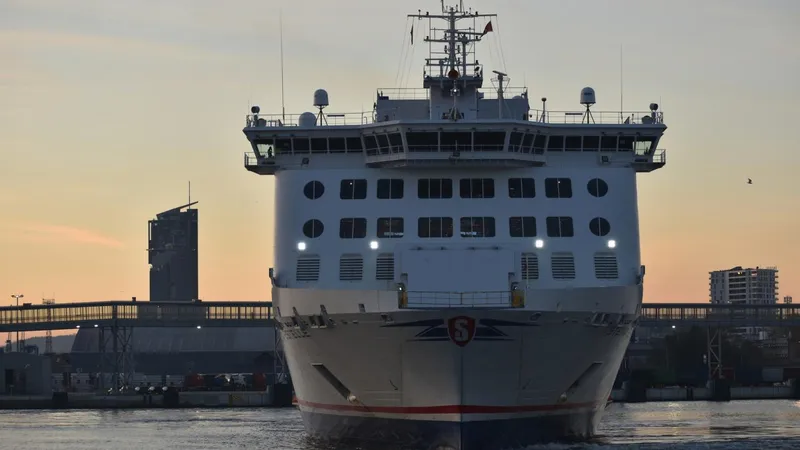
A significant operational disruption occurred in the port of Karlskrona, where the passenger and car ferry Stena Spirit, operated by Stena Line, was temporarily immobilised following a mooring incident compounded by adverse weather conditions. The vessel was taken out of service, interrupting its scheduled rotation on the Karlskrona-Poland route.
In brief
The Stena Line ferry Stena Spirit was immobilised in the port of Karlskrona after damage to a component of the mooring system while berthed alongside the quay in strong wind conditions. The vessel remained outside its standard sailing cycle for more than 50 hours, and some passengers spent more than two days on board. Tugs were dispatched to the scene, and the crew awaited administrative and technical decisions clearing the ship to sail. The disruption on the Poland, Sweden route caused delays to subsequent rotations and schedule changes on both sides of the Baltic.
Technical failure and harbour constraints
The direct cause of the disruption was damage to a mooring component during berthing in strong wind conditions. As a result, the vessel could not safely depart the quay without assistance. Tugboats were deployed, and additional technical inspections and safety procedures were required before the ship could be cleared for further navigation.
Passengers affected and onboard conditions
Passengers onboard faced an extended and unplanned delay, remaining on the vessel while awaiting clearance for departure. The prolonged wait represented a significant deviation from standard ferry operations. During this period, passengers experienced uncertainty regarding onward travel, while crew members maintained essential onboard services under constrained operational conditions.
Operational impact on the route
The incident triggered a ripple effect across the ferry schedule. Disruption to a single vessel’s rotation led to delays and adjustments in subsequent sailings, requiring operational rescheduling across both terminals. On a high-frequency route such as Karlskrona–Poland, even a localized incident can propagate through the wider timetable and affect multiple departures.
Public response and social media activity
The situation gained considerable attention on social media platforms, where passengers shared updates, images, and personal accounts from onboard. These real-time reactions highlighted both the human dimension of the disruption and the importance of clear and timely communication during maritime incidents. From an industry perspective, the case underscores the role of crisis communication and passenger information systems in maintaining trust during irregular operations.
Broader operational context
The Karlskrona-Poland route is a key corridor in Baltic Sea transport, serving both passenger and freight traffic. Disruptions of this nature illustrate the sensitivity of ferry networks to environmental conditions, port infrastructure performance, and vessel readiness. In tightly coordinated systems, the unavailability of a single unit can affect not only individual voyages but also the broader logistics chain.
Return to service
Following completion of required technical checks and approval procedures, the vessel resumed operations and began its voyage toward Poland. Upon arrival, further inspections are expected to confirm full operational readiness before returning to the regular schedule.
Source: Gazeta Morska · Compiled by: Kamil Kusier
Related articles
 Ports and logistics One bid for Gdynia's Outer Port. MSC wants the 5-billion-zloty terminal, three rivals walked away
 Ports and logistics CMA CGM Pantheon in Gdańsk. A success for the port and a bitter lesson about the absence of maritime policy
 Ports and logistics CEVA ships a 29-tonne broken Eiffel Tower from Le Havre to Burning Man
 Ports and logistics US sinks Iranian tanker in the Gulf of Oman as Hormuz traffic stays at 7 percent
 Ports and logistics Maersk to fit a 35 m rotor sail on an 8,700 TEU Lima-class ship in 2027
 Ports and logistics Thirty years and 26 hectares. Baltic Hub leases Deepwater and plans a second rail siding
Comments (0)
The discussion is moderated by the editors: a comment appears after review. Your e-mail address is not published.
Nobody has commented on this article yet.