









Offshore wind farms to contribute 18 GW to Poland’s power grid by 2040
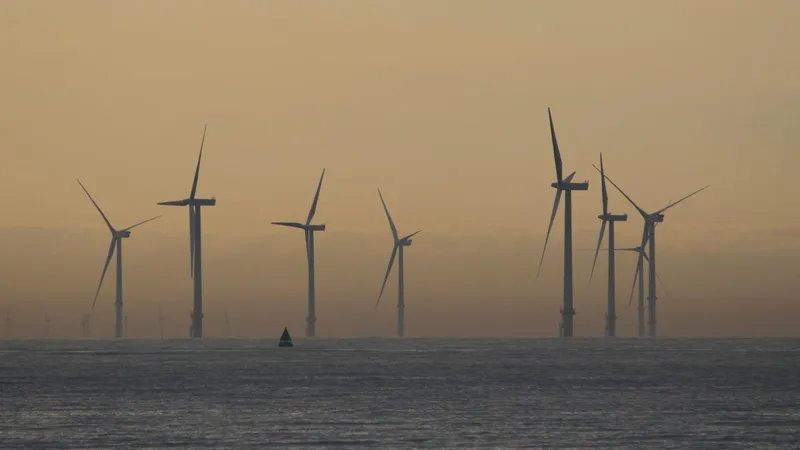
Offshore wind farms will contribute 18 GW to Poland’s national power system by 2040, announced Jakub Budzyński, President of the Polish Offshore Wind Energy Society (PIMEW), during a conference on Thursday. Pomeranian Deputy Voivode Emil Rojek emphasized the strategic importance of these developments.
In brief
Offshore wind farms will provide the Polish power system with 18 GW by 2040, the president of Polska Izba Morskiej Energetyki Wiatrowej, Jakub Budzyński, announced on Thursday. The president of Polska Izba Morskiej Energetyki Wiatrowej pointed out that at the end of last year Polskie Sieci Elektroenergetyczne recorded 72 GW, or 72 thousand MW, of installed capacity, and offshore wind energy will account for a quarter of the capacity growth. Pomeranian Deputy Voivode Emil Rojek assessed that there had been no undertaking of such scale in the maritime economy since the construction of Gdynia.
The XIII National Maritime Law Conference is taking place this Thursday at the Faculty of Law and Administration at the University of Gdańsk, focusing on key legal and regulatory aspects of offshore wind energy from a Polish perspective.
President Budzyński highlighted that as of late last year, Poland's transmission system operator PSE reported a total installed generation capacity of 72 GW (72,000 MW) in the National Power System (KSE).
- Offshore wind farms will deliver 18 GW to the Polish grid by 2040 — and in practice, much sooner, likely around 2036–2037. That’s just 12 years from now, Budzyński explained. - Compared to current levels, this will represent a 25% increase in installed capacity — and of exceptionally high quality.
While offshore wind is already a well-established sector across Western Europe, in Poland it is still considered an emerging innovation. Budzyński stressed that its development represents not only a major opportunity for higher education and academic research, but also a powerful catalyst for revitalizing technical and vocational training.
Pomeranian Deputy Voivode Emil Rojek underscored the scale of the investment: “Since the construction of Gdynia, we haven’t seen such a vast and capital-intensive undertaking in the maritime economy.”
Member of the European Parliament Magdalena Adamowicz noted that enhancing the competitiveness of the EU economy through the development of sustainable energy sources is a priority for the new European Commission. She emphasized that the energy transition is not a choice but a necessity.
- We must remain pragmatic in aligning with our actual capabilities — and that’s what we’re advocating for. We’ve already seen the drawbacks of overly restrictive and fast-paced regulations from the previous term. While we won’t be reversing them, we will certainly be slowing things down, Adamowicz stated.
Source: PAP / Gazeta Morska · Compiled by: Kamil Kusier
Related articles
 Shipbuilding industry Poland christens ro-pax ferry Bursztyn Unity in Szczecin on Independence Day. Ystad service starts 18 November
 Energy and offshore Orlen Neptun deploys V-LiDAR buoys at Baltic West ahead of Poland's 2027 offshore wind auction
 Energy and offshore Equinor takes over Bałtyk 2 and 3 O&M base in Łeba. Port to serve 1.44 GW of offshore wind for 30 years
 Navy and defence Port Gdański Eksploatacja secures NATO NCAGE code. Gdańsk port company lines up for defence tenders
 Shipbuilding industry Ex-Enterprise towed to Mobile under $418.5m contract. Test case for Nimitz-class disposal begins
 Energy and offshore Energa renames Gdańsk gas plant company as foundations for 6,000-tonne turbine and boiler are laid
Comments (0)
The discussion is moderated by the editors: a comment appears after review. Your e-mail address is not published.
Nobody has commented on this article yet.