









Official opening of terminal T3 at Baltic Hub Gdańsk marks a new era in container logistics and maritime energy
On June 6, 2025, Baltic Hub in Gdańsk officially inaugurated Terminal T3, a milestone investment poised to reshape container logistics and maritime infrastructure in Poland and the wider Baltic region. The ceremony was attended by key government and regional officials, including Arkadiusz Marchewka, Deputy Minister of Infrastructure; Jacek Karnowski, Deputy Minister of Funds and Regional Policy; Beata Rutkiewicz, Pomeranian Voivode; Marcin Skierwaski, Deputy Marshal of the Pomeranian Voivodeship; and Aleksandra Dulkiewicz, Mayor of Gdańsk.
In brief
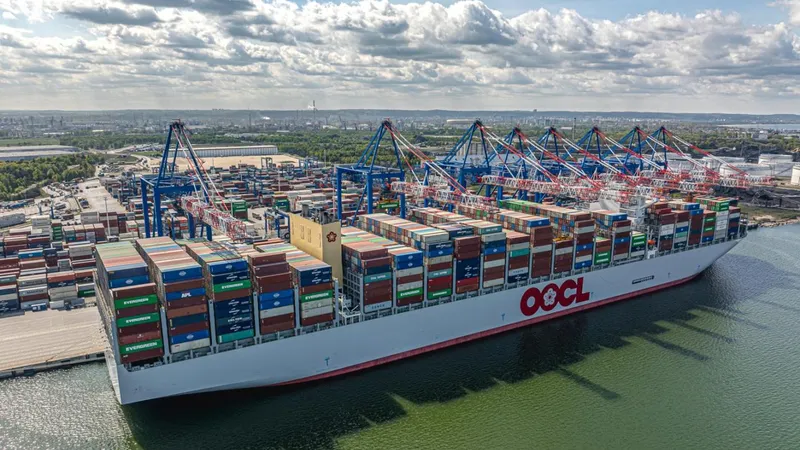
The T3 container terminal at Baltic Hub in Gdańsk was officially opened on 6 June 2025. The investment expands the operational area of Baltic Hub by 36 hectares and extends the deepwater quay by 717 metres, raising the port's capacity to 4.5 million TEU per year. Baltic Hub now has 124 hectares, over 2.1 kilometres of quays, 21 STS cranes and 74 yard cranes, directly employing over 1,400 workers. The neighbouring T5 terminal, with an area of 21 hectares and an 800-metre quay, is being built to serve offshore wind farms.
A strategic partnership with global leaders
Baltic Hub’s ownership structure combines domestic and international expertise: the Polish Development Fund (PFR) holds a 30% stake alongside PSA International (40%) and IFM Global Infrastructure Fund (30%). Piotr Matczuk, CEO of PFR, emphasized that this partnership demonstrates Poland’s ability to develop world-class infrastructure in collaboration with global investors. The investment aligns with PFR’s strategy focusing on energy transition, economic resilience, and competitiveness.
Terminal T3 – expanding Baltic Hub’s capacity
The newly opened terminal adds 36 hectares of operational area and extends deep-water quays by 717 meters, boosting Baltic Hub’s annual throughput capacity to 4.5 million TEUs. Currently, Baltic Hub spans over 124 hectares, with 2.1 km of deep-water quay, 21 ship-to-shore cranes (STS), and 74 yard cranes (RMG and RTG). It stands as the largest and deepest container terminal on the Baltic Sea, capable of accommodating Ultra Large Container Vessels (ULCV) exceeding 24,000 TEUs.
Terminal T3 enhances Gdańsk’s position as a pivotal transport gateway not only for Poland but also for landlocked Central European countries such as the Czech Republic, Slovakia, and Hungary. It significantly strengthens supply chain resilience and expands regional access to global markets.
Economic and social impact
Baltic Hub directly employs over 1,400 workers, while the wider logistics and transportation network supports around 36,000 jobs nationwide. The port’s operations generate substantial fiscal revenues—nearly PLN 56 billion in customs duties, VAT, and excise taxes were collected from Polish ports in 2024 alone. The new terminal is expected to further increase these contributions, boosting Poland’s economic attractiveness and trade capacity.
A step toward offshore wind energy
Beyond container handling, Baltic Hub is preparing for a green future. Adjacent to Terminal T3, construction is underway on Terminal T5, a dedicated facility for servicing offshore wind farms. Spanning 21 hectares with 800 meters of quay, Terminal T5 represents a strategic investment in Poland’s renewable energy sector and maritime economy.
Poland expands by 36 hectares
Deputy Minister of Infrastructure Arkadiusz Marchewka highlighted the symbolic significance of the expansion: “With Terminal T3, Poland has effectively grown by 36 hectares. This investment not only increases throughput capacity but also contributes significantly to budget revenues and the growth of our maritime economy. It sends a clear message that port infrastructure development remains a national priority.”
Source: Gazeta Morska · Compiled by: Kamil Kusier
Related articles
 Shipbuilding industry Poland christens ro-pax ferry Bursztyn Unity in Szczecin on Independence Day. Ystad service starts 18 November
 Energy and offshore Orlen Neptun deploys V-LiDAR buoys at Baltic West ahead of Poland's 2027 offshore wind auction
 Energy and offshore Equinor takes over Bałtyk 2 and 3 O&M base in Łeba. Port to serve 1.44 GW of offshore wind for 30 years
 Navy and defence Port Gdański Eksploatacja secures NATO NCAGE code. Gdańsk port company lines up for defence tenders
 Shipbuilding industry Ex-Enterprise towed to Mobile under $418.5m contract. Test case for Nimitz-class disposal begins
 Energy and offshore Energa renames Gdańsk gas plant company as foundations for 6,000-tonne turbine and boiler are laid
Comments (0)
The discussion is moderated by the editors: a comment appears after review. Your e-mail address is not published.
Nobody has commented on this article yet.