Gdańsk withstands record rainfall thanks to long-term water infrastructure investments
Gdańsk has just experienced one of the most extreme rainfall events of the 21st century, with some districts receiving more than twice the average monthly precipitation in just 24 hours. Yet, thanks to years of strategic investments in stormwater management and retention infrastructure, the city avoided major flooding and infrastructure damage — a significant contrast to similar events in previous years.
security investments pomerania tricity news29 july 2025 | 22:05 | Source: Gazeta Morska | Prepared by: Kamil Kusier | Print
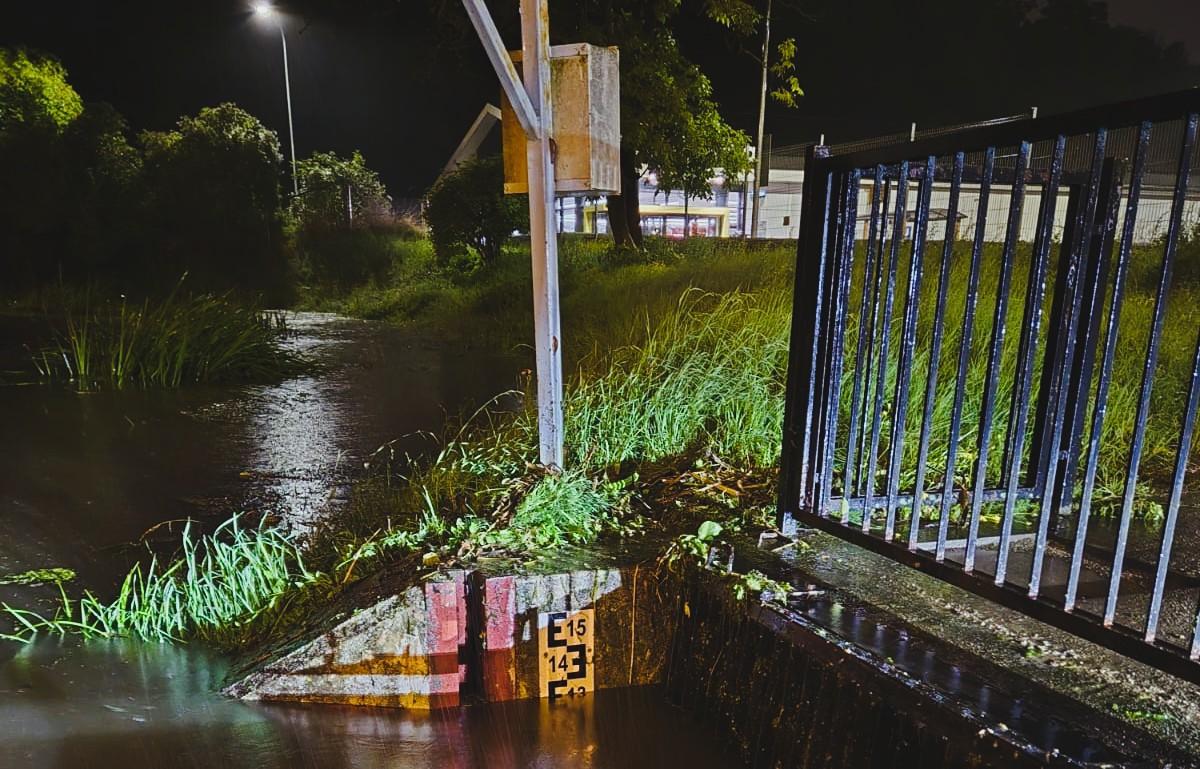
fot. Gdańskie Wody
Historic rainfall, modern resilience
On July 28–29, Gdańsk was hit by exceptionally heavy and prolonged rainfall. The city’s monitoring network recorded peak values of:
- Przegalina: 134 mm
- Stogi: 109 mm
- Górki Zachodnie: 109 mm
- Dolne Miasto: 103 mm
- Nowy Port: 99 mm
The city-wide average exceeded 80 mm — more than double the typical monthly average of 70 mm for July. Despite this, Gdańsk saw no widespread flooding or significant infrastructure failures.
- This was one of the largest rainfall episodes in Gdańsk in recent decades, said Ryszard Gajewski, president of Gdańskie Wody, the municipal company responsible for flood protection. - It was comparable in scale to the 2017 event, but this time the eastern districts — from Wrzeszcz to the Vistula — took the brunt, and our systems held.
Retention capacity: the heart of urban climate strategy
Over the past 20 years, Gdańsk has increased its water retention capacity from 200,000 m³ in 2001 to 760,000 m³ in 2024, with a strategic target of 1 million m³ by 2030. This growth is the result of both large-scale infrastructure development and small, distributed solutions integrated into urban space.
Notable investments include:
- Osowa II reservoir (15,000 m³, PLN 25M, 2019)
- Strzelniczka II (46,620 m³, PLN 18M, 2020)
- Jaśkowa Dolina (6,129 m³, PLN 11M, 2023)
- Expansion of Subisława reservoir (from 8,260 to 23,763 m³, PLN 9.7M)
- Stormwater grates and automated cleaning systems on the Radunia Canal
- Seasonal retention increase at Srebrniki reservoir (+26,000 m³)
Since 2001, 30 new reservoirs have been built, bringing the total to 56 active facilities. In parallel, Gdańsk has implemented more than 200 rain gardens, green depressions, permeable surfaces, and urban rainwater parks, building a diversified and adaptive stormwater system.
Crisis response through coordination
According to Aleksandra Dulkiewicz, mayor of Gdańsk, the city’s performance during the storm reflects both infrastructure readiness and strong interagency cooperation.
- We are grateful to all involved — Gdańskie Wody, the State Fire Service, the Road and Greenery Authority, and the Municipal Police — for their professionalism and commitment. Even though rainfall exceeded forecasts, our systems worked and our teams were ready.
Operations began even before the rain arrived, with forecasts monitored closely and response teams pre-positioned. Key interventions took place at Zabornia reservoir (overflow management), Kartuska Street (controlled surface runoff), and the Strzyża stream (mobile pumping support). While some temporary pooling occurred, no serious damage was reported.
Next steps: 2025–2029 investment plan
Gdańsk is now preparing for the next phase of climate resilience. Under its Sustainable Urban Drainage Systems (SUDS) program — co-financed by the National Fund for Environmental Protection and Water Management (NFOŚiGW) — the city is launching a new wave of projects between 2025 and 2029. These include:
- Redevelopment of the Kuźnia Wodna reservoir on the Oliwa stream
- Construction of K2 retention reservoir on the Kowalski stream
- Stage II of the Strzyża Relief Canal
- Construction of the Rudniki pumping station
- Modernization of the Płonia Mała pumping station
- Footbridge construction across the Oliwa stream (Pomorska Street link)
- Renovation of a facility on Kartuska Street for crisis management needs
These projects build on an already robust foundation of climate adaptation, while maintaining the city’s goal of increasing water retention and decentralizing risk.
A coastal resilience model for Europe
Gdańsk’s integrated approach — combining large-scale engineering, nature-based solutions, and digital hydrological monitoring — stands as a model for other coastal cities facing increasing climate volatility. With PLN 600 million already invested in stormwater infrastructure (including nearly PLN 260 million from EU funds), the city is redefining what long-term urban preparedness looks like.
As the climate crisis accelerates, Gdańsk offers a case study in resilience: proactive, data-informed, and structurally embedded into the city’s development strategy.
Buy us a coffee, and we’ll invest in great maritime journalism! Support Gazeta Morska and help us sail forward – click here!
Kamil Kusier
redaktor naczelny
comments
Add the first comment
see also
"Let everyone know we will prevail". Poland’s armed forces set strategic course for 2026-2039
“Army 500” and strategic transformation: Poland sets the course for long-term deterrence and allied readiness
Medical evacuation from offshore vessel in the Baltic. Rescue 511 helicopter and m/s Huragan deployed
Karol Nawrocki: “The strength of the republic lies in its armed forces”. Security requires national unity
Human trafficking, money laundering, millions frozen. Successful operation by border guard and tax administration
Evening SAR operation in the Baltic. Two kitesurfers stranded offshore
Medical evacuation from sailing ship in Gdynia port. 17-year-old safely transported
Medical evacuation from Danish-flagged vessel Skoven off Łeba. Joint SAR operation in the Baltic Sea
Almost 2.5 million travellers cleared in 2025 by the Maritime Border Guard
Frontex officers train with Polish Maritime Border Guard
ADVERTISEMENT
ADVERTISEMENT