Fincantieri launches first integrated underwater drone system DEEP
Italian shipbuilding giant Fincantieri unveiled its first integrated underwater drone system, DEEP, at the Naval Support and Experimentation Center (CSSN) in La Spezia. The demonstration marks a significant milestone in the European underwater technology sector and reinforces Italy’s ambitions in developing the so-called underwater economy, spanning security, energy, and environmental applications.
security maritime economy investments equipment and technology news25 october 2025 | 15:44 | Source: Gazeta Morska | Prepared by: Kamil Kusier | Print
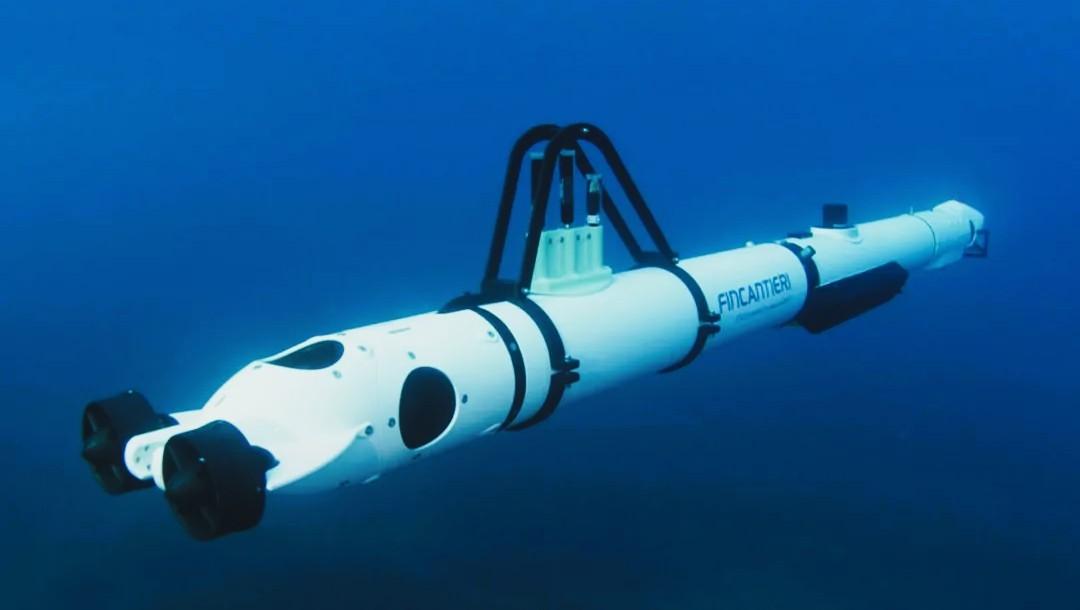
fot. Fincantieri
The event was attended by Undersecretary of State at the Italian Ministry of Defense Matteo Perego di Cremnago, Fincantieri CEO and Managing Director Pierroberto Folgiero, representatives of the Italian Navy, regional authorities from Liguria, and the company’s senior management.
DEEP – a comprehensive underwater protection ecosystem
The DEEP system (Dynamic Ecosystem for Enhanced Performance) integrates:
- an underwater sensor network (Early Warning System) for threat detection,
- a Command & Control (C2) center for real-time operational management,
- a fleet of autonomous underwater vehicles (AUVs),
- and an AI-based data analytics platform.
From the outset, DEEP was designed as a dual-use solution, capable of addressing both civilian applications—such as port monitoring, undersea cable inspection, and offshore farm surveillance—and defense missions, including patrolling and underwater reconnaissance.
- The launch of DEEP is tangible proof of our commitment to pushing the boundaries of innovation ever deeper. Today we have validated an integrated unmanned underwater drone system that represents an innovative and concrete solution to the challenge of protecting critical infrastructure by using the best technologies available. This achievement is the result of the work of an outstanding industrial supply chain that enables us to anticipate market needs and position ourselves for the future. We are proud to lead this transformation, which makes a real contribution to the security, growth, competitiveness and technological autonomy of our national system, while also projecting us toward global leadership in the underwater economy, said Pierroberto Folgiero, CEO and Managing Director of Fincantieri.
Global competition inunderwater systems
The launch of DEEP comes amid a growing global competition in underwater technology. Similar solutions are being developed by:
- Saab (Sweden) – AUV platforms Sabertooth and Seaeye Tiger for naval and offshore operations,
- Kongsberg (Norway) – HUGIN and REMUS systems deployed in NATO operations,
- Thales (France) – Maritime Autonomy solutions and underwater sensor networks for energy infrastructure,
- Hanwha Ocean (South Korea) – autonomous systems for offshore wind farms and critical asset monitoring,
- WB Group (Poland) – expanding in unmanned and communication technologies, primarily in air and land domains.
Fincantieri distinguishes itself through full integration, offering a complete ecosystem rather than individual products, from sensors and software to operational command and AI-enabled data processing.
Underwater economy as a strategic growth sector
Fincantieri estimates the global underwater technology market at around €50 billion annually, with a potential accessible segment for the group of approximately €22 billion. This includes protection of undersea cables, pipelines, offshore installations, and systems for threat detection and communication in coastal zones.
DEEP is expected to become a cornerstone of underwater infrastructure protection in the Mediterranean and Atlantic regions. For the Baltic Sea region, including Poland, the development of similar technologies carries strategic significance, linking industrial innovation with national security priorities.
Technological autonomy and the future of naval industry
DEEP is a key component of Fincantieri’s Underwater Technology Hub, which combines civil, defense, and industrial capabilities under a unified management structure. The initiative aims to ensure technological autonomy for Europe in the underwater sector while strengthening industrial independence amid growing geopolitical tensions.
The DEEP launch demonstrates that the future of maritime economy and defense increasingly extends beneath the waves, where innovation, industrial collaboration, and technological leadership will define strategic advantage.
Buy us a coffee, and we’ll invest in great maritime journalism! Support Gazeta Morska and help us sail forward – click here!
Kamil Kusier
redaktor naczelny
comments
Add the first comment
see also
Defence.Hub strengthens capabilities in technologies supporting maritime infrastructure security
Damen to build 13 SAR units for Turkey. Strengthening search and rescue in the Aegean Sea
Sebastian Kluska, director of MSPiR SAR: No room for improvisation at sea. Skills and judgment matter
MS Kapitan Poinc to deploy FRB 850 in Baltic SAR upgrade
105th life-saving mission. Naval Aviators conduct double "Heart Action" transport
Another successful medical evacuation over the Baltic Sea. Yet another intervention at offshore wind farms
Fishing trip on Vistula Lagoon cut short due to missing certificates
Drifting tanker near Malta highlights risks linked to the global “shadow fleet”
Cross-border SAR operation on the ice of the Gulf of Bothnia
Body recovered from the waters of Puck Bay near Babie Doły in Gdynia
ADVERTISEMENT
ADVERTISEMENT