Scarborough Shoal standoff escalates. China uses water cannons on Philippine vessels
Tensions flared once again in the South China Sea as Chinese Coast Guard vessels used water cannons against Philippine boats near Scarborough Shoal (known in China as Huangyan Dao and in the Philippines as Bajo de Masinloc).
security maritime economy navy worldwide news16 september 2025 | 14:07 | Source: Gazeta Morska / PAP | Prepared by: Oskar Wojciechowski | Print
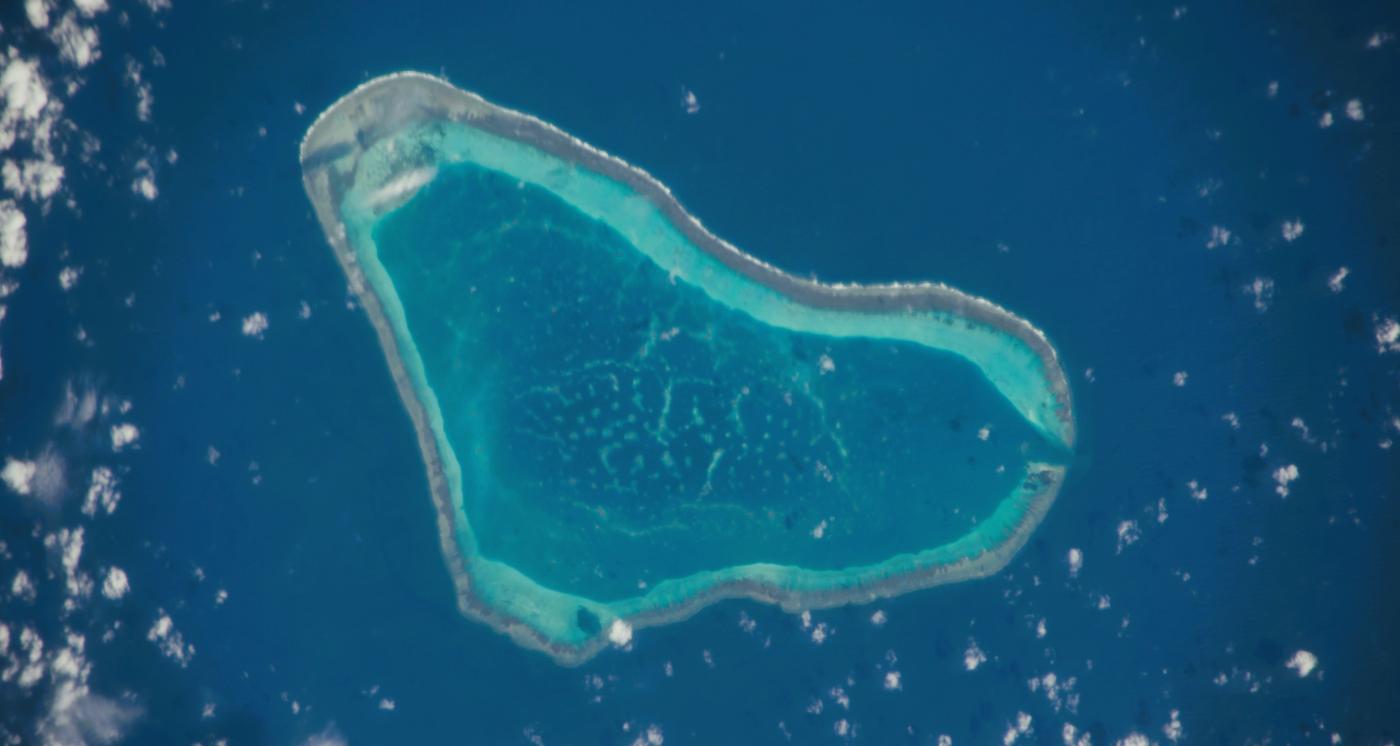
fot. Lyndon B. Johnson Space Center / Wikimedia
According to Beijing, more than 10 Philippine vessels “illegally” entered what China claims as its territorial waters. Coast Guard spokesperson Gan Yu stated that one of the Philippine boats “ignored repeated warnings and deliberately rammed” a Chinese patrol vessel. China said it then “lawfully implemented control measures,” including the use of water cannons to drive the boats away.
Manila strongly rejected Beijing’s version of events. The Philippine National Maritime Council, quoted by Reuters, dismissed the Chinese statement as “another case of disinformation and propaganda,” insisting that Philippine vessels were harassed while operating lawfully in the area.
The confrontation comes just a week after China announced plans to turn Scarborough Shoal into a marine protected area — a move analysts see as an attempt to reinforce its territorial claims.
Scarborough Shoal remains one of the flashpoints in the South China Sea dispute, which centers on sovereignty, fishing rights, and access to resources. In 2016, the Permanent Court of Arbitration in The Hague ruled that China’s claims in the region have no basis under international law. Beijing has rejected the ruling and continues to strengthen its presence through patrols and infrastructure development.
For the global shipping industry, the latest escalation is a cause for concern. Roughly $3 trillion worth of goods transit through the South China Sea annually, making it one of the world’s most critical trade arteries. Increased tensions could mean higher freight costs, potential rerouting of shipping lanes, and rising insurance premiums for vessels operating in contested waters.
Buy us a coffee, and we’ll invest in great maritime journalism! Support Gazeta Morska and help us sail forward – click here!
Oskar Wojciechowski
redaktor
comments
Add the first comment
see also
Defence.Hub strengthens capabilities in technologies supporting maritime infrastructure security
Damen to build 13 SAR units for Turkey. Strengthening search and rescue in the Aegean Sea
Sebastian Kluska, director of MSPiR SAR: No room for improvisation at sea. Skills and judgment matter
MS Kapitan Poinc to deploy FRB 850 in Baltic SAR upgrade
105th life-saving mission. Naval Aviators conduct double "Heart Action" transport
Another successful medical evacuation over the Baltic Sea. Yet another intervention at offshore wind farms
Fishing trip on Vistula Lagoon cut short due to missing certificates
Drifting tanker near Malta highlights risks linked to the global “shadow fleet”
Cross-border SAR operation on the ice of the Gulf of Bothnia
Body recovered from the waters of Puck Bay near Babie Doły in Gdynia
ADVERTISEMENT
ADVERTISEMENT