Drones from the east over Poland. Wreckage near NATO base in Malbork. Security or SAFE?
Poland’s airspace was disrupted overnight by multiple drone incursions, extending beyond the eastern border to include the Warmian-Masurian and Pomeranian regions. One unmanned aerial vehicle (UAV) crashed near the 22nd Tactical Air Base in Malbork, in Oleśno, Gronowo Elbląskie municipality.
security aviation worldwide pomerania news10 september 2025 | 17:20 | Source: Gazeta Morska | Prepared by: Kamil Kusier | Print
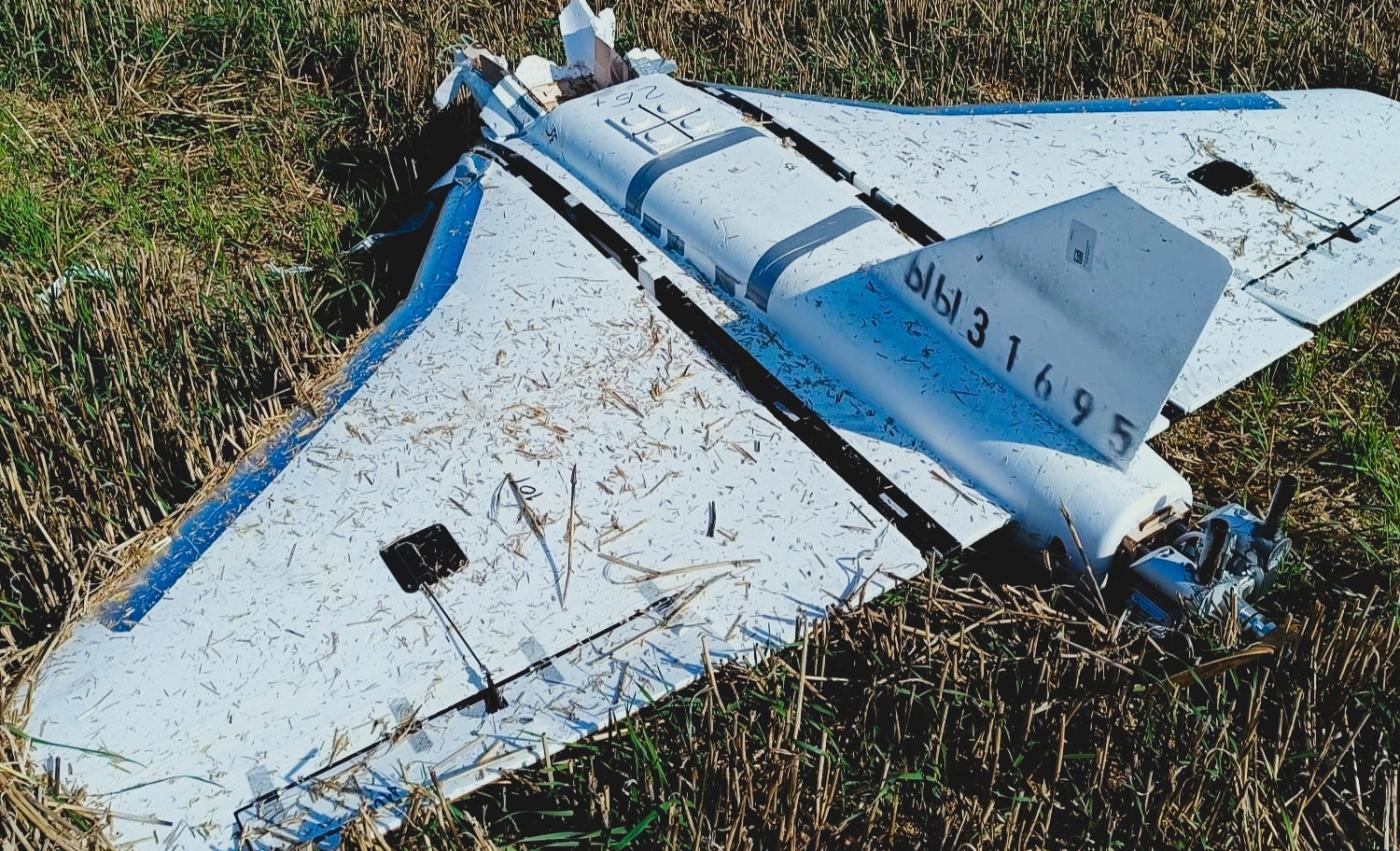
fot. x.com
Authorities confirmed this is one of several drone wreckages discovered in the past hours. The area was secured, and no casualties were reported. The Operational Command of the Polish Armed Forces did not disclose whether the drone was shot down or crashed on its own.
Largest scale in months
According to the Ministry of National Defence (MON) and Ministry of Interior and Administration (MSWiA), Poland recorded multiple airspace violations involving UAVs and missile fragments overnight. This represents one of the largest such incidents in recent months.
The growing frequency of these events indicates increased military pressure on NATO’s eastern flank. The fact that one drone fell only a few kilometers from a strategic air base hosting NATO components is particularly concerning.
Attack following SAFE announcement
The airspace violations occurred one day after the announcement of over €40 billion in SAFE (Security and Resilience) funding to Poland by the European Union. SAFE is designed to support member states’ security and resilience. The timing raises questions about the deliberate testing of Poland’s and NATO’s defense structures.
NATO responds – Article 4
In response to the escalation, Poland officially requested the activation of Article 4 of the NATO Treaty, which triggers consultations among member states to assess threats and determine joint actions.
This marks the third time Poland has invoked Article 4:
- 2014, following Russia’s annexation of Crimea and the war in Donbas,
- February 2022, at the start of Russia’s full-scale invasion of Ukraine,
- September 2025, amid intensified drone and missile incursions into Polish airspace.
Every invocation of Article 4 signals a security alarm to the Alliance, demonstrating that NATO must respond collectively. It also sends a clear message to Moscow: Poland acts within NATO solidarity, not alone.
The President of the Republic of Poland, Karol Nawrocki, also announced that within 48 hours he will convene the National Security Council.
- This will be a moment when all political parties, the chairpersons of parliamentary clubs, and the most important officials in the country will discuss not only what has happened, but also what we should do in the future to prevent such situations. Throughout this process, I have also remained in regular contact with the presidents of our allied countries, as well as with NATO Secretary General Mark Rutte, said Karol Nawrocki.
Drones in action: shaheds
Most of the UAVs detected were Shahed-136 and Shahed-131, Iranian-designed kamikaze drones widely used by Russia in Ukraine.
Shahed-136 (“Geran-2” in Russian service):
- Range: up to 2,000 km
- Cruise speed: ~180 km/h
- Warhead: 30–40 kg
- Altitude: 50–150 m
- Notoriously loud engine, earning the nickname “mopeds”
Shahed-131 (“Geran-1”):
- Smaller variant, range ~900 km
- Warhead: 10–15 kg
- Harder to detect due to smaller size
- Used to saturate air defense systems near the front
The Russian designations “Geran-1” and “Geran-2” aim to portray these drones as indigenous, but they are essentially adaptations of Iranian Shaheds. The combination of long- and short-range drones complicates defense, with larger UAVs targeting infrastructure and smaller ones overloading air defense systems.
Baltic and hybrid threats
The drone incidents coincided with GPS signal disruptions in the Baltic Sea region. Temporary disruptions affected ferry services and some flights from Polish ports. While there was no direct threat to passengers, the events highlight how easily such provocations can disrupt transport and critical infrastructure.
Baltic Sentry, NATO’s maritime monitoring system, focuses on naval traffic and suspicious surface activity. Airspace monitoring and GPS interference detection fall under the responsibility of allied and national air surveillance systems, including radar, AWACS missions, and specialized electromagnetic detection units.
Experts emphasize that GPS jamming has become a frequent form of hybrid pressure, disrupting civil aviation, maritime navigation, and military operations. Coordinated monitoring between maritime systems, air surveillance, and electromagnetic detection centers is essential to quickly identify and mitigate such provocations.
NATO base Malbork under pressure
The proximity of Malbork, one of NATO’s key bases in the Baltic region, underscores the real risk of incidents near strategic military infrastructure. It signals the need to strengthen air defense systems and enhance alliance coordination.
Notably, on September 2, Swedish JAS 39 Gripen fighters left Malbork after their rotational deployment supporting Poland’s F-16s in Baltic Air Policing. While planned and routine, this highlights periods where transitional rotations can temporarily reduce immediate rapid-response capacity, emphasizing the importance of readiness.
With airspace violations becoming more frequent, Malbork remains a critical point on NATO’s eastern flank. Each incident tests not only Poland’s defense but also the Alliance’s ability to rapidly reinforce vulnerable areas and maintain deterrence.
Test of Polish defense and NATO cohesion
These recent events demonstrate that hybrid pressure on NATO’s eastern flank is increasing. Drone incursions, GPS disruptions, and incidents near strategic bases like Malbork are not isolated—they are systematic attempts to test the resilience of defense systems.
For Poland, this means maintaining high military readiness and close coordination with allies. For NATO, it requires constant monitoring and strengthening of security across the eastern flank. Each incident is a test of technology, air defense systems, operational procedures, and political cohesion within the Alliance.
Rapid response, enhanced surveillance, and sustained rotational deployments remain key to deterring hybrid threats and maintaining stability in the region.
see also
Buy us a coffee, and we’ll invest in great maritime journalism! Support Gazeta Morska and help us sail forward – click here!
Kamil Kusier
redaktor naczelny
comments
Add the first comment
see also
Defence.Hub strengthens capabilities in technologies supporting maritime infrastructure security
Damen to build 13 SAR units for Turkey. Strengthening search and rescue in the Aegean Sea
Sebastian Kluska, director of MSPiR SAR: No room for improvisation at sea. Skills and judgment matter
MS Kapitan Poinc to deploy FRB 850 in Baltic SAR upgrade
105th life-saving mission. Naval Aviators conduct double "Heart Action" transport
Another successful medical evacuation over the Baltic Sea. Yet another intervention at offshore wind farms
Fishing trip on Vistula Lagoon cut short due to missing certificates
Drifting tanker near Malta highlights risks linked to the global “shadow fleet”
Cross-border SAR operation on the ice of the Gulf of Bothnia
Body recovered from the waters of Puck Bay near Babie Doły in Gdynia
ADVERTISEMENT
ADVERTISEMENT